Overview
Pathological Demand Avoidance Diploma introduces learners to PDA characteristics, autism links, family contexts, sensory responses, developmental concerns and school-based situations. Moreover, this programme explores behavioural profiles, neurological traits, historic developments and learning disability relationships. The structure allows learners to explore concepts gradually, while the modules consistently unpack essential elements linked to demand-related patterns. Therefore, this pathway supports individuals who require specialised insight into PDA online training, pathological demand avoidance courses, and pda courses for parents. As a result, the pathological demand avoidance diploma course online provides a structured route towards professional growth while also supporting community needs.
Course Description
Children and adults with PDA often display highly distinctive responses to pressure, change and instruction. Therefore, the Pathological Demand Avoidance Diploma invites learners into a carefully sequenced journey where each module reveals layers of behavioural diversity, sensory influence and contextual meaning. This framework, enriched with clear explanations, prepares learners to use pda online training approaches responsibly while supporting personalised communication styles. Furthermore, these insights reinforce confidence when navigating challenging interactions across home, school and wider environments.
The diploma expands into developmental perspectives, autism profiles and sensory variations, while also focusing on how familial factors influence behavioural escalation. Consequently, learners move through historical interpretations of PDA, modern recognition and disability-related considerations. Throughout the journey, participants repeatedly encounter themes included in pathological demand avoidance courses, pda courses for parents and pathological demand avoidance certification. Additionally, each topic contributes to improved awareness of neurodivergent traits and the reasons individuals may resist or avoid demands.
By the end, learners will feel more capable when interpreting patterns, recognising behavioural triggers and offering supportive responses. In addition, the pathological demand avoidance diploma course online and pathological demand avoidance diploma course enhance the ability to apply structured strategies across varied educational or home-support settings. The programme, therefore, serves as an essential choice for those seeking strong foundations within PDA practice and specialised autism-related scenarios.
Learning Outcome
- Identify unique PDA behavioural features across home, school and community settings.
- Interpret autism-related characteristics linked to PDA presentations.
- Recognise sensory processing effects that influence responses to everyday pressure.
- Outline developmental and historic factors associated with PDA recognition.
- Distinguish learning disability considerations when assessing demand-related patterns.
Who Is This Course For?
- Individuals supporting autistic children or adults in educational contexts.
- Parents seeking strong techniques to address PDA-related challenges.
- Carers requiring structured knowledge about demand-avoidant behaviour.
- Classroom support professionals who work with neurodivergent pupils.
- Welfare and pastoral staff overseeing behaviour-related responsibilities.
Certificate of Achievement
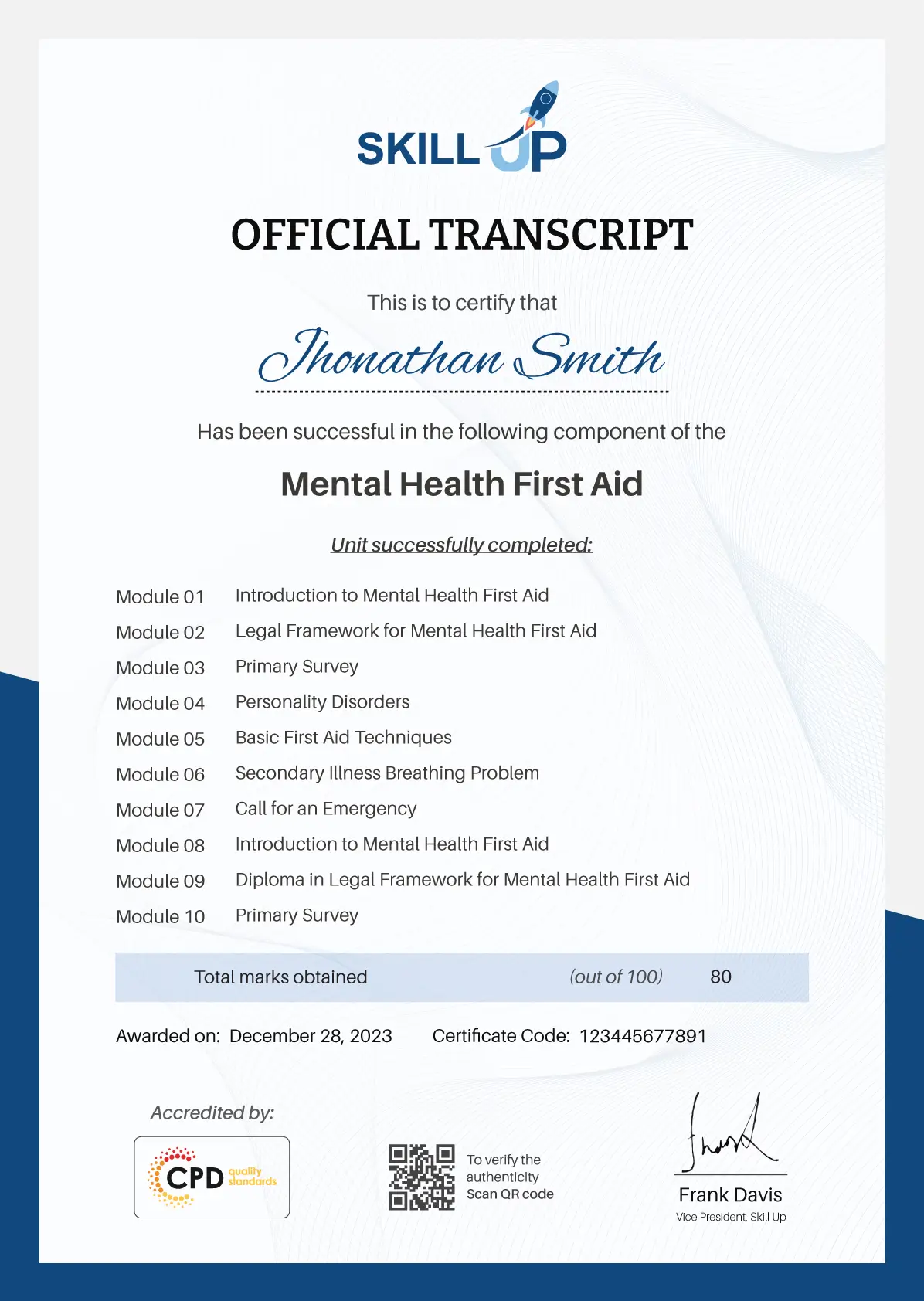
Earn Your Accredited Certificate with Transcript
Save 20% with the coupon code SKILL20
Show Your Certified Identity with a CPD-QS Certificate
Perfect for employers, clients, or academic verification.
Career Path
- Behaviour Support Practitioner – Provides behaviour-focused guidance across schools or community services. Average Salary (UK): £40,000–£52,000 per year
- Autism Outreach Worker – Advises families, schools and organisations on autism-related support needs. Average Salary (UK): £41,000–£55,000 per year
- Special Educational Needs Coordinator (SENCO) – Oversees SEND provisions while ensuring tailored support plans. Average Salary (UK): £45,000–£58,000 per year
- Learning Disability Advisor – Assists individuals experiencing developmental and behavioural differences. Average Salary (UK): £43,000–£57,000 per year
- Family Support Worker (Specialist PDA/Autism) – Provides structured guidance for households facing demand-related challenges. Average Salary (UK): £40,000–£50,000 per year
- Inclusion Officer – Promotes accessible frameworks and behavioural support across educational institutions. Average Salary (UK): £42,000–£54,000 per year
Frequestly Asked Questions
The Pathological Demand Avoidance Diploma is an online programme that explores PDA traits, autism links, sensory responses, learning disability considerations and family-school dynamics. It supports learners seeking trusted pda online training and recognised pathological demand avoidance certification.
Yes. The diploma includes clear explanations, behaviour-focused guidance and accessible support frameworks, making it a strong choice for parents who require structured learning around PDA.
Absolutely. The pathological demand avoidance diploma course online can be completed from any UK location, allowing flexible study hours and full digital access.
This diploma stands out because it integrates autism insights, sensory perspectives, behavioural variation themes and parent-school applications in one comprehensive pathway.
Yes. It discusses behaviour management, communication styles, routine-based stress and learning disability issues typically encountered in UK educational settings.
Curriculum
-
Introduction to Pathological Demand Avoidance
00:19:00
-
Understanding Autism
00:15:00
-
Sensory Processing Disorder
00:17:00
-
The History of PDA
00:14:00
-
Learning Disability and Autism
00:15:00
Offer Ends in
-
Duration:1 hour, 20 minutes
-
Access:1 Year
-
Units:5

6 Reviews
All
Courses for £49