Overview
The CNC Programming Course introduces coded control methods used to operate machine tools within modern manufacturing. This programme explains how numerical instructions guide cutting, drilling, and shaping processes through structured commands. Topics such as control loops, axes classification, coordinate references, and programming formats are presented clearly for cnc programming for beginners. As the curriculum progresses, learners connect machine behaviour with program logic, supporting future cnc programmer roles. This CNC Programming Course builds clarity around machine communication, program flow, and industrial application without relying on manual intervention.
Course Description
Automation has reshaped production environments, and this CNC Programming Course reflects that transformation through a structured curriculum. Beginning with numerical control concepts and CNC system classifications, the content develops awareness of how machines interpret coded instructions. As cnc programming for beginners progress, clarity grows around system components, point-to-point operations, and axis-based movement, strengthening confidence in CNC terminology and workflow relevance.
As learning advances, programming formats and coordinate systems take centre stage. Incremental and absolute references demonstrate how positioning affects machine response, while open and closed control loops highlight accuracy control. Coding structure is reinforced through guided exercises, allowing each cnc programmer pathway to develop logical sequencing and machine-response prediction within controlled environments.
Toward completion, the focus shifts to CNC applications and higher-axis machining significance. These elements illustrate how advanced movement expands manufacturing capability. The CNC Programming Course concludes by linking coded instruction to industrial output, enabling cnc programming for beginners to transition smoothly into cnc programmer opportunities with technical awareness and structured programming knowledge.
Learning Outcome
- Explain numerical control principles applied in CNC systems
- Identify CNC machine classifications and operating components
- Apply coordinate systems for programmed machine movement
- Construct CNC codes using standard formatting methods
- Associate CNC programming with manufacturing applications
Who Is This Course For?
- Individuals starting cnc programming for beginners training
- Learners targeting cnc programmer career entry
- Engineering students exploring automated machining systems
- Production workers moving toward CNC-based operations
- Technical learners interested in coded machine control
Certificate of Achievement
Earn Your Accredited Certificate with Transcript
Save 20% with the coupon code SKILL20
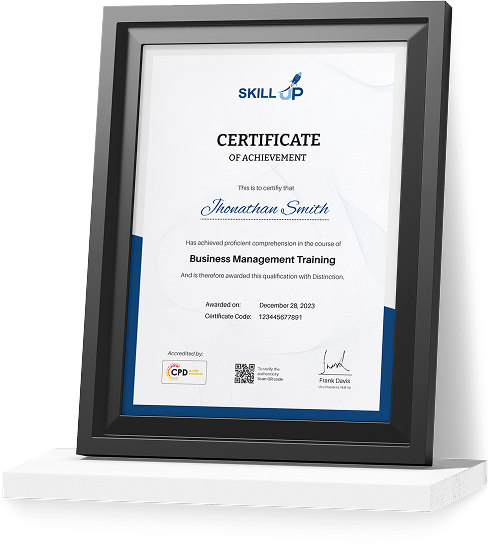
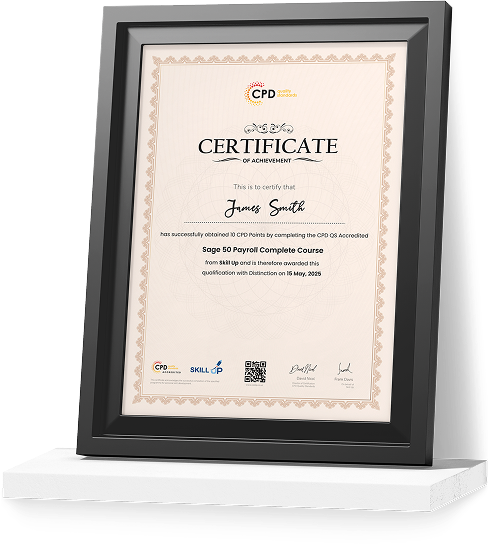
Show Your Certified Identity with a CPD-QS Certificate
Perfect for employers, clients, or academic verification.
Career Path
- CNC Machine Operator – £24,000 to £30,000
- Junior CNC Programmer – £28,000 to £34,000
- CNC Programmer – £35,000 to £45,000
- Manufacturing Technician – £32,000 to £40,000
- Production Engineer – £38,000 to £50,000
Curriculum
-
Module 1: Scope of the Course
00:03:00
-
Module 2: Numerical Control of Machine Tools
00:04:00
-
Module 3: CNC- Computer Numerical Control Syst
00:02:00
-
Module 4: Components of CNCs
00:04:00
-
Module 5: Point to Point CNC Machines
00:03:00
-
Module 6: Incremental & Absolute CNC Machines
00:03:00
-
Module 7: Open & Close Control Loop CNC Machines
00:02:00
-
Module 8: 2 & 3 Axes CNC Machines
00:02:00
-
Module 9: Importance of Higher axes Machining
00:02:00
-
Module 10: Programming Format
00:06:00
-
Module 11: Cartesian Coordinate System
00:03:00
-
Module 12: How to Write a Program
00:08:00
-
Module 14: Basic CNC Programming (Incremental)
00:04:00
-
Module 15: A Simple Coding Exercise
00:17:00
-
Module 16: Applications of CNC
00:07:00
-
Get Your CPD Certificate
00:01:00
Offer Ends in
-
Duration:1 hour, 11 minutes
-
Access:1 Year
-
Units:16

4 Reviews
All
Courses for £49