Basic Electricity Course
An Electricity Course introduces learners to the fundamental concepts of electrical energy, current, and power systems. Through this electrician course, you’ll explore topics such as Ohm’s Law, voltage, resistance, magnetism, and safety procedures essential for working with electrical circuits. Designed to build confidence in both theory and technical principles, this electricity course online serves as an ideal pathway for those pursuing careers in electrical installation and related trades. Whether you are new to the field or enhancing existing knowledge, this electricity course for beginners offers a structured route into the world of electricity and its practical applications.
Course Description
Electricity powers everything around us—from lighting homes to running industries—and this electrician course helps you understand how it all works. Through interactive lessons and real-world examples, the electricity course online introduces you to the essentials of direct and alternating current, voltage, and resistance, along with the safe handling of electrical systems.
As you progress, each module builds your confidence to interpret electrical units, apply Ohm’s Law, and understand the relationship between current, power, and energy. The electrical installation course also ensures you learn the vital aspects of safety precautions, magnetism, and capacitance to prepare for various applications in domestic and industrial settings.
By completing this electricity course for beginners, you’ll be prepared for more advanced electrician courses or certification paths in the UK. The knowledge gained through this electrical course not only boosts technical aptitude but also opens doors to stable and rewarding job opportunities within the electrical and energy sectors.
Learning Outcome
- Demonstrate a clear comprehension of electrical units, Ohm’s Law, and their real-world implications.
- Identify the differences between direct current and alternating current and apply their uses.
- Analyse the principles of voltage, resistance, and capacitance in electrical circuits.
- Apply essential safety measures while working with or around live electrical systems.
- Recognise the influence of magnetism in electrical operations and system performance.
Who Is This Course For?
- Individuals starting their journey in electrical and energy-related professions.
- Technicians aiming to expand their qualifications through an online electrician course UK.
- Learners seeking structured guidance in electricity courses without prior experience.
- Students exploring technical foundations before moving to higher electrician courses.
- Professionals interested in broadening their knowledge through an electricity course online.
Certificate of Achievement
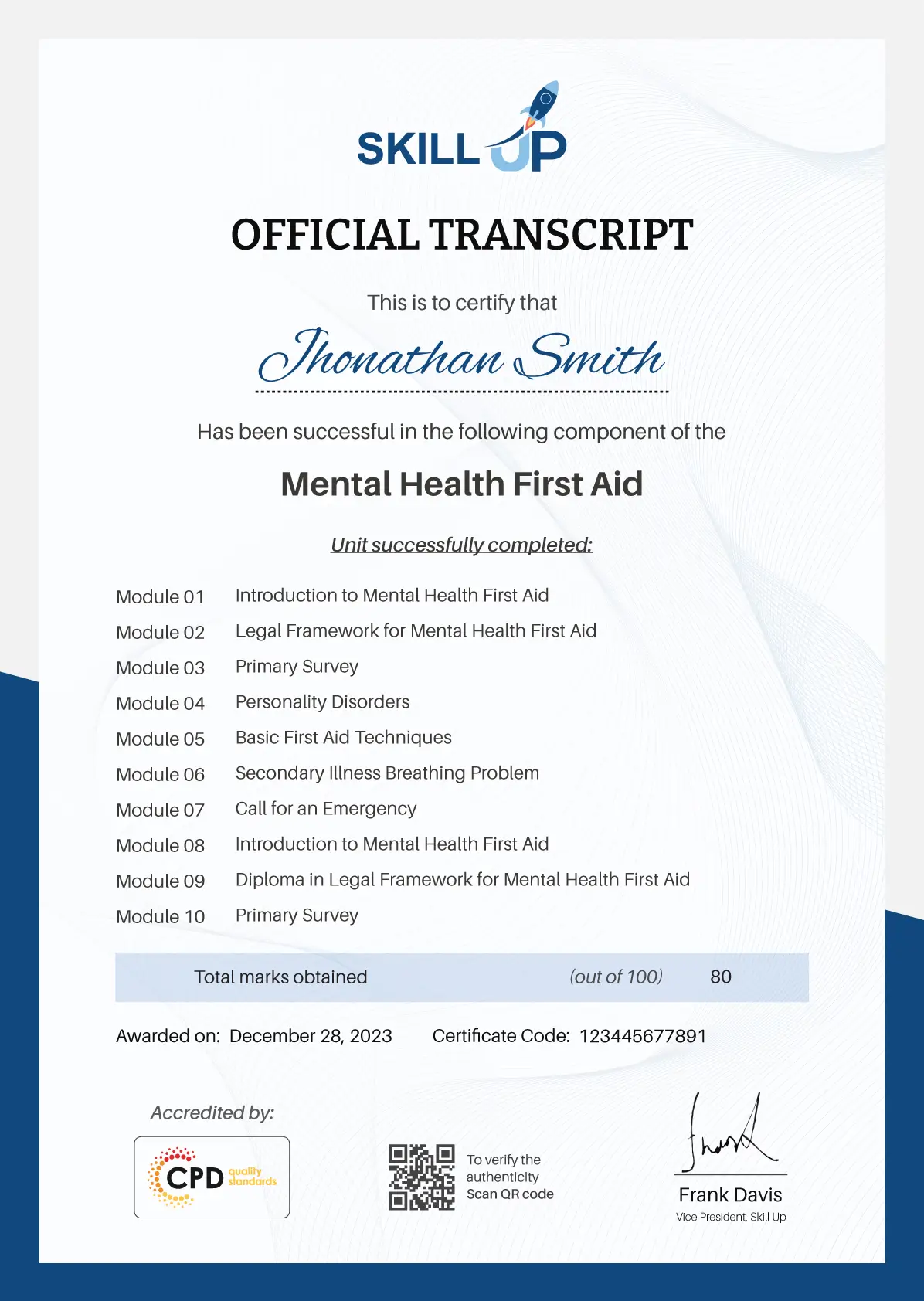
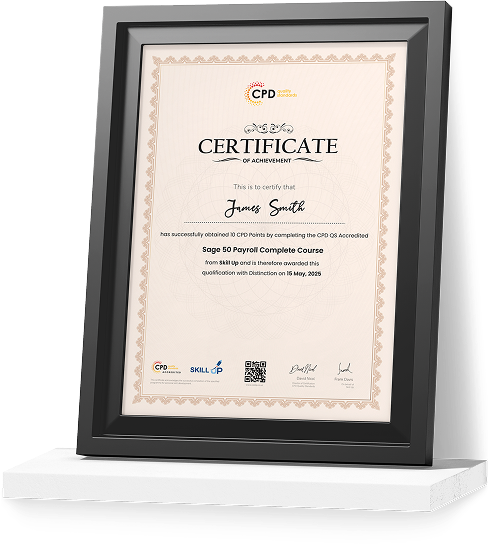
Earn Your Accredited Certificate with Transcript
Save 20% with the coupon code SKILL20

Show Your Certified Identity with a CPD-QS Certificate
Perfect for employers, clients, or academic verification.
Career Path
- Electrician – Installs and maintains electrical systems in homes and businesses. Average Salary: £40,000 – £55,000 per year.
- Electrical Engineer – Designs and improves electrical systems for industrial and commercial use. Average Salary: £45,000 – £70,000 per year.
- Maintenance Technician – Oversees routine electrical maintenance and fault diagnosis. Average Salary: £42,000 – £52,000 per year.
- Power System Operator – Manages and monitors electrical supply networks. Average Salary: £45,000 – £65,000 per year.
- Renewable Energy Specialist – Focuses on solar, wind, and sustainable energy projects. Average Salary: £46,000 – £60,000 per year.
- Electrical Installation Supervisor – Leads installation teams ensuring compliance and safety. Average Salary: £50,000 – £68,000 per year.
Frequently Asked Questions
Electricity is the flow of electric charge—typically electrons—through a conductor, producing energy we can harness for light, heat, motion or power.
Electricity as a natural phenomenon wasn’t “invented”—it existed long before humans. What changed was our ability to harness and use it.
Key milestones include:
– Ancient Greeks (around 600 BC) observed static electricity effects (amber rubbed with cloth)
– In the 18th century, experiments by Franklin, Volta, and others began to systematically explore electrical phenomena
– Thomas Edison’s 1879 development of a practical light bulb and power system is often treated as a turning point for electrical infrastructure
There is no single “cheapest” electricity provider for everyone in the UK—rates vary by region, consumption, tariff type and contract. The best approach is to compare current offers using Ofgem-accredited comparison sites like Uswitch, Compare the Market, or MoneySavingExpert. That said, recent listings show that Octopus Energy often appears among the lowest-cost providers currently, for both fixed and variable plans. Also, Tulo Energy and Outfox The Market are frequently mentioned as having very competitive tariffs.
The $100 Power Saving Bonus is a one-off payment offered by the Victorian Government to eligible concession-card households to assist with energy costs. It is provided in addition to the $150 Energy Bill Relief Fund. Eligible households must hold a relevant concession or pensioner card and have a recent electricity bill.
If you mean in the UK, the answer is similar to the question “Which electricity provider is the cheapest?”—you must compare tariffs for your area. As of 2025, Octopus Energy is often cited as the cheapest large supplier.
However, for some consumers, smaller or newer providers or regional offers may be cheaper depending on location, usage and type of plan.
To get the $100 Power Saving Bonus (a type of Victorian energy rebate), follow these steps:
1. Visit the Victorian Energy Compare website (compare.energy.vic.gov.au).
2. Register or log in, and submit your application along with a recent residential electricity bill.
3. Provide proof of your eligible concession card (e.g. Health Care Card, Pensioner Concession Card, Veterans’ Affairs cards)
4. You may also apply via phone, or via community organisations participating in outreach programs.
5. Once approved, the payment will be made as per government guidelines.
Note: Because this is an Australian (Victorian) scheme, UK residents are not eligible to apply
Curriculum
-
Introduction and Basics
00:15:00
-
Electrical Units and Ohm’s Laws
00:18:00
-
Direct Current
00:20:00
-
Alternating Current Basics
00:21:00
-
Voltage and Resistance
00:21:00
-
Capacitance and Capacitors
00:19:00
-
Magnetism
00:24:00
-
Safety Precautions
00:28:00
-
Order Your Certificate
00:01:00
Offer Ends in
-
Duration:2 hours, 47 minutes
-
Access:1 Year
-
Units:9

10 Reviews
All
Courses for £49