
Overview of Financial Analysis
Financial Analysis – QLS Endorsed Course offers a structured approach to interpreting organisational activity, yet it also reveals hidden patterns influencing future direction. Through the curriculum, learners explore statement interpretation, ratio application, profitability tracking, return evaluation, liquidity review, operational assessment, and detection of irregular entries. Each section builds an integrated outlook, enabling analytical cohesion across multiple indicators. Moreover, case reviews highlight telecom sector nuances, while discussions introduce operational intricacies. Consequently, every component strengthens numerical clarity. Furthermore, ratio-based interpretation helps illuminate competitive dynamics, efficiency levels, asset deployment, and capital decisions. Therefore, Financial Analysis becomes a crucial framework for strategic judgement.
Financial Analysis Course Description
Financial Analysis captures the rhythm of organisational movement, turning scattered figures into meaningful direction. Consequently, this Financial Analysis – QLS Endorsed course introduces learners to structured evaluation methods that illuminate hidden financial signals. Additionally, each topic joins seamlessly with the next, allowing numerical patterns to form a coherent interpretive picture. Therefore, participants begin recognising how statements reflect operational behaviour while ratios uncover deeper structural tendencies.
Moreover, the curriculum links profitability indicators, operating margins, return ratios, liquidity measures, and operational metrics, creating a unified analytical flow. Furthermore, comparisons highlight contrasting performance drivers, while targeted discussions shed light on overlooked cost elements. Thus, learners witness how Financial Analysis sharpens comparative reasoning and strengthens strategic interpretation across various business environments.
Finally, the programme closes with techniques for identifying irregular entries, unusual revenue recognition, questionable depreciation choices, flawed pricing logic, and capital allocation concerns. Consequently, learners acquire an evaluative method that reveals inconsistencies before they distort judgement. In turn, Financial Analysis evolves from a measurement approach into a safeguard against misleading information. As a result, participants complete the Financial Analysis – QLS Endorsed Course equipped with numerically grounded judgement suitable for complex organisational landscapes, allowing them to approach financial evaluation with clarity, precision, and forward-focused confidence.
Note: Skill-up is a Janets-approved resale partner for Quality Licence Scheme Endorsed courses.
Learning Outcome
- Interpret numerical indicators across varied statements
- Evaluate profitability ratios for structural insight
- Assess liquidity ratios highlighting organisational exposure
- Apply return metrics demonstrating asset utilisation
- Use operational ratios identifying efficiency gaps
Who Is This Course For?
- Individuals pursuing analytical competence
- Learners seeking ratio-driven decision clarity
- Professionals reviewing organisational performance
- Career-changers exploring financial evaluation
- Students entering analytical fields
Certificate of Achievement
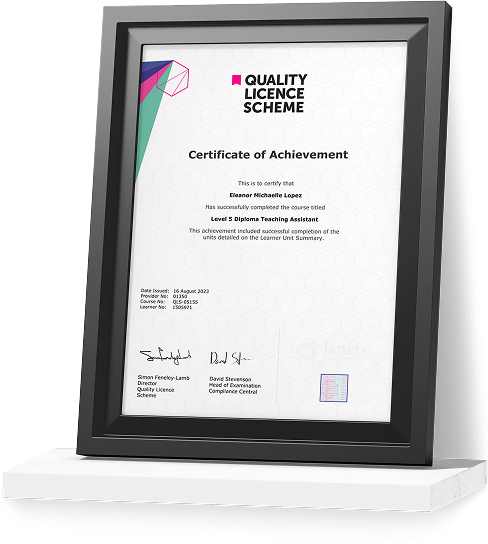
Quality Licence Scheme Endorsed Certificate
Upon completing the final assessment of Financial Analysis – QLS Endorsed Course, you can apply for the Quality Licence Scheme Endorsed Certificate of Achievement. Endorsed certificates can be ordered and delivered to your home by post for only £89.
Earn Your Accredited Certificate with Transcript
Save 20% with the coupon code SKILL20
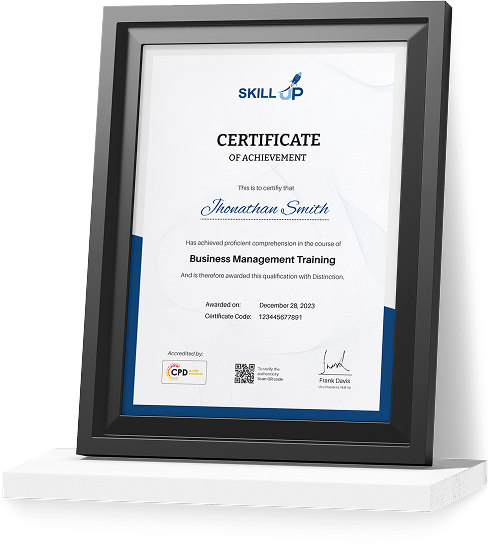
Get a QLS Certificate to Showcase Your Skills
Detailed record of your completed modules and qualifications.
Career Path
- Financial Analyst: £32,000–£55,000
- Business Analyst: £30,000–£52,000
- Corporate Finance Officer: £40,000–£68,000
- Investment Analyst: £38,000–£70,000
- Risk Reviewer: £33,000–£58,000
Frequestly Asked Questions
Financial analysis is the process of examining a company’s financial data—like balance sheets, income statements and cash flow—to understand performance, financial health, and future prospects. It’s essential for investors, business owners and decision-makers to make informed strategic decisions and assess risks and profitability.
The main types include ratio analysis (e.g., liquidity and profitability ratios), trend analysis (comparing data over time), horizontal and vertical analysis, and cash flow analysis. These methods help spot trends, benchmark performance, and predict future outcomes.
Key financial ratios include:
– Liquidity ratios (e.g., current ratio),
– Profitability ratios (e.g., return on equity),
– Solvency ratios (e.g., debt-to-equity),
– Efficiency ratios (e.g., asset turnover).
These help evaluate a company’s ability to pay bills, generate profit, sustain operations and utilise assets effectively.
By analysing financial statements and ratios, investors can gauge a company’s financial health, forecast earnings potential, and compare it with peers or industry benchmarks. This data-driven insight helps decide whether to buy, hold or sell an investment.
Financial analysts commonly use Microsoft Excel for modelling and ratio calculations, accounting software (like QuickBooks), and data visualisation tools (e.g., Power BI or Tableau) to analyse and present financial insights effectively.
Curriculum
-
Financial Statement Analysis Objectives
00:02:00
-
Financial Analysis Methods in Brief
00:10:00
-
Ratio Analysis
00:05:00
-
Gross Profit Operating Margin Ratios
00:10:00
-
Net Profit Expense Control Ratios
00:05:00
-
ClassRoom Discussion for some other expenses
00:07:00
-
Use of Profitability Ratio to Understand Competitive advantage and Business Models
00:08:00
-
Return on Assets and FIxed Assets
00:11:00
-
Return on Capital Employed
00:08:00
-
Case Study Analysis of three telecom companies
00:15:00
-
Cautions for using return ratios on face value
00:04:00
-
Ratios which help to understand how efficiently assets are used
00:17:00
-
How we measure utlisation of assets not recorded in Balance Sheet
00:09:00
-
Liquidity Ratio to understand Risk inherent in companies
00:05:00
-
Long Term Liquidity Ratios
00:06:00
-
Financial Analysis Measure meant to understand efficiency in other operations
00:04:00
-
Summarise – Ratios use for operational analysis
00:03:00
-
Dupont Analysis to understand opportunities in optimising return on equity
00:04:00
-
Detecting Manipulation in accounts – Fake Sales
00:11:00
-
Detecting Manipulation – Wrong Depreciation and others
00:06:00
-
Pricing Decisions
00:07:00
-
How to make Capex Decisions
00:05:00
-
Assignment – Financial Analysis
-
Submit Your Assignment & Order QLS Certificate
-
Skill Up Recognised Certificate
-
Order CPDQS Certificate

Offer Ends in
-
Duration:2 hours, 42 minutes
-
Access:1 Year
-
Units:26

3 Reviews
All
Courses for £49