Overview: Certification in Intelligence Analyst
If you want to explore how intelligence professionals collect, evaluate, and interpret information to support decision-making, the Certification in Intelligence Analyst course provides structured training in intelligence analysis principles and methodologies. Intelligence analysis plays a critical role in helping organisations assess risks, identify threats, and support strategic planning across various sectors.
Modern governments, security agencies, law enforcement organisations, and private sector institutions rely on intelligence analysts to transform raw information into actionable insights. Effective intelligence analysis supports informed decisions, risk reduction, and improved operational outcomes.
This course introduces the foundations of intelligence analysis, including intelligence development, analytical frameworks, critical thinking, national security considerations, ethical responsibilities, and professional best practices.
- Learn the foundations of intelligence analysis
- Explore the development and evolution of intelligence practices
- Understand the intelligence cycle and analytical processes
- Develop critical thinking and structured analytical approaches
- Examine intelligence best practices and methodologies
- Explore intelligence applications in national security
- Understand legal, ethical, and regulatory considerations
- Learn the responsibilities and functions of intelligence analysts
Whether you are interested in intelligence operations, security analysis, risk assessment, or strategic decision-making, this course provides valuable knowledge of intelligence analysis frameworks and professional standards.
What Is Certification in Intelligence Analyst?
The Certification in Intelligence Analyst course focuses on the principles, processes, and methodologies used to analyse information and produce intelligence products that support decision-making. Intelligence analysis transforms information from multiple sources into meaningful assessments that help organisations understand risks, threats, and opportunities.
Throughout the course, learners explore intelligence development, intelligence cycles, analytical frameworks, structured thinking methods, and intelligence best practices. The programme explains how intelligence products are created and how analysts evaluate information objectively and systematically.
The training also examines the role of intelligence within national security environments, highlighting how intelligence supports operational planning, threat assessment, and policy development.
By the end of the course, learners develop a comprehensive understanding of intelligence analysis processes, ethical considerations, analytical methods, and professional responsibilities required within intelligence-related environments.
Course Description
The Certification in Intelligence Analyst course begins with an introduction to intelligence analysis and its role in supporting organisational and national decision-making. Learners explore the definition, purpose, and significance of intelligence analysis across various operational environments.
The curriculum then examines the historical development of intelligence analysis. Learners study how intelligence methodologies have evolved over time and how modern analytical practices support contemporary intelligence operations.
Further modules introduce the intelligence cycle, providing insight into the stages of collection, processing, analysis, dissemination, and feedback. Learners explore how intelligence products are developed using structured analytical approaches.
The course also focuses on critical thinking and structured analysis techniques. Learners examine analytical frameworks that help improve objectivity, reduce bias, and support effective decision-making processes.
Additional lessons explore intelligence best practices, national security applications, legal considerations, and ethical responsibilities. Learners study how intelligence activities operate within professional and legal frameworks while maintaining ethical standards.
The training concludes with an examination of analyst roles, responsibilities, and professional functions. By completing this course, learners develop knowledge of intelligence methodologies, analytical processes, and the professional standards required within intelligence-related fields.
Learning Outcome
- Understand the principles and purpose of intelligence analysis
- Identify the historical development of intelligence methodologies
- Understand the stages of the intelligence cycle
- Apply critical thinking within intelligence environments
- Recognise structured analytical approaches and frameworks
- Evaluate intelligence analysis best practices
- Understand intelligence applications within national security
Who Is This Course For?
- Individuals interested in intelligence analysis and security studies.
- Security professionals seeking intelligence-related knowledge.
- Risk management and compliance professionals.
- Law enforcement and public sector personnel.
- Researchers and analysts involved in information assessment.
Why Enrol in This Course?
Intelligence analysis plays an important role in helping organisations identify risks, assess threats, and support strategic decision-making. The ability to analyse information objectively and systematically is increasingly valuable across government, security, and corporate sectors.
This course provides structured training in intelligence methodologies, analytical frameworks, critical thinking techniques, and intelligence processes. Learners explore how intelligence products are developed and how analysts contribute to effective decision-making.
The training also examines national security applications, legal frameworks, ethical considerations, and professional responsibilities that influence intelligence operations.
Whether your interests lie in security, research, risk management, or intelligence services, this course strengthens your knowledge of intelligence analysis and analytical thinking.
Certification in Intelligence Analyst Career Path
Intelligence analysis knowledge supports a range of professional opportunities within intelligence, security, risk assessment, and research environments.
Typical career pathways include:
Intelligence Analyst — £30,000–£55,000
Analyses information from multiple sources to support operational and strategic decisions.
Security Intelligence Officer — £32,000–£58,000
Monitors threats and supports organisational security operations.
Risk Intelligence Analyst — £35,000–£60,000
Evaluates risks and develops intelligence-based assessments.
Research Analyst — £28,000–£50,000
Conducts information analysis and supports evidence-based decision-making.
Counter Fraud Analyst — £30,000–£55,000
Identifies suspicious activities and supports fraud prevention initiatives.
Strategic Intelligence Specialist — £40,000–£70,000
Provides intelligence assessments that support long-term planning and security strategies.
Professionals with intelligence analysis knowledge can progress into senior intelligence, security management, strategic assessment, and risk advisory positions.
Enrol Today – Develop Intelligence Analysis Knowledge
By enrolling in this Certification in Intelligence Analyst course, you begin developing knowledge of intelligence processes, analytical methodologies, and professional intelligence practices.
Strong intelligence analysis supports informed decision-making, effective risk assessment, and strategic planning across a wide range of sectors.
Start building the analytical capabilities that contribute to intelligence operations, security environments, and evidence-based decision-making.
Certificate of Achievement
Upon successfully completing this Certification in Intelligence Analyst course, learners will receive an Accredited Certificate confirming their knowledge of intelligence analysis methodologies, analytical frameworks, and professional responsibilities.
We provide two recognised certificate options:
CPD-QS Certificate
Learners can obtain a certificate accredited by CPD Quality Standards (CPD-QS). This accreditation confirms that the course meets recognised Continuing Professional Development standards and supports professional development in intelligence analysis and security-related disciplines.
SKILL UP Brand Recognised Certificate
Learners will also receive a SKILL UP Certificate of Completion. This certificate verifies that you have successfully completed the training and achieved the required learning outcomes related to intelligence analysis, critical thinking, intelligence cycles, and professional practice.
Both certificates demonstrate that you have developed knowledge of intelligence analysis principles and analytical methodologies.
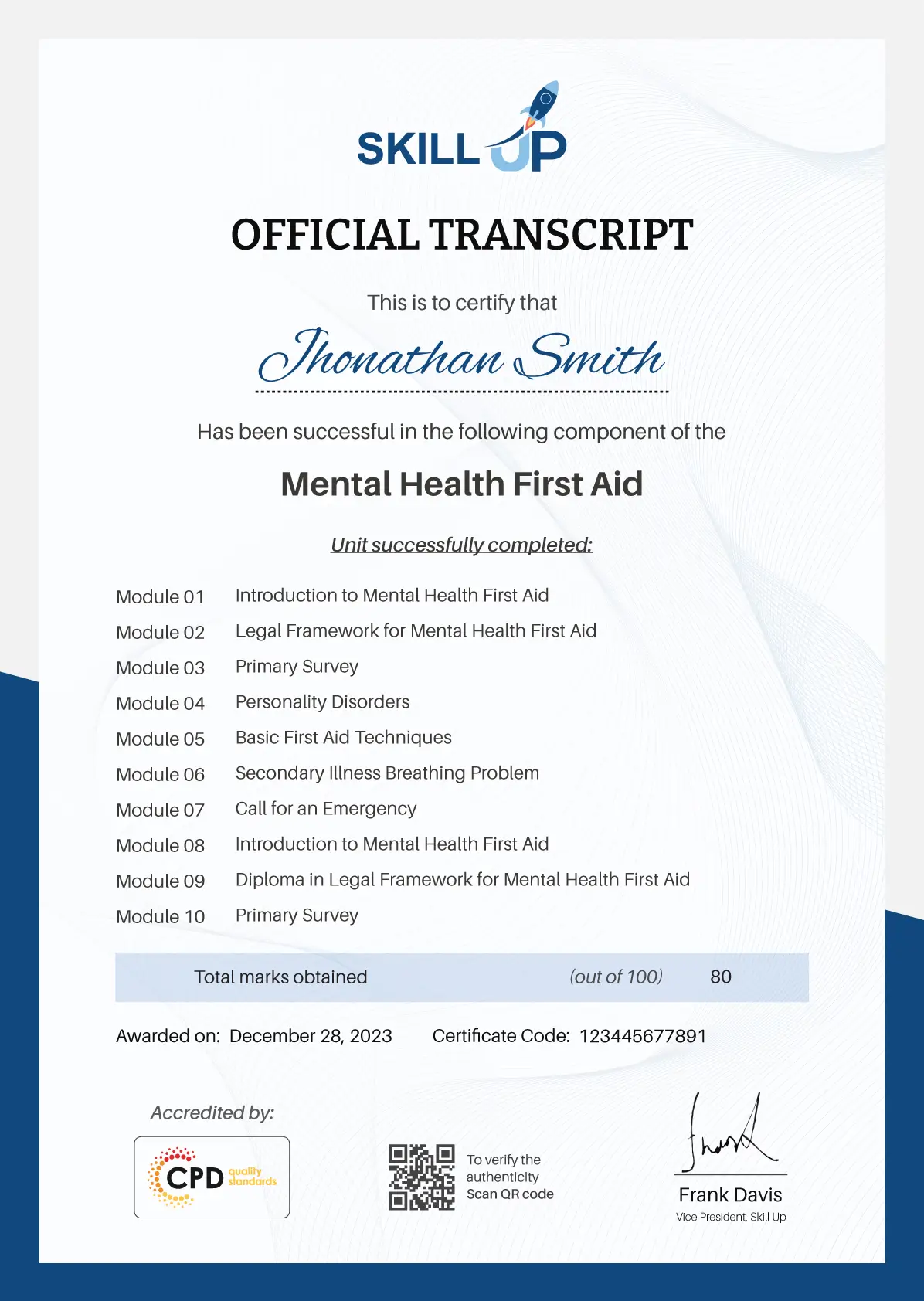
Earn Your Accredited Certificate with Transcript
Save 20% with the coupon code SKILL20
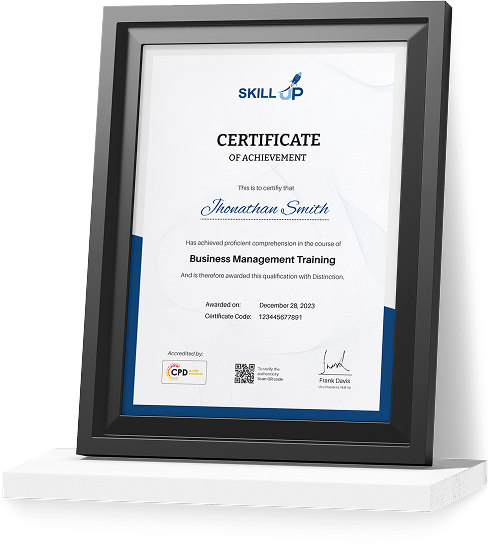
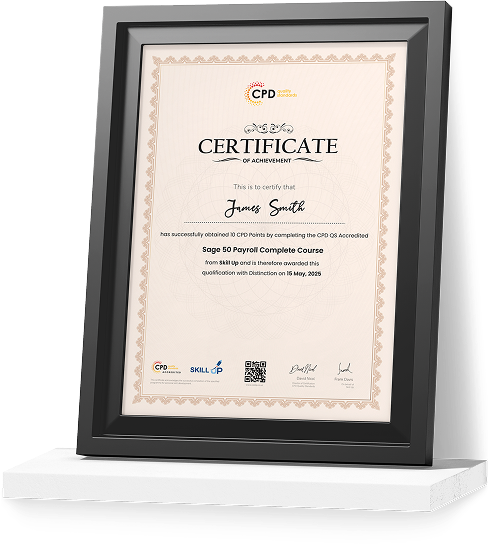
Show Your Certified Identity with a CPD-QS Certificate
Perfect for employers, clients, or academic verification.
Frequently Asked Questions
The course is fully online and self-paced, allowing learners to study according to their own schedules.
 No prior experience is required. The course is suitable for beginners interested in intelligence analysis and security studies.
Yes, learners receive an accredited certificate upon successful completion of the course.
Yes, the curriculum includes legal issues, ethical responsibilities, and professional standards related to intelligence work.
Yes, the course introduces knowledge relevant to intelligence, security, risk analysis, and research-related roles.
Certification in Intelligence Analyst Reviews
Excellent
98%
Would Recommend13
Certified Learners100%
Authentic Reviews
A well-organised and highly valuable course with clear, easy-to-understand guidance throughout. I’ve gained knowledge that’s directly relevant to my day-to-day responsibilities. It’s given me greater confidence in applying these skills professionally.
Engaging content delivered in a straightforward and structured format. The examples were realistic and helped reinforce key concepts effectively. I would certainly recommend it to colleagues looking to upskill
Comprehensive, insightful and professionally presented from start to finish. The course materials were clear and well supported. A worthwhile investment for anyone serious about career development
Curriculum
-
Defining Intelligence Analysis
00:47:00
-
Development of Intelligence Analysis
00:50:00
-
The Intelligence Cycle
00:36:00
-
Critical Thinking and Structurin
00:39:00
-
Intelligence Analysis and Best Practice
01:00:00
-
Intelligence and National Security
00:46:00
-
Legal Issues and Ethics
00:42:00
-
Your Role, Responsibilities, and Functions as an Analyst
00:45:00
-
Mock Exam – Certification in Intelligence Analyst
00:20:00
-
Final Exam – Certification in Intelligence Analyst
00:20:00
-
Order Your Certificate

Offer Ends in
-
Duration:6 hours, 45 minutes
-
Access:1 Year
-
Units:11

8 Reviews

TAKE ALL COURSES FOR £99