
Overview
How do machines recognise faces, track movement, or detect objects in real time? More importantly, how can you start building those systems yourself?
For software developers, AI learners, robotics enthusiasts, and data-focused professionals, computer vision is now a valuable technical skill. Today, organisations use visual data in surveillance, automation, analytics, robotics, and smart applications. Therefore, professionals who can combine coding skills with image understanding can access stronger AI and software opportunities.
This Computer Vision with OpenCV Course Online UK supports learners who want structured OpenCV training with certification. You will explore C++, image processing, object detection, motion analysis, and CUDA-based performance concepts. As a result, you can strengthen your portfolio and move towards roles that involve real-time visual systems.
Course Description
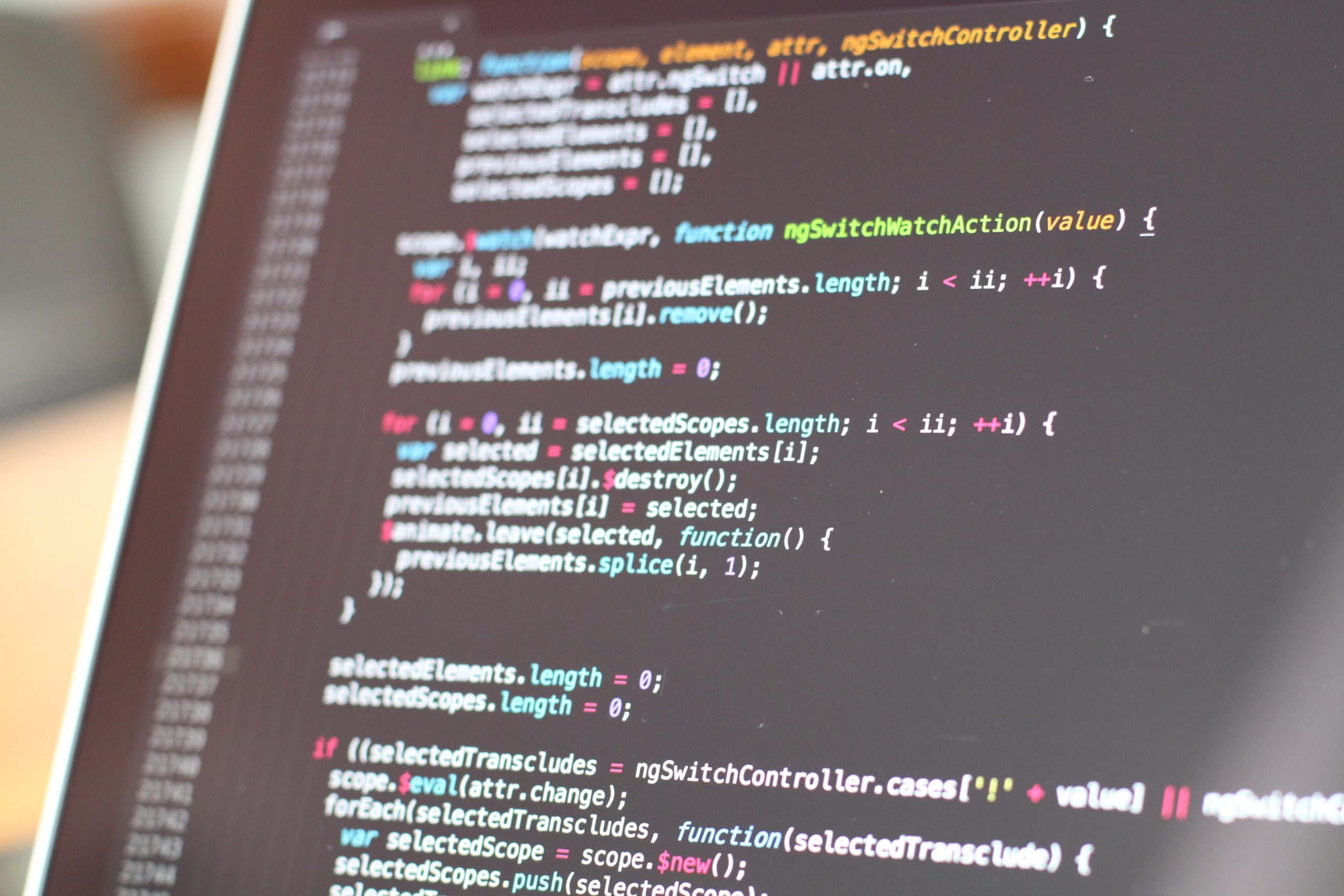
This computer vision with C++ and OpenCV course gives you a clear pathway into visual computing. First, you explore environment setup, driver configuration, CUDA toolkit integration, and OpenCV compilation with GPU support. Together, these areas create the foundation for performance-focused computer vision systems.
Next, you move into core image processing with C++ and OpenCV. You work with live camera input, image datasets, edge detection, colour transformations, and interactive parameter control. As a result, you see how raw visual data becomes ready for analysis.
You then explore background segmentation, object tracking, and object detection through OpenCV’s machine learning capabilities. In addition, the course covers optical flow for motion analysis and compares CPU and GPU performance. Because you study online, this OpenCV course online UK supports flexible learning for AI, robotics, and software development goals.
Key Benefits of This Course
When selecting a computer vision course with certificate, focus on how well it builds real technical capability and career value.
- Develop a solid understanding of computer vision using C++ and OpenCV.
- Strengthen your CV with a recognised computer vision course with certificate.
- Gain confidence in real-time image and video data workflows.
- Understand how object detection, segmentation, and tracking systems work.
- Explore how GPU acceleration improves performance through OpenCV CUDA concepts.
- Build awareness of motion analysis using optical flow techniques.
- Study through a flexible OpenCV training course in the UK.
This course helps you transition from theoretical understanding to recognising how computer vision systems are structured and applied.
Learning Outcome
By the end of this computer vision and image processing course, you will be able to:
- Understand how OpenCV and C++ are used within computer vision systems.
- Analyse how image and video data are processed in real-time environments.
- Develop workflows for filtering, transformation, and feature extraction.
- Apply object detection, tracking, and segmentation techniques using OpenCV.
- Evaluate performance improvements through CUDA-based acceleration.
- Demonstrate knowledge of optical flow for motion analysis.
- Implement computer vision concepts in AI, robotics, and software contexts.
Who Is This Course For?
- Developers aiming to specialise in Computer Vision with the OpenCV Course Online UK pathways.
- AI learners exploring computer vision for AI and robotics applications.
- C++ programmers expanding into image processing and visual systems.
- Robotics enthusiasts working on perception and automation.
- Tech learners building a computer vision project course portfolio.
- Professionals transitioning into AI, machine learning, or software engineering.
- Learners seeking an OpenCV and C++ course online with certification for career growth.
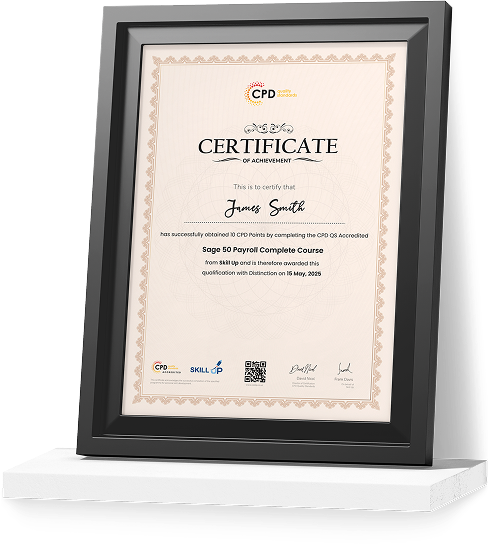
Certificate of Achievement
Earn Your Accredited Certificate with Transcript
Save 20% with the coupon code SKILL20
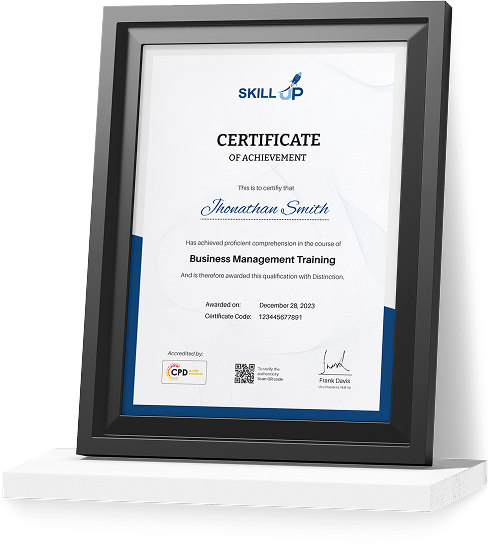
Show Your Certified Identity with a CPD-QS Certificate
Perfect for employers, clients, or academic verification.
Career Path
- Computer Vision Engineer: Create systems that interpret images and video for automation, robotics, and intelligent applications. | Salaries typically range from £30,000 to £60,000+.
- AI Engineer: Design AI solutions that use visual data for recognition, monitoring, and decision support. | Salaries often range from £40,000 to £70,000.
- Software Developer (Vision-Based Systems): Build applications with image processing, object detection, tracking, and real-time visual features. | Salaries range from £30,000 to £75,000.
- Robotics Engineer: Apply computer vision to help machines detect objects, navigate spaces, and respond accurately. | Salaries typically range from £32,000 to £65,000.
- Machine Learning Engineer: Train and optimise models for visual recognition, classification, motion analysis, and detection tasks. | Salaries commonly range from £40,000 to £75,000.
- Image Processing Engineer: Improve, analyse, and transform images for healthcare, security, automation, and research. | Salaries typically range from £28,000 to £55,000.
- Research Assistant (AI/Computer Vision): Support research in visual computing, image analysis, and AI-driven applications. | Entry-level salaries typically range from £25,000 to £35,000.
Frequently Asked Questions
Typically, a Computer Vision with OpenCV Course Online UK covers environment setup, OpenCV installation, image processing, object detection, tracking, feature extraction, and GPU acceleration using CUDA. In addition, this course includes real-time computer vision workflows using C++.
In this computer vision projects course, learners work on tasks such as object detection, motion tracking, background segmentation, and image filtering. As a result, these projects can help build a stronger portfolio for AI, robotics, and software development roles.
Yes, this OpenCV CUDA course includes GPU acceleration concepts. It also shows how CUDA can improve performance for real-time image processing, object detection, and motion analysis.
Yes, basic C++ knowledge is recommended. However, learners do not need advanced programming experience. This OpenCV and C++ course online focuses on applying C++ to computer vision tasks.
Yes, this computer vision course with certificate provides certification after completion. After completion, you can use it to support your CV, technical portfolio, and applications for AI, software, robotics, and data-driven roles.
This course can support pathways such as Computer Vision Engineer, AI Engineer, Robotics Engineer, Machine Learning Engineer, Software Developer, and Image Processing Engineer. Therefore, it is suitable for learners building skills for AI and visual computing roles.
Computer Vision with C++ & OpenCV Reviews
Excellent
98%
Would Recommend9
Certified Learners100%
Authentic Reviews
A well-organised and highly valuable course with clear, easy-to-understand guidance throughout. I’ve gained knowledge that’s directly relevant to my day-to-day responsibilities. It’s given me greater confidence in applying these skills professionally.
Engaging content delivered in a straightforward and structured format. The examples were realistic and helped reinforce key concepts effectively. I would certainly recommend it to colleagues looking to upskill
Comprehensive, insightful and professionally presented from start to finish. The course materials were clear and well supported. A worthwhile investment for anyone serious about career development
Curriculum
-
Module 01: Driver installation
00:06:00
-
Module 02: Cuda toolkit installation
00:01:00
-
Module 03: Compile OpenCV from source with CUDA support part-1
00:06:00
-
Module 04: Compile OpenCV from source with CUDA support part-2
00:05:00
-
Module 05: Python environment for flownet2-pytorch
00:09:00
-
Module 01: Read camera & files in a folder (C++)
00:11:00
-
Module 02: Edge detection (C++)
00:08:00
-
Module 03: Color transformations (C++)
00:07:00
-
Module 04: Using a trackbar (C++)
00:06:00
-
Module 05: Image filtering with CUDA (Introduction to using OpenCV GPU methods on C++)
00:13:00
-
Module 01: Background segmentation with MOG (C++)
00:04:00
-
Module 02: MOG and MOG2 cuda implementation (C++ – CUDA)
00:03:00
-
Module 03: Special app: Track class
00:06:00
-
Module 04: Special app: Track bgseg Foreground objects
00:08:00
-
Module 01: A simple application to prepare dataset for object detection (C++)
00:08:00
-
Module 02: Train model with openCV ML module (C++ and CUDA)
00:13:00
-
Module 03: Object detection with openCV ML module (C++ CUDA)
00:06:00
-
Module 01: Optical flow with Farneback (C++)
00:08:00
-
Module 02: Optical flow with Farneback (C++ CUDA)
00:06:00
-
Module 03: Optical flow with Nvidia optical flow SDK (C++ CUDA)
00:05:00
-
Module 04: Optical flow with Nvidia Flownet2 (Python)
00:05:00
-
Module 05: Performance Comparison
00:07:00
Offer Ends in
-
Duration:2 hours, 31 minutes
-
Access:1 Year
-
Units:22

7 Reviews

TAKE ALL COURSES FOR £99