.png) 9 Reviews
9 Reviews 3 Students

 Overview: Data Science and Machine Learning using Python – A Bootcamp
 Overview: Data Science and Machine Learning using Python – A Bootcamp
Data is transforming every industry, from finance and healthcare to retail, marketing, and artificial intelligence. The Data Science and Machine Learning using Python – A Bootcamp is designed for learners who want to build strong analytical and machine learning knowledge using Python programming. Organisations across the UK increasingly rely on data-driven systems to improve business decisions, automate processes, and predict future outcomes.
Key Points of This Course at a Glance:
 Complete Python data science and machine learning training Learn NumPy, Pandas, Matplotlib, Seaborn, and Scikit-Learn Study machine learning algorithms and predictive modelling Build data visualisation and analytical reporting knowledge Explore NLP and recommender systems
This data science course introduces learners to Python programming, data analysis, machine learning algorithms, data visualisation, and predictive modelling using industry-recognised Python libraries. The curriculum explains how raw datasets are transformed into meaningful insights through statistical analysis, visualisation tools, and machine learning techniques.
Learners will explore NumPy, Pandas, Matplotlib, Seaborn, Plotly, Scikit-Learn, NLP, recommender systems, clustering algorithms, regression models, and dimensionality reduction techniques. The course also includes multiple projects that simulate real data analysis and machine learning workflows.
Whether you are entering the data industry or strengthening technical knowledge, this training supports career progression in data science, analytics, machine learning, and artificial intelligence.
What Is Data Science Course?
The data science course focuses on analysing, processing, and interpreting large datasets using Python programming and machine learning frameworks. Data science combines programming, mathematics, statistics, and business intelligence to support decision-making and predictive analysis.
This course introduces learners to Python essentials before moving into data analysis libraries such as NumPy and Pandas. Learners study data manipulation, missing data handling, grouping operations, merging datasets, and analytical workflows.
The training then expands into data visualisation using Matplotlib, Seaborn, Plotly, and Pandas visualisation tools. Learners explore how charts, plots, and dashboards help organisations identify trends and patterns within datasets.
Advanced modules introduce machine learning models including:
Linear Regression Logistic Regression K Nearest Neighbors Decision Trees Random Forests Support Vector Machines K Means Clustering Principal Component Analysis (PCA)
The course also introduces Natural Language Processing (NLP) and recommender systems using Python.
By completing this training, learners develop strong knowledge of data analysis workflows, machine learning techniques, and Python-based data science ecosystems.
Course Description
Learning Outcome
 Learning Outcome
 Course media
Who Is This Course For?
 Who Is This Course For?
 Why Enrol in This Data Science Course?
Data Science Course Career Path
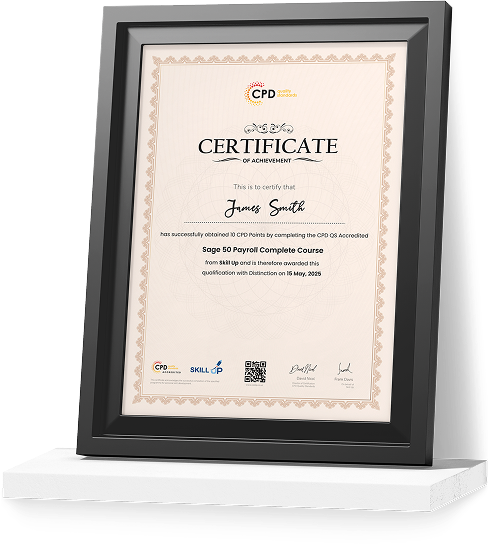
Certificate of Achievement
Earn Your Accredited Certificate with Transcript
Save 20% with the coupon code SKILL20
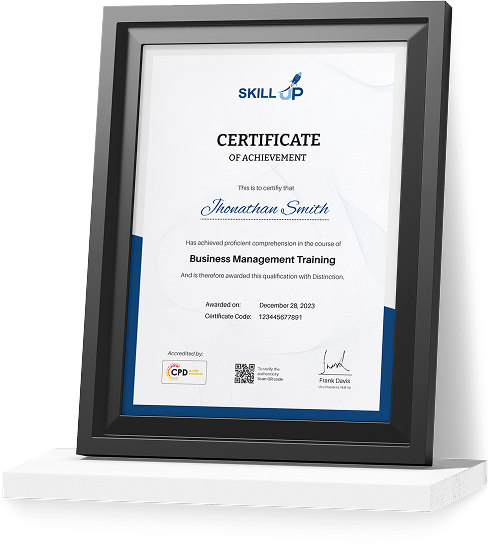
Show Your Certified Identity with a CPD-QS Certificate
Perfect for employers, clients, or academic verification.
Frequently Asked Questions
Data Science and Machine Learning using Python – A Bootcamp Reviews

A well-organised and highly valuable course with clear, easy-to-understand guidance throughout. I’ve gained knowledge that’s directly relevant to my day-to-day responsibilities. It’s given me greater confidence in applying these skills professionally.

Engaging content delivered in a straightforward and structured format. The examples were realistic and helped reinforce key concepts effectively. I would certainly recommend it to colleagues looking to upskill

Comprehensive, insightful and professionally presented from start to finish. The course materials were clear and well supported. A worthwhile investment for anyone serious about career development
Curriculum
-
Welcome & Course Overview
00:07:00
-
Set-up the Environment for the Course (lecture 1)
00:09:00
-
Set-up the Environment for the Course (lecture 2)
00:25:00
-
Two other options to setup environment
00:04:00

 00:07:00
 -
Python data types Part 1
00:21:00
-
Python Data Types Part 2
00:15:00
-
Loops, List Comprehension, Functions, Lambda Expression, Map and Filter (Part 1)
00:16:00
-
Loops, List Comprehension, Functions, Lambda Expression, Map and Filter (Part 2)
00:20:00
-
Python Essentials Exercises Overview
00:02:00
-
Python Essentials Exercises Solutions
00:22:00
-
What is Numpy? A brief introduction and installation instructions.
00:03:00
-
NumPy Essentials – NumPy arrays, built-in methods, array methods and attributes.
00:28:00
-
NumPy Essentials – Indexing, slicing, broadcasting & boolean masking
00:26:00
-
NumPy Essentials – Arithmetic Operations & Universal Functions
00:07:00
-
NumPy Essentials Exercises Overview
00:02:00
-
NumPy Essentials Exercises Solutions
00:25:00
-
What is pandas? A brief introduction and installation instructions.
00:02:00
-
Pandas Introduction
00:02:00
-
Pandas Essentials – Pandas Data Structures – Series
00:20:00
-
Pandas Essentials – Pandas Data Structures – DataFrame
00:30:00
-
Pandas Essentials – Handling Missing Data
00:12:00
-
Pandas Essentials – Data Wrangling – Combining, merging, joining
00:20:00
-
Pandas Essentials – Groupby
00:10:00
-
Pandas Essentials – Useful Methods and Operations
00:26:00
-
Pandas Essentials – Project 1 (Overview) Customer Purchases Data
00:08:00
-
Pandas Essentials – Project 1 (Solutions) Customer Purchases Data
00:31:00
-
Pandas Essentials – Project 2 (Overview) Chicago Payroll Data
00:04:00
-
Pandas Essentials – Project 2 (Solutions Part 1) Chicago Payroll Data
00:18:00
-
Matplotlib Essentials (Part 1) – Basic Plotting & Object Oriented Approach
00:13:00
-
Matplotlib Essentials (Part 2) – Basic Plotting & Object Oriented Approach
00:22:00
-
Matplotlib Essentials (Part 3) – Basic Plotting & Object Oriented Approach
00:22:00
-
Matplotlib Essentials – Exercises Overview
00:06:00
-
Matplotlib Essentials – Exercises Solutions
00:21:00
-
Seaborn – Introduction & Installation
00:04:00
-
Seaborn – Distribution Plots
00:25:00
-
Seaborn – Categorical Plots (Part 1)
00:21:00
-
Seaborn – Categorical Plots (Part 2)
00:16:00
-
Seborn-Axis Grids
00:25:00
-
Seaborn – Matrix Plots
00:13:00
-
Seaborn – Regression Plots
00:11:00
-
Seaborn – Controlling Figure Aesthetics
00:10:00
-
Seaborn – Exercises Overview
00:04:00
-
Seaborn – Exercise Solutions
00:19:00
-
Pandas Built-in Data Visualization
00:34:00
-
Pandas Data Visualization Exercises Overview
00:03:00
-
Panda Data Visualization Exercises Solutions
00:13:00
-
Plotly & Cufflinks – Interactive & Geographical Plotting (Part 1)
00:19:00
-
Plotly & Cufflinks – Interactive & Geographical Plotting (Part 2)
00:14:00
-
Plotly & Cufflinks – Interactive & Geographical Plotting Exercises (Overview)
00:11:00
-
Plotly & Cufflinks – Interactive & Geographical Plotting Exercises (Solutions)
00:37:00
-
Project 1 – Oil vs Banks Stock Price during recession (Overview)
00:15:00
-
Project 1 – Oil vs Banks Stock Price during recession (Solutions Part 1)
00:18:00
-
Project 1 – Oil vs Banks Stock Price during recession (Solutions Part 2)
00:18:00
-
Project 1 – Oil vs Banks Stock Price during recession (Solutions Part 3)
00:17:00
-
Project 2 (Optional) – Emergency Calls from Montgomery County, PA (Overview)
00:03:00
-
Introduction to ML – What, Why and Types…..
00:15:00
-
Theory Lecture on Linear Regression Model, No Free Lunch, Bias Variance Tradeoff
00:15:00
-
scikit-learn – Linear Regression Model – Hands-on (Part 1)
00:17:00
-
scikit-learn – Linear Regression Model Hands-on (Part 2)
00:19:00
-
Good to know! How to save and load your trained Machine Learning Model!
00:01:00
-
scikit-learn – Linear Regression Model (Insurance Data Project Overview)
00:08:00
-
scikit-learn – Linear Regression Model (Insurance Data Project Solutions)
00:30:00
-
Theory: Logistic Regression, conf. mat., TP, TN, Accuracy, Specificity…etc.
00:10:00
-
scikit-learn – Logistic Regression Model – Hands-on (Part 1)
00:17:00
-
scikit-learn – Logistic Regression Model – Hands-on (Part 2)
00:20:00
-
scikit-learn – Logistic Regression Model – Hands-on (Part 3)
00:11:00
-
scikit-learn – Logistic Regression Model – Hands-on (Project Overview)
00:05:00
-
scikit-learn – Logistic Regression Model – Hands-on (Project Solutions)
00:15:00
-
Theory: K Nearest Neighbors, Curse of dimensionality ….
00:08:00
-
scikit-learn – K Nearest Neighbors – Hands-on
00:25:00
-
scikt-learn – K Nearest Neighbors (Project Overview)
00:04:00
-
scikit-learn – K Nearest Neighbors (Project Solutions)
00:14:00
-
Theory: D-Tree & Random Forests, splitting, Entropy, IG, Bootstrap, Bagging….
00:18:00
-
scikit-learn – Decision Tree and Random Forests – Hands-on (Part 1)
00:19:00
-
scikit-learn – Decision Tree and Random Forests (Project Overview)
00:05:00
-
scikit-learn – Decision Tree and Random Forests (Project Solutions)
00:15:00
-
Support Vector Machines (SVMs) – (Theory Lecture)
00:07:00
-
scikit-learn – Support Vector Machines – Hands-on (SVMs)
00:30:00
-
scikit-learn – Support Vector Machines (Project 1 Overview)
00:07:00
-
scikit-learn – Support Vector Machines (Project 1 Solutions)
00:20:00
-
scikit-learn – Support Vector Machines (Optional Project 2 – Overview)
00:02:00
-
Theory: K Means Clustering, Elbow method …..
00:11:00
-
scikit-learn – K Means Clustering – Hands-on
00:23:00
-
scikit-learn – K Means Clustering (Project Overview)
00:07:00
-
scikit-learn – K Means Clustering (Project Solutions)
00:22:00
-
Theory: Principal Component Analysis (PCA)
00:09:00
-
scikit-learn – Principal Component Analysis (PCA) – Hands-on
00:22:00
-
scikit-learn – Principal Component Analysis (PCA) – (Project Overview)
00:02:00
-
scikit-learn – Principal Component Analysis (PCA) – (Project Solutions)
00:17:00
-
Theory: Recommender Systems their Types and Importance
00:06:00
-
Python for Recommender Systems – Hands-on (Part 1)
00:18:00
-
Python for Recommender Systems – – Hands-on (Part 2)
00:19:00
-
Natural Language Processing (NLP) – (Theory Lecture)
00:13:00
-
NLTK – NLP-Challenges, Data Sources, Data Processing …..
00:13:00
-
NLTK – Feature Engineering and Text Preprocessing in Natural Language Processing
00:19:00
-
NLTK – NLP – Tokenization, Text Normalization, Vectorization, BoW….
00:19:00
-
NLTK – BoW, TF-IDF, Machine Learning, Training & Evaluation, Naive Bayes …
00:13:00
-
NLTK – NLP – Pipeline feature to assemble several steps for cross-validation…
00:09:00
-
Resources – Data Science and Machine Learning using Python – A Bootcamp
-
Order Your Certificate
Offer Ends in

 TAKE ALL COURSES FOR £99


-
Duration:1 day
-
Access:1 Year
-
Units:100