Overview
This programme introduces structured analytics, decision frameworks, dashboard logic, KPI design, warehouse architecture, and predictive discovery across sectors. Therefore, learners explore how information supports strategy, improves reporting clarity, and drives evidence-based outcomes. Moreover, the syllabus connects visual reporting, database models, and Data Mining training workflows to organisational needs, ensuring analytical thinking aligns with business goals while supporting informed choices across multiple operational stages.
Course Description
Numbers tell stories, yet only insight shapes direction. Therefore, this Business Intelligence Course transforms raw figures into decision-ready intelligence through dashboards, scorecards, and structured KPIs. Moreover, visual storytelling, chart selection, and balanced scorecard logic are explored, ensuring clarity replaces confusion while reporting supports leadership priorities.
However, insight depends on foundations. Consequently, data warehouse concepts, processing stages, architectural tiers, and core components are addressed alongside database modelling approaches. Furthermore, learners see how structured storage enables accurate analysis, consistency, and scalability across departments while supporting enterprise-wide reporting strategies.
Finally, prediction sharpens advantage. Thus, Data Mining training introduces classification, clustering, and association analysis, followed by sector-focused applications across banking, CRM, and other industries. Moreover, this Business Intelligence Course links analytical methods with real organisational scenarios, ensuring information becomes a strategic asset rather than static records.
Note: Skill-up is a Janets-approved resale partner for Quality Licence Scheme Endorsed courses.
Key Benefits
- Clear decision frameworks supported by analytical systems
- Effective dashboard communication using structured visual logic
- Reliable reporting through warehouse architecture principles
- Predictive insight creation using Data Mining training concepts
- Cross-industry analytical relevance for organisational strategy
Certificate of Achievement
Free QLS Certificate Included
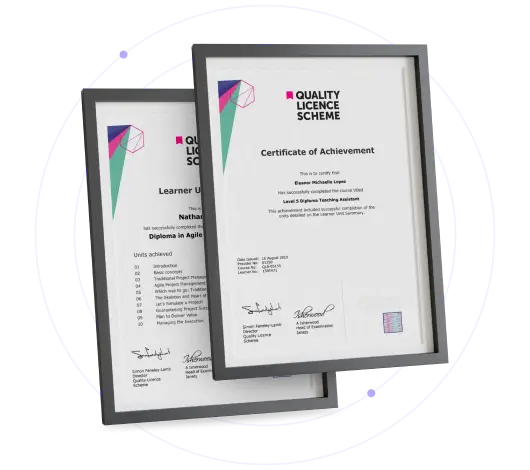
Quality Licence Scheme Endorsed Certificate
Upon completing the final assessment, you can apply for the Quality Licence Scheme Endorsed Certificate of Achievement. Endorsed certificates can be ordered and delivered to your home by post.
An extra £10 postage charge will be required for students leaving overseas.
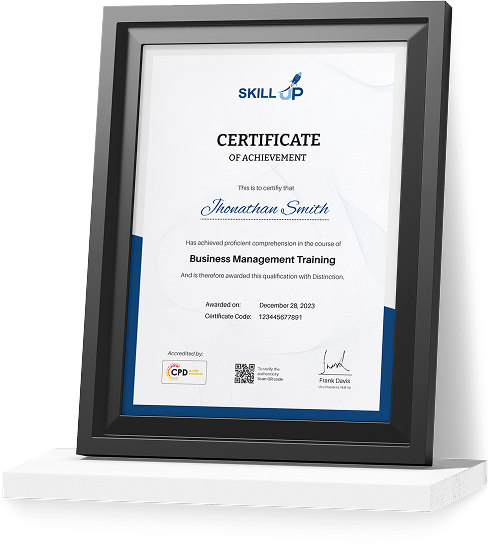
Skill Up Recognised Certificate
Upon successfully completing this course, you can request a Skill Up Recognised Certificate. This certificate holds significant value, and its validation will endure throughout your lifetime.
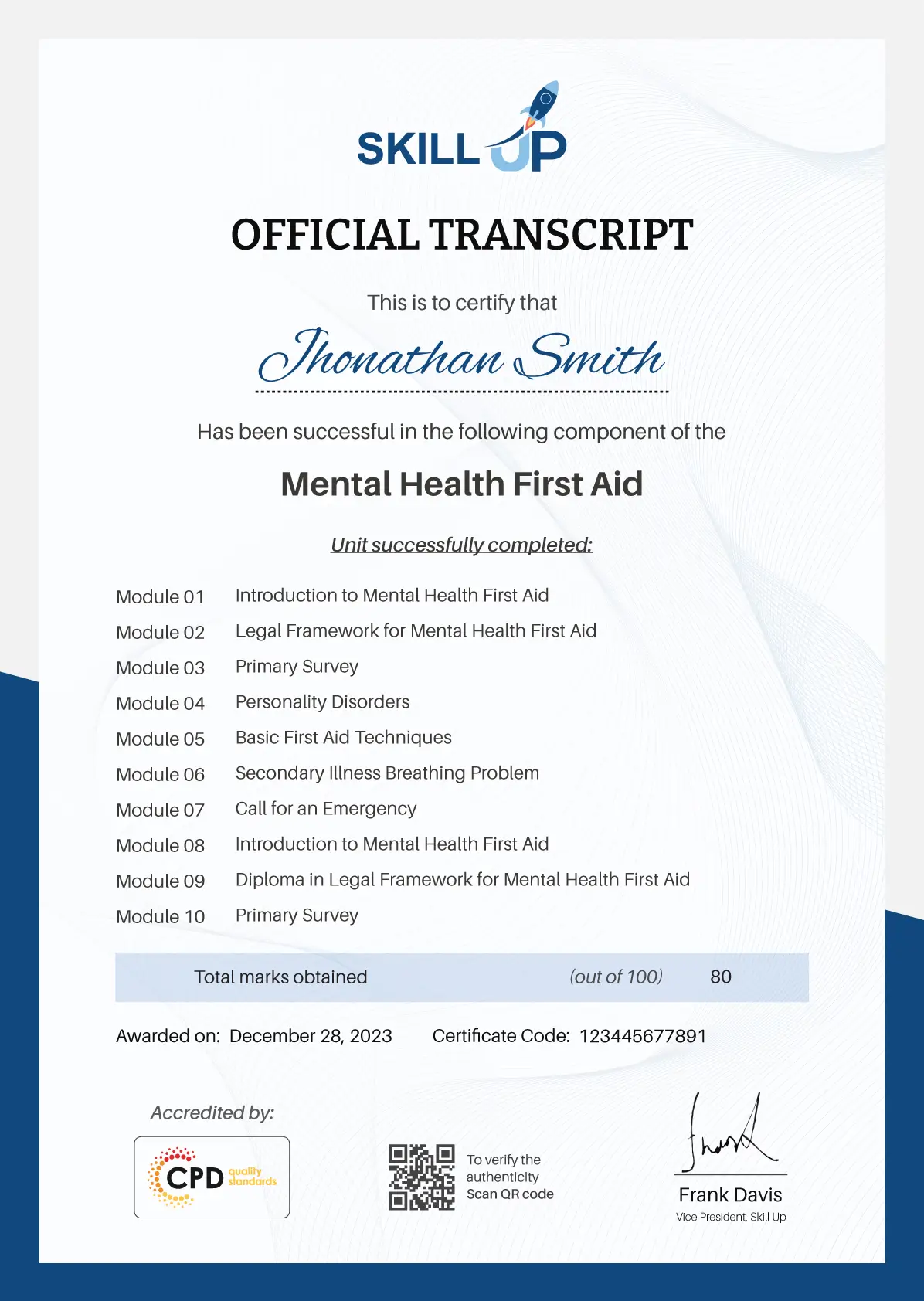
1. PDF Certificate + PDF Transcript: FREE With This Course
2. Hard Copy Certificate + Hard Copy Transcript: £19.99
3. Delivery Charge: £10.00 (Applicable for International Students)
Note: There are no discount coupons available for this course at the moment.
Learning Outcome
- Apply decision-support models for business scenarios
- Design KPI structures aligned with strategic objectives
- Evaluate dashboard quality using visual performance criteria
- Interpret warehouse processing stages and architectures
- Use Data Mining training methods for predictive evaluation
Who Is This Course For?
- Aspiring data-focused business analysts
- Managers seeking evidence-led planning
- Graduates entering analytics-driven roles
- Professionals transitioning into BI environments
- Entrepreneurs needing insight-led growth strategies
Career Path
- Business Intelligence Analyst: £45,000 – £60,000
- Data Analyst: £40,000 – £55,000
- Reporting Analyst: £38,000 – £52,000
- Data Warehouse Analyst: £50,000 – £65,000
- CRM Analytics Specialist: £48,000 – £62,000
Frequently Asked Questions
It covers dashboards, KPIs, data warehouses, decision systems, and Data Mining training techniques used across industries.
Yes, Data Mining training topics include classification, clustering, association rules, and sector-based applications.
Graduates, analysts, managers, and career switchers seeking analytical decision-focused roles benefit most.
Therefore, analytical responsibility expansion often leads to higher salary brackets and leadership opportunities.
Moreover, it supports prediction, segmentation, and relationship analysis for improved strategic planning.
Curriculum
-
Module 01: What is Business Intelligence?
00:05:00
-
Module 02: Starting Case in understanding BI needs in diff phase of business
00:07:00
-
Module 03: Decision Making Process and Need of IT systems
00:20:00
-
Module 04: Problem Structure and Decision Support System
00:11:00
-
Module 05: Introduction to BI Applications
00:18:00
-
Module 06: Dashboard presentation systems
00:07:00
-
Module 07: Different Types of Charts used in 131 Dashboards
00:30:00
-
Module 08: Good Dashboard and BSC
00:13:00
-
Module 09: Examples of Bad Dashboards 1
00:07:00
-
Module 10: Examples of Bad Dashboards 2
00:01:00
-
Module 11: Process of KPI Development
00:26:00
-
Module 12: Overview of Data warehouse
00:08:00
-
Module 13: More explaining of data warehouse and steps in processing
00:09:00
-
Module 14: Data Warehouse Architecture –Tiers
00:18:00
-
Module 15: Data Warehouse – components
00:15:00
-
Module 16: Approach to develop data structure and Models of database
00:16:00
-
Module 17: Basics of Data Mining – Meaning
00:35:00
-
Module 18: Basics of Data Mining – Stages of DM
00:25:00
-
Module 19: Data Mining Technique – Classification
00:07:00
-
Module 20: Data mining – Clustering
00:02:00
-
Module 21: Data Mining – Association Rules
00:05:00
-
Module 22: Data Mining Applications – Banking
00:03:00
-
Module 23: Data Mining Applications – CRM
00:04:00
-
Module 24: Data Mining Applications – other industries
00:04:00
-
Submit Your Assignment & Order QLS Certificate
Offer Ends in
-
Duration:4 hours, 56 minutes
-
Access:1 Year
-
Units:25

5 Reviews
All
Courses for £49