
Overview: NodeJS for MEAN & MERN Stack Course
Want to build modern web applications and develop skills that employers value? As demand for full-stack developers grows, knowledge of NodeJS, React, MongoDB, and API development can help you stand out in today’s technology sector.
This NodeJS for MEAN and MERN Stack Online Course is designed for aspiring developers, software professionals, and career changers. Whether you are looking for a MERN stack course in the UK, a NodeJS course online, or a full-stack JavaScript course, this training provides a structured route into modern web development. During the course, you will learn how to:
✓ Build NodeJS applications and server-side services.
✓ Create REST API development with NodeJS and Express.
✓ Work with MongoDB and Mongoose databases.
✓ Develop React applications and deploy with Docker and AWS EC2.
As a result, you will gain valuable full-stack web development skills.
Course Description
Modern organisations rely on web applications to manage services, process data, and support users. Therefore, developers with both frontend and backend skills remain highly valued. This MERN stack online course introduces the technologies used to build scalable applications while helping learners develop a strong foundation in full-stack development.
The training begins with NodeJS fundamentals, including NPM, application setup, file handling, HTTP services, and modern JavaScript features. Next, you will learn how server-side applications work before progressing to REST API development with NodeJS and Express. Along the way, you will create routes, manage requests, build endpoints, and structure applications using industry-standard practices.
As your knowledge grows, you will explore MongoDB for data storage and management. In addition, the MongoDB and Mongoose course sections cover schemas, models, CRUD operations, controllers, and database integration. Furthermore, you will use Axios to consume APIs and learn integration testing with Mocha and Chai to improve application reliability.
The course also covers code refactoring, modular development, Babel, and ES6 syntax. To reinforce your understanding, you will build a patient clinical data management application that combines backend services, routing, testing, and database operations.
Finally, you will explore Docker containerisation, AWS EC2 deployment, React frontend development, and PostgreSQL integration. Consequently, this training supports learners seeking a NodeJS and Express course, React and NodeJS course, MEAN stack course online, MERN stack developer course, or full-stack web development course.
Learning Outcome
- Understand NodeJS fundamentals and server-side JavaScript development.
- Develop REST API development with NodeJS using Express.
- Apply MongoDB and Mongoose techniques for database management.
- Build React applications and connect them with backend services.
- Implement integration testing using Mocha and Chai.
- Demonstrate Docker containerisation and AWS EC2 deployment workflows.
- Evaluate technologies used in MEAN, MERN, and full-stack JavaScript environments.
Who Is This Course For?
- Beginners looking to enter full-stack web development.
- Aspiring developers searching for a NodeJS course online.
- Learners interested in a MERN stack course in the UK.
- Software professionals seeking stronger backend development skills.
- Individuals wanting to learn React, NodeJS, Express, and MongoDB together.
- Career changers preparing for MERN stack developer roles.
- Developers aiming to expand their cloud deployment and API development knowledge.
Why Enrol in This NodeJS for MEAN & MERN Stack Course?
Modern software companies actively seek developers who can manage both frontend and backend technologies. Full-stack JavaScript frameworks reduce development complexity while improving efficiency across teams.
This training provides structured learning covering backend development, database management, testing, deployment, and frontend integration. Instead of isolated coding topics, the course explains how web applications are built from development to deployment.
The mern stack full course supports learners interested in software development, web engineering, API development, and cloud deployment careers.
Whether you want to build web applications professionally, strengthen your programming portfolio, or expand into backend development, this course supports your learning journey.
Certificate of Achievement
Upon successfully completing this NodeJS for MEAN & MERN Stack Online Course, learners will receive an Accredited Certificate confirming their knowledge of full-stack JavaScript development, NodeJS, databases, APIs, testing, and deployment.
We provide two recognised certificate options:
CPD-QS Certificate
Learners can obtain a certificate accredited by CPD Quality Standards (CPD-QS). This accreditation confirms that the course meets recognised Continuing Professional Development standards.
SKILL UP Brand Recognised Certificate
Learners will also receive a SKILL UP Certificate of Completion verifying successful course completion.
Both certificates help demonstrate technical training in JavaScript full-stack development.
Earn Your Accredited Certificate with Transcript
Save 20% with the coupon code SKILL20
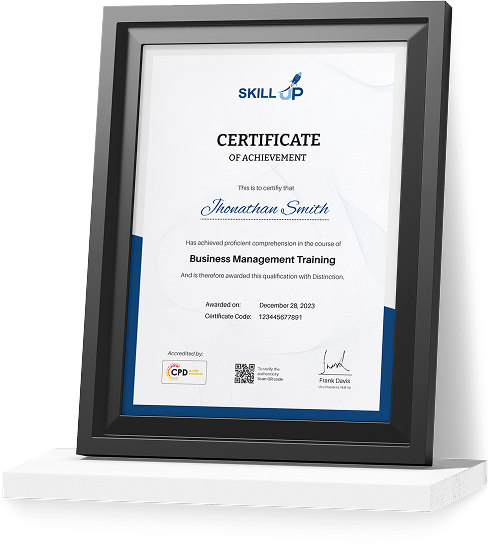
Show Your Certified Identity with a CPD-QS Certificate
Perfect for employers, clients, or academic verification.

Career Path
- NodeJS Developer (£35,000–£60,000 per year) – Build server-side applications, APIs, and scalable backend services using NodeJS, Express, and modern JavaScript technologies. In addition, professionals in this role help improve application performance, security, and system reliability.
- MERN Stack Developer (£38,000–£70,000 per year) – Develop complete web applications using MongoDB, Express, React, and NodeJS. As businesses continue to invest in digital platforms, demand for MERN stack developers remains strong across startups and established organisations.
- Full Stack JavaScript Developer (£40,000–£75,000 per year) – Create end-to-end applications while managing frontend interfaces, backend services, databases, testing, and deployment processes. Consequently, these professionals often play a key role throughout the software development lifecycle.
- Backend Developer (£35,000–£65,000 per year) – Design APIs, manage databases, and build secure application architectures that support business-critical systems. Furthermore, strong backend development skills are highly valued across technology-driven industries.
- Web Application Developer (£32,000–£60,000 per year) – Develop responsive and interactive web applications using modern JavaScript frameworks and development tools. Therefore, this role suits individuals who enjoy creating user-focused digital solutions.
- Cloud Application Developer (£40,000–£80,000 per year) – Deploy and maintain applications using AWS, Docker, cloud infrastructure, and modern development workflows. As cloud adoption continues to grow, employers increasingly seek developers with deployment and containerisation expertise.
- Freelance Full Stack Developer (£35,000–£90,000+ per year) – Deliver customised web solutions for clients while working across frontend, backend, database, and deployment technologies. Moreover, freelancers can expand their opportunities by offering complete full-stack web development services to businesses worldwide.
Frequently Asked Questions
MERN and MEAN are popular full stack JavaScript frameworks used to build modern web applications. MERN uses MongoDB, Express, React, and NodeJS, while MEAN uses Angular instead of React. Both support efficient full stack web development using JavaScript.
NodeJS powers the server-side environment in both stacks. It handles requests, manages APIs, processes data, and connects applications to databases. Therefore, NodeJS is a core technology in modern web development.
You will learn NodeJS, Express, MongoDB, Mongoose, React, REST API development with NodeJS, Docker, AWS EC2, PostgreSQL, testing, and deployment. As a result, the course provides a strong foundation in full stack JavaScript development.
Yes. This MERN stack online course starts with NodeJS fundamentals before progressing to advanced topics. Consequently, it is suitable for beginners, aspiring developers, and professionals seeking a NodeJS course online.
Absolutely. This MERN stack developer course combines backend, frontend, database, and deployment technologies. In addition, it serves as a NodeJS and Express course, React and NodeJS course, and MongoDB and Mongoose course for learners preparing for full stack development roles.
AI can automate some coding tasks. However, businesses still need developers who can design applications, build APIs, solve problems, and manage complex systems. Therefore, MERN stack and full stack web development skills are expected to remain valuable for years to come.
NodeJS for MEAN & MERN Stack Online Course Reviews

Excellent
98%
Would Recommend7
Certified Learners100%
Authentic ReviewsA comprehensive course covering everything from NodeJS basics to Docker and cloud deployment. Highly recommended.
Clear explanations, useful exercises and relevant technologies. Ideal for anyone interested in MERN stack development.
The patient data project helped me understand how different technologies connect in a real application.
Curriculum
-
Module 01: Course and Instructor Introduction
00:03:00
-
Module 02: GITHub URL
00:01:00
-
Module 01: What is Node?
00:05:00
-
Module 02: Why Node?
00:04:00
-
Module 03: NodeJS package manager NPM
00:02:00
-
Module 04: Install Node and Visual Studio Code
00:02:00
-
Module 01: Create a simple node application
00:04:00
-
Module 02: Adding Dependencies
00:04:00
-
Module 03: OS Module
00:05:00
-
Module 04: Write a file sync and async
00:07:00
-
Module 05: Use Arrow Functions
00:02:00
-
Module 06: Append and Rename
00:03:00
-
Module 07: Read and Delete
00:04:00
-
Module 08: HTTP module in action
00:03:00
-
Module 09: Return JSON Response
00:04:00
-
Module 10: Use nodemon
00:02:00
-
Module 11: Scripts block
00:04:00
-
Module 01: Introduction
00:04:00
-
Module 02: What is REST?
00:06:00
-
Module 03: Create an Express App
00:02:00
-
Module 04: Express In Action
00:05:00
-
Module 05: Handle other HTTP Methods
00:06:00
-
Module 06: Use Router
00:05:00
-
Module 07: Create Customer Endpoint
00:05:00
-
Module 01: Introduction
00:02:00
-
Module 02: Mongo Command Line
00:07:00
-
Module 03: Steps
00:03:00
-
Module 04: Use Mongo Client
00:04:00
-
Module 05: Implement Find All
00:04:00
-
Module 06: GET single product
00:04:00
-
Module 07: What is body-parser?
00:03:00
-
Module 08: Configure body-parser
00:02:00
-
Module 09: Create Product
00:04:00
-
Module 10: Update Product
00:06:00
-
Module 11: Delete Product
00:02:00
-
Module 01: Introduction
00:04:00
-
Module 02: Steps
00:01:00
-
Module 03: Create Project
00:02:00
-
Module 04: Create Server JS
00:02:00
-
Module 05: Create and Configure Product Controller
00:02:00
-
Module 06: Create Mongoose Schema and Model
00:02:00
-
Module 07: Create
00:03:00
-
Module 08: Test and Flow
00:03:00
-
Module 09: Read
00:03:00
-
Module 10: Update
00:04:00
-
Module 11: Delete
00:02:00
-
Module 01: Introduction
00:01:00
-
Module 02: Steps
00:01:00
-
Module 03: Create the Project
00:02:00
-
Module 04: Get All
00:02:00
-
Module 05: Create and Update
00:04:00
-
Module 06: Get and Delete
00:03:00
-
Module 01: Mocha and Chai
00:03:00
-
Module 02: Steps
00:02:00
-
Module 03: Install Dependencies
00:01:00
-
Module 04: First Test
00:06:00
-
Module 05: Handle Failures
00:02:00
-
Module 06: Test Create and Get
00:02:00
-
Module 07: Before and after methods
00:03:00
-
Module 01: Introduction
00:03:00
-
Module 02: Steps
00:03:00
-
Module 03: Create DB Connection
00:04:00
-
Module 04: Mongoose Static Methods
00:03:00
-
Module 05: Create the Model and DAO
00:07:00
-
Module 06: Create the Controller
00:08:00
-
Module 07: Map Routes
00:05:00
-
Module 08: Test
00:02:00
-
Module 09: Use src folder
00:02:00
-
Module 10: Use Babel and ES6 Syntax
00:06:00
-
Module 01: Usecase
00:03:00
-
Module 02: Create the Project
00:03:00
-
Module 03: Setup Configuration
00:04:00
-
Module 04: Create Model
00:05:00
-
Module 05: Implement Patient DAO
00:04:00
-
Module 06: Create Patient Controller
00:04:00
-
Module 07: Create and Configure Routes
00:03:00
-
Module 08: Create Clinical DAO and Controller
00:07:00
-
Module 09: Run and Test
00:06:00
-
Module 10: Fix Bug and Test
00:02:00
-
Module 01: Introduction
00:02:00
-
Module 02: Install Docker Desktop
00:02:00
-
Module 03: Steps
00:06:00
-
Module 04: Create Dockerfile
00:07:00
-
Module 05: Create docker-compose.yml
00:05:00
-
Module 06: docker compose up
00:05:00
-
Module 01: Introduction
00:01:00
-
Module 02: AWS EC2 Introduction
00:03:00
-
Module 03: Launch an EC2 Instance
00:05:00
-
Module 04: Windows – Use MobaXterm and connect
00:04:00
-
Module 05: Install Mongo
00:04:00
-
Module 06: Install Node and Git
00:02:00
-
Module 07: Push Project to Github
00:04:00
-
Module 08: Run the APP on EC2 and Test
00:04:00
-
Module 01: Introduction
00:01:00
-
Module 02: Install React CLI
00:01:00
-
Module 03: Create Project
00:06:00
-
Module 04: Create Components
00:03:00
-
Module 05: Configure Routing
00:04:00
-
Module 06: Home Component
00:03:00
-
Module 07: Use State and React Hook
00:04:00
-
Module 08: Render Rows
00:03:00
-
Module 09: Enable CORS on the Node Project
00:04:00
-
Module 10: Test Home Page
00:03:00
-
Module 11: Add Patient – Create Form
00:05:00
-
Module 12: Handle Submit
00:04:00
-
Module 13: Add Clinical’s – Create Form
00:07:00
-
Module 14: Add Clinical’s – Handle Submit
00:04:00
-
Module 01: Introduction
00:02:00
-
Module 02: Steps
00:01:00
-
Module 03: Setup the database
00:03:00
-
Module 04: Setup Project
00:02:00
-
Module 05: Get All
00:05:00
-
Module 06: Get One
00:03:00
-
Module 07: Create
00:03:00
-
Module 08: Return after Insert
00:02:00
-
Module 09: Update
00:03:00
-
Order Your Certificate
Offer Ends in
-
Duration:6 hours, 47 minutes
-
Access:1 Year
-
Units:117

9 Reviews

TAKE ALL COURSES FOR £99