Overview: Oil & Gas: Market Trade Pricing & Economic Framework Course
The Oil & Gas: Market Trade Pricing & Economic Framework course introduces the economic principles and trading mechanisms that shape the global petroleum market. Oil is one of the most influential commodities in the world economy, and its pricing structure is determined by complex interactions between supply, demand, international trade systems, and financial markets. This training explains how crude oil and petroleum products are traded, priced, and managed within the international energy industry.
➽ Learn how crude oil functions as a unique raw material within the global energy market and why benchmark prices are essential for international trade.
➽  Explore the historical evolution of international oil trade, including long-term contracts, spot markets, and financial market development from the 1970s onward.
➽ Study crude oil and petroleum product pricing mechanisms, including how benchmark references and price reporting systems operate.
➽  Examine the structure of spot markets, forward markets, and futures markets used by energy traders and organisations.
➽  Understand financial trading tools such as futures contracts, swaps, and options used to manage price risks.
➽  Review the economic framework that connects physical oil markets with financial energy markets.
This course explains how oil markets operate globally, how pricing structures are created, and how trading systems connect producers, traders, refiners, and financial institutions within the energy sector.
What Is Oil & Gas: Market Trade Pricing & Economic Framework Course?
The Oil & Gas: Market Trade Pricing & Economic Framework course focuses on how the international petroleum market functions from an economic and trading perspective. It explains the mechanisms that determine crude oil prices, the trading systems used in global energy markets, and the financial instruments applied in petroleum trading.
This training begins with the concept of crude oil as a unique commodity. Learners examine the role of marker prices and the strategies used by market participants when trading oil internationally. The course also explores the historical development of global oil trade, including long-term supply contracts, the emergence of spot markets, and the evolution of financial energy markets.
Participants also study how crude oil and petroleum product prices are determined. The programme explains price-setting mechanisms, different types of agreements used in oil transactions, and how international markets maintain transparency in price reporting.
By completing this course, learners develop knowledge of oil trading structures, pricing mechanisms, and the economic framework that connects physical energy markets with financial trading systems.
Description: Global Oil Market Trading and Pricing Training
The Oil & Gas: Market Trade Pricing & Economic Framework course begins with an introduction to crude oil as a unique raw material within the global economy. Learners examine how benchmark prices and marker crude oils are used to establish reference points for international trading. This section explains how producers, refiners, and traders use different pricing strategies when negotiating oil transactions.
The course then explores the historical development of international oil trade. Learners review how long-term contracts dominated the market during the 1970s and how the 1980s introduced the growth of spot markets. The programme also explains the emergence of netback contracts and the development of financial oil markets during the 1990s.
Further modules explain the mechanisms used to determine crude oil and petroleum product prices. Learners analyse the different types of commercial agreements used in oil trading and study how global benchmark markets, such as Brent pricing systems, influence international price structures. The course also explains the process of indexing crude oil prices and the limitations of existing pricing systems.
The training continues with a detailed review of spot markets, forward markets, and financial futures markets. Learners examine how traders manage price risks using futures contracts, swaps, and options. By the end of the course, participants develop a clear perspective on the economic framework that governs global oil trading and pricing systems.
Learning Outcome
- Understand the role of crude oil as a strategic global commodity
- Identify marker prices and benchmark crude oils used in international trading
- Explain the historical development of international oil trade and market structures
- Understand the mechanisms used to determine crude oil and petroleum product prices
- Recognise different types of agreements used in oil market transactions
- Analyse the function of spot markets and global oil trading hubs
- Understand forward markets and financial futures markets in energy trading
Who Is This Course For?
- Energy sector professionals interested in oil market operations and trading systems.
- Business analysts studying global commodity markets and energy economics.
- Finance professionals working with commodity markets and energy investments.
- Students studying energy economics, international trade, or petroleum markets.
- Professionals seeking structured training in oil market pricing and trading mechanisms.
Why Enrol in This Oil & Gas: Market Trade Pricing & Economic Framework Course?
The global oil market is one of the most complex and economically significant commodity markets. Crude oil prices influence international trade, energy security, industrial production, and financial markets across the world.
This course explains how crude oil and petroleum product prices are established, how international trade agreements operate, and how financial instruments are used to manage market risks. The training also highlights the economic relationships between physical oil markets and financial trading systems.
Organisations involved in energy production, trading, refining, and investment rely on structured knowledge of market pricing mechanisms. Professionals who study oil market economics are better prepared to interpret market trends, evaluate trading strategies, and analyse price movements.
Completing this course supports knowledge development in global energy markets, commodity trading structures, and petroleum economic frameworks.
Oil & Gas: Market Trade Pricing & Economic Framework Course Career Path
Knowledge of oil market trading and pricing mechanisms supports several roles within the energy and commodity trading industries.
Typical career pathways include:
➽ Energy Market Analyst — £45,000–£60,000
Analyses oil market trends, supply-demand dynamics, and global pricing movements.
➽ Commodity Trader — £55,000–£80,000
Trades energy commodities such as crude oil and petroleum products in global markets.
➽ Energy Risk Analyst — £50,000–£70,000
Evaluates financial risks associated with energy price fluctuations and trading strategies.
➽ Petroleum Economist — £60,000–£85,000
Studies oil market economics and pricing structures within global energy systems.
➽ Oil Market Research Analyst — £42,000–£58,000
Researches international oil trade developments and commodity pricing behaviour.
➽ Energy Investment Analyst — £55,000–£75,000
Evaluates energy market investments and commodity trading opportunities.
Professionals with knowledge of oil market economics and trading frameworks can advance into commodity trading, energy consultancy, market analysis, and petroleum economics roles.
Enrol Today – Build Knowledge of Global Oil Market Systems
By enrolling in this Oil & Gas: Market Trade Pricing & Economic Framework course, you begin developing structured knowledge of how global oil markets operate and how petroleum prices are determined.
International oil trading systems influence economic policy, global commerce, and financial markets. Professionals who study these systems contribute to energy market analysis, commodity trading strategies, and petroleum economic research.
Start building knowledge that supports energy market analysis, oil trading systems, and the economic frameworks behind global petroleum pricing.
Certificate of Achievement
Upon successfully completing this Oil & Gas: Market Trade Pricing & Economic Framework course, learners will receive an Accredited Certificate confirming their knowledge of oil market pricing systems, trading structures, and petroleum economic frameworks.
We provide two recognised certificate options:
CPD-QS Certificate
Learners can obtain a certificate accredited by CPD Quality Standards (CPD-QS). This accreditation confirms that the course meets recognised Continuing Professional Development standards and supports professional development in energy markets, commodity trading, and petroleum economics.
SKILL UP Brand Recognised Certificate
Learners will also receive a SKILL UP Certificate of Completion. This certificate verifies that you have successfully completed the training and achieved the learning outcomes related to crude oil pricing mechanisms, spot markets, futures markets, and petroleum trading systems.
Both certificates demonstrate knowledge of global oil market structures and the economic principles behind petroleum trading.
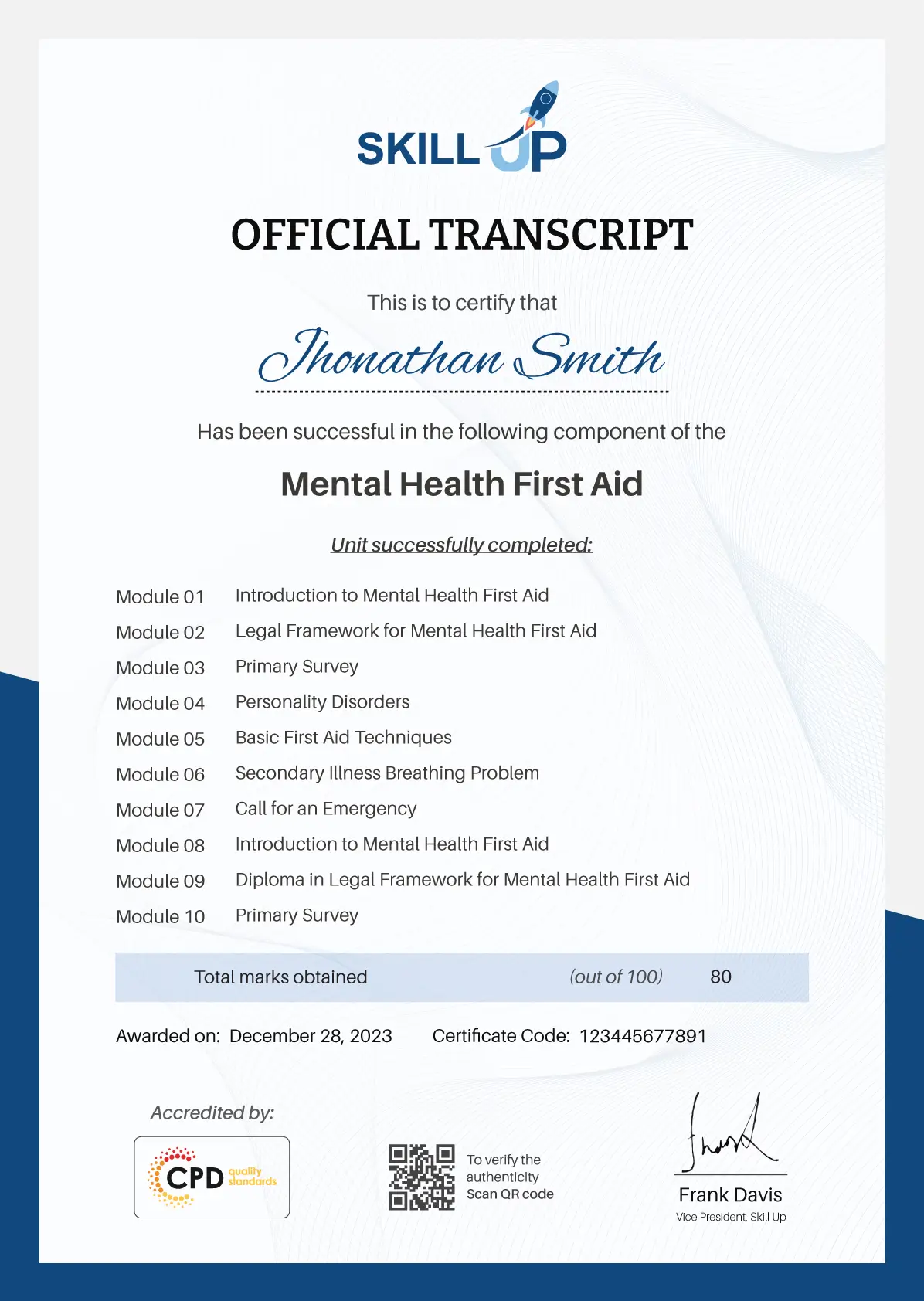
Earn Your Accredited Certificate with Transcript
Save 20% with the coupon code SKILL20
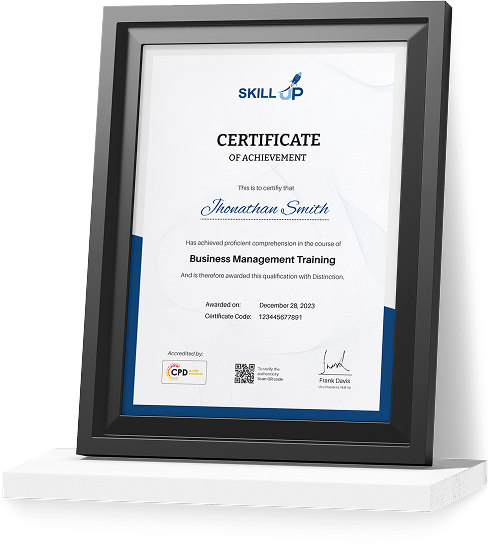
Show Your Certified Identity with a CPD-QS Certificate
Perfect for employers, clients, or academic verification.
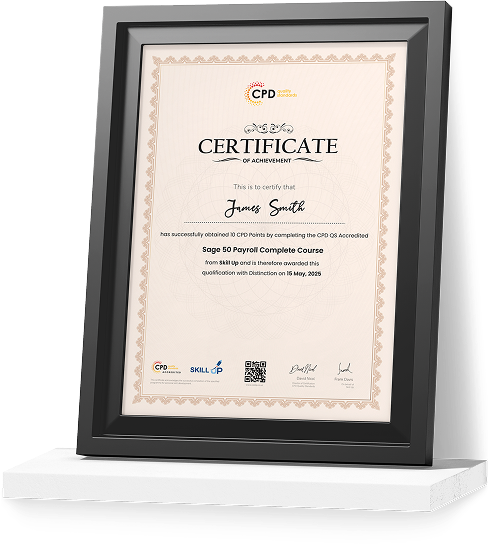
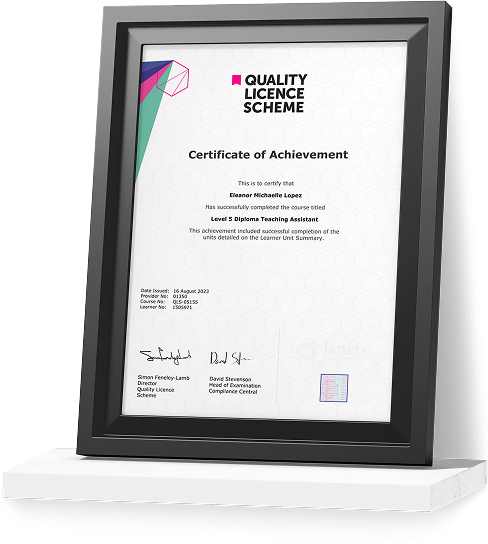
Get a QLS Certificate to Showcase Your Skills
Detailed record of your completed modules and qualifications.
Frequently Asked Questions
The course is delivered online and self-paced, allowing learners to complete it within approximately 4–6 weeks.
No prior knowledge is required. The course introduces oil market structures, trading systems, and pricing frameworks in a structured format.
Yes, learners receive a recognised certificate confirming completion of the oil market trading and pricing training.
Yes, the programme explains benchmark systems such as Brent pricing and other global reference indices used in crude oil trading.
 Yes, the course supports career development in energy market analysis, commodity trading, petroleum economics, and energy investment analysis.
Yes, the course explains futures markets, derivatives such as swaps and options, and financial structures used in oil trading.
Oil & Gas: Market Trade Pricing & Economic Framework Reviews
Excellent
98%
Would Recommend75
Certified Learners100%
Authentic Reviews
A well-organised and highly valuable course with clear, easy-to-understand guidance throughout. I’ve gained knowledge that’s directly relevant to my day-to-day responsibilities. It’s given me greater confidence in applying these skills professionally.
Engaging content delivered in a straightforward and structured format. The examples were realistic and helped reinforce key concepts effectively. I would certainly recommend it to colleagues looking to upskill
Comprehensive, insightful and professionally presented from start to finish. The course materials were clear and well supported. A worthwhile investment for anyone serious about career development
Curriculum
-
Introduction
00:04:00
-
A marker price
00:02:00
-
Different strategies
00:02:00
-
Introduction
00:01:00
-
The 1970s : Long term contracts
00:02:00
-
The 1980s : The development of spot markets
00:02:00
-
The netback contracts
00:05:00
-
The 1990s : The development of financial markets
00:02:00
-
Introduction
00:01:00
-
The different types of agreements
00:03:00
-
Crude oil price setting mechanism
00:02:00
-
Product price setting mechanism
00:02:00
-
Barter agreements
00:01:00
-
Single cargo sales
00:02:00
-
Long term contracts
00:02:00
-
Definition
00:02:00
-
Spot markets in the world
00:02:00
-
Operators on the spot markets
00:01:00
-
The balance between crude oil and product prices
00:02:00
-
Spot transactions
00:02:00
-
The Brent market
00:02:00
-
The Brent crude oil
00:01:00
-
Price transparency
00:03:00
-
Indexing crude oil prices : The adjustment factor
00:03:00
-
Indexing crude oil prices : Reference indices
00:02:00
-
Indexing crude oil prices : The price timing
00:06:00
-
The limitation of the system
00:03:00
-
Example #1 : The Rotterdam products market
00:03:00
-
How prices are reported
00:02:00
-
The forward market
00:03:00
-
The principle of cover
00:02:00
-
Speculation
00:01:00
-
The players on the forward markets
00:01:00
-
Dated Brent and 15 Day Brent
00:05:00
-
The limitations of the forward markets
00:01:00
-
The historical development of the petroleum exchanges
00:03:00
-
Futures contracts
00:01:00
-
How the markets work : Generalities
00:02:00
-
How the markets work : The clearing house
00:01:00
-
How the markets work : The deposit
00:01:00
-
How the markets work : The margin call
00:01:00
-
The participants
00:04:00
-
Pricing structures : Backwardation and Contango
00:02:00
-
The limitations of the futures markets
00:07:00
-
The definition of an option
00:01:00
-
Example of the use of an option : Call option
00:02:00
-
Example of the use of an option : Put option
00:01:00
-
The cost of an option
00:02:00
-
The definition of a swap
00:01:00
-
Example of the use of a swap
00:04:00
-
Course conclusion
00:02:00

Offer Ends in
-
Duration:1 hour, 55 minutes
-
Access:1 Year
-
Units:51

3 Reviews

TAKE ALL COURSES FOR £99