
Overview
CPD Accredited Ethical Hacking Course. Learn reconnaissance, network scanning, vulnerability assessment, web security, penetration testing and responsible security testing.
Learn how ethical hackers identify security weaknesses and assess systems responsibly. This course covers ethical hacking fundamentals, reconnaissance, scanning, enumeration, network security, Windows and Linux security, web vulnerabilities, OWASP risks and social engineering.
Designed for IT professionals, aspiring cyber security analysts, system administrators, web developers and career changers in the UK, it provides a strong foundation for further cybersecurity and penetration testing study.
You’ll learn how to:
✓ Assess attack surfaces through reconnaissance, scanning and enumeration
✓ Understand network, Windows, Linux and web security vulnerabilities
✓ Explore OWASP risks, SQL injection and business logic weaknesses
✓ Work with security tools such as Nmap, Wireshark, Burp Suite and Maltego
✓ Understand social engineering risks and responsible security practices
Whether you’re comparing ethical hacking courses online, looking for ethical hacker classes or building knowledge relevant to future ethical hacker jobs, this course provides a structured starting point for further cybersecurity training.
Course Description
Build a well-rounded understanding of ethical hacking and cybersecurity through this Ethical Hacker Course. Following a logical learning journey, the curriculum explores key security principles, testing techniques and tools used to identify vulnerabilities and support responsible security assessment.
Throughout this Ethical Hacking Course, you will explore:
✓ Ethical hacking fundamentals, terminology, the role of an ethical hacker and legal considerations.
✓ Reconnaissance, attack-surface assessment, information gathering, scanning and enumeration.
✓ Network security concepts including host discovery, service identification, network mapping, traffic analysis, sniffing and spoofing.
✓ Windows and Linux security, credential protection, privilege escalation and security testing concepts.
✓ Web hacking, security architecture, OWASP Top 10 risks, SQL injection and business logic vulnerabilities.
✓ Security tools and methodologies using platforms such as Nmap, Wireshark, Burp Suite and Maltego in controlled environments.
✓ Social engineering, human-focused security risks and physical security awareness.
✓ A CPD-accredited certificate upon completion, supporting your continuing professional development in cybersecurity and ethical hacking.
This Ethical Hacking Course brings together knowledge covered across ethical hacking courses, making it suitable for learners exploring ethical hacking courses online, ethical hacker classes, cybersecurity training and future penetration testing opportunities.
Key Benefits of This Course
When choosing an ethical hacking course in the UK, the real value lies in developing responsible security awareness that supports future cyber learning:
- Build knowledge of ethical hacking principles and legal boundaries.
- Understand reconnaissance, scanning, enumeration and attack-surface assessment.
- Develop awareness of network, Windows, Linux and web security risks.
- Explore OWASP concepts and common application security weaknesses.
- Gain familiarity with recognised security tools in controlled settings.
- Study flexibly through online cybersecurity training with certification.
- Prepare for further learning in penetration testing and cyber defence.
This course helps you progress from general cyber interest towards a structured understanding of responsible security assessment.
Learning Outcome
By the end of this cybersecurity and ethical hacking course, you will be able to:
- Understand the role, responsibilities and legal boundaries of ethical hacking.
- Analyse attack surfaces using reconnaissance and information-gathering concepts.
- Develop awareness of scanning, enumeration, host discovery and service identification.
- Apply security assessment concepts to network mapping, traffic analysis and external network security assessment.
- Evaluate common web security risks, OWASP Top 10 concepts and business logic weaknesses.
- Demonstrate awareness of Windows, Linux, credential and privilege-related security issues.
- Implement ethical hacking knowledge responsibly within authorised learning environments.
Who Is This Course For?
- Beginners seeking ethical hacker classes to build foundational cybersecurity knowledge.
- IT support professionals wanting stronger awareness of security testing and attack surfaces.
- System administrators developing knowledge of network, Windows and Linux security risks.
- Web developers exploring application security, OWASP risks and safer development practices.
- Career changers looking for ethical hacking training through flexible online study.
- Learners considering a penetration testing course before progressing into specialist cybersecurity study.
- Individuals comparing ethical hacking courses online to prepare for future cybersecurity careers.
Certificate of Achievement
Earn Your Accredited Certificate with Transcript
Save 20% with the coupon code SKILL20
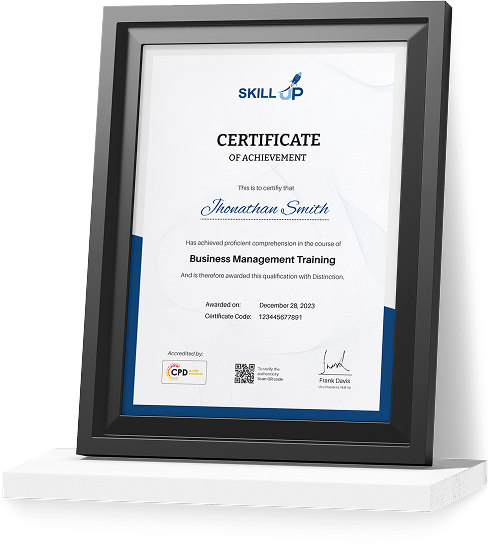
Show Your Certified Identity with a CPD-QS Certificate
Perfect for employers, clients, or academic verification.

Career Path
After completing this Ethical Hacking Course Online, you may use your learning to support further study or explore pathways such as:
- Penetration Tester: Assesses networks, systems and applications under authorised conditions to identify security weaknesses. Knowledge of reconnaissance, scanning, web security and external network penetration testing provides a useful foundation for this pathway. Typical earnings range from £25,000 to £80,000, depending on experience and seniority.
- Cyber Security Analyst: Monitors systems, investigates alerts, reviews vulnerabilities and supports incident response. The course develops relevant awareness of network activity, security risks and ethical testing that can support progression into cybersecurity roles. Professionals in the UK can earn around £35,000 to £60,000.
- Cyber Intelligence Officer: Assesses potential threats and helps organisations understand how attacks may affect their systems. Reconnaissance, information gathering and security awareness covered in this course can support further development towards this career. Salary levels generally fall between £25,000 and £50,000.
- Security Engineer: Helps maintain systems, networks and controls that protect information and infrastructure. Understanding vulnerabilities, network security and security assessment can provide a useful starting point for further specialist training. Earnings can reach approximately £40,000 to £88,000, depending on experience and responsibilities.
- Security Systems Administrator: Maintains and monitors systems that protect organisational information and infrastructure. Knowledge of Windows, Linux, networks and security risks can support progression towards this type of security-focused IT role. The role can offer around £34,000 on average, with pay varying by employer, location and experience.
Frequently Asked Questions
Yes. Ethical hacking courses online can provide a flexible starting point for beginners. This course begins with core concepts, legal boundaries and security terminology before progressing into reconnaissance, scanning and web security.
An ethical hacker course introduces authorised security testing, including reconnaissance, network mapping, enumeration, vulnerability awareness, web security and responsible use of security tools.
Ethical hacker classes help learners understand how security professionals identify weaknesses in systems and networks. They can provide useful foundations before progressing into specialist cybersecurity or penetration testing training.
These ethical hacking courses can cover network security, reconnaissance, scanning, enumeration, Windows and Linux security, OWASP risks, web security, traffic analysis and social engineering awareness.
An ethical hacking course can build foundational knowledge relevant to future cybersecurity careers and ethical hacker jobs. However, specialist employment usually requires further training, hands-on experience and relevant professional development.
External network penetration testing involves assessing internet-facing systems and services under authorised conditions. This course introduces related concepts through reconnaissance, scanning, enumeration, host discovery and service identification.
Yes, when security testing has clear authorisation, defined scope and proper permission. Ethical hacking must never involve accessing or testing systems without approval.
Yes. The course includes certification after completion, providing evidence of your commitment to developing knowledge in ethical hacking, cybersecurity and security testing.
The Complete Ethical Hacking Course! Reviews

Excellent
98%
Would Recommend70
Certified Learners100%
Authentic ReviewsThe course gave me a much better understanding of cybersecurity and the different stages involved in responsible security testing.”
A well-organised course with plenty of useful topics. The OWASP and web security sections were especially interesting.
I wanted to build a foundation in ethical hacking before further study, and this course gave me a solid starting point.
Curriculum
-
What is an Ethical Hacker
00:07:00
-
Terminology Crash Course pt. 1
00:09:00
-
Terminology Crash Course pt. 2
00:13:00
-
Terminology Crash Course pt. 3
00:08:00
-
Legal Considerations
00:11:00
-
Surveying the Attack Surface
00:10:00
-
Recon Types
00:08:00
-
Passive Recon Part 1
00:07:00
-
Passive Recon Part 2
00:10:00
-
Active Recon
00:15:00
-
Recon Walkthrough Tools Summary
00:14:00
-
Maltego Demo
00:07:00
-
FOCA Demo
00:05:00
-
DEMO – Harvester
00:02:00
-
Scanning & enumeration
00:08:00
-
Identifying Active Hosts pt. 1
00:10:00
-
Identifying Active Hosts pt. 2
00:13:00
-
Identifying Active Services
00:18:00
-
OS and Services Fingerprinting
00:15:00
-
Network Mapping
00:10:00
-
Final Thoughts
00:05:00
-
DEMO – Nmap Syntax pt. 1
00:14:00
-
DEMO – Nmap Syntax pt. 2
00:16:00
-
DEMO – Nmap Hosts Discovery
00:12:00
-
DEMO – Nmap Service Discovery
00:17:00
-
DEMO – Nmap Scripts
00:11:00
-
DEMO – Masscan
00:11:00
-
Network Insecurity
00:04:00
-
Sniffing and Spoofing
00:13:00
-
Sniffing Tools
00:09:00
-
Spoofing, Crypto and Wifi
00:15:00
-
DEMO – tcpdump
00:11:00
-
DEMO – Wireshark
00:11:00
-
DEMO – Ettercap
00:13:00
-
DEMO – Burp Suite
00:15:00
-
DEMO – Scapy
00:10:00
-
Security Overview pt. 1: Windows Architecture
00:18:00
-
Security Overview pt. 2: Credentials Security
00:16:00
-
Security Overview pt. 3: Memory Corruption and Exploitation
00:16:00
-
Windows Hacking Basics
00:20:00
-
Local Access and Privilege Escalation
00:20:00
-
Dumping Hashes and Cracking Passwords
00:18:00
-
Linux Attacking Basics pt. 1
00:13:00
-
Linux Attacking Basics pt. 2
00:14:00
-
References
00:08:00
-
DEMO – Windows MSF Exploit pt. 1
00:13:00
-
DEMO – Windows MSF Exploit pt. 2
00:15:00
-
DEMO – Post Exploitation Activities
00:13:00
-
DEMO – Mimikatz
00:07:00
-
DEMO – Hashcat
00:08:00
-
DEMO – Konboot
00:13:00
-
DEMO – Post Exploitation Windows CMD
00:14:00
-
DEMO – Post Exploitation Windows Powershell
00:13:00
-
DEMO – Attacking Linux targets pt. 1
00:10:00
-
DEMO – Attacking Linux targets pt. 1
00:13:00
-
Introduction to Web Hacking
00:03:00
-
Web Security Architecture Overview pt. 1
00:17:00
-
Web Security Architecture Overview pt. 2
00:12:00
-
Attacking the Web Server pt. 1
00:10:00
-
Attacking the Web Server pt. 2
00:11:00
-
Attacking the Platform pt. 1
00:19:00
-
Attacking the Platform pt. 2
00:08:00
-
Attacking the Technology pt. 1
00:21:00
-
Attacking the Technology pt. 2
00:17:00
-
OWASP Top 10 pt. 1
00:09:00
-
OWASP Top 10 pt. 2
00:21:00
-
Attacking the Business Logic pt. 1
00:11:00
-
Attacking the Business Logic pt. 2
00:15:00
-
Tools and Methodology
00:20:00
-
References
00:05:00
-
DEMO – OWASP Mutillidae
00:09:00
-
SQLI
00:07:00
-
SQL Map Intro
00:08:00
-
SQL Map
00:25:00
-
DEMO – Burpsuite
00:37:00
-
DEMO – Burpsuite XSS Hunter
00:16:00
-
DEMO – mitmproxy
00:10:00
-
DEMO – Skipfish pt.1
00:04:00
-
DEMO – Skipfish pt.2
00:04:00
-
Social Engineering Basics
00:15:00
-
Social Engineering Methods
00:16:00
-
Tools and Techniques pt. 1
00:15:00
-
Tools and Techniques pt. 2
00:12:00
-
Tools and Techniques pt. 3
00:09:00
-
Physical Security Considerations
00:13:00
-
Final Thoughts
00:11:00
-
DEMO – Credential harvesting
00:02:00
-
DEMO – Website cloning
00:06:00
-
DEMO – Automating an attack
00:03:00
-
DEMO – Anti-virus evasion pt. 1
00:08:00
-
DEMO – Anti-virus evasion pt. 2
00:12:00
-
Order Your Certificate
00:01:00

Offer Ends in
-
Duration:18 hours, 11 minutes
-
Access:1 Year
-
Units:92

9 Reviews

TAKE ALL COURSES FOR £99