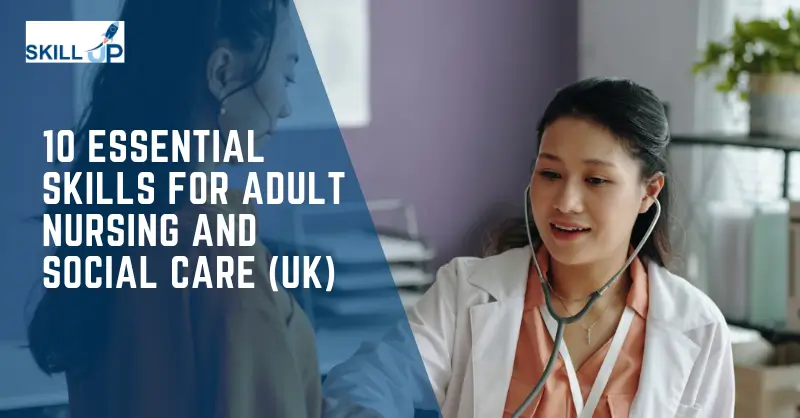
A lot of job descriptions list compassion and teamwork. Fewer explain what those words actually mean in practice, how to demonstrate them, and which ones matter most when you are starting out. If you are trying to build the right skills for adult nursing and social care, the useful question is not just which certificates to collect. It is which abilities will make you employable, effective, and able to progress without burning out in your first year? UK guidance from the NHS, Skills for Care, and the Nursing and Midwifery Council points learners towards checking communication, person-centred practice, safeguarding, and resilience properly rather than trusting generic buzzwords.
That is why this guide starts with what matters most: the ten skills employers actually ask for, how each one shows up in daily work, and how to develop them whether you are studying, applying for your first role, or moving up. You will still get the skill list readers expect, but you will also get the part many blogs rush past: how to tell the difference between a skill you genuinely need and one that only sounds impressive on a CV.
What Makes These Skills Essential?
At their core, adult nursing and social care demand practical competence and human connection. The essential skills are not abstract ideals. They are observable behaviours that keep patients safe, make care person-centred, and allow teams to function under pressure. Once the list stretches into communication, safeguarding, clinical observation, and leadership, it is worth slowing down and understanding what each one actually looks like in practice.
That is why essential skills for adult nursing UK searches matter so much. People are not just looking for a checklist. They are trying to find a foundation that will pass interviews, satisfy regulators, and survive the reality of 12-hour shifts or 15-minute domiciliary calls. If the skill can be taught, tested, and improved, that is usually a sign it is genuine. If it is vague or purely attitudinal, it may not help when you need it most. NHS, NMC, and Skills for Care guidance all place specific, demonstrable competencies at the centre of smart career preparation.
A quick rule helps here. If you want skills needed for health and social care jobs UK, core skills for health and social care professionals UK, or nursing and social care competencies UK, ignore the adjectives first and look for the verbs. “Good communication” is less useful than “documents accurately, adjusts tone for different patients, and escalates concerns promptly.” The real answer is usually sitting in the behaviour, not the label.
Why These Skills Matter in UK Health and Social Care
These skills stay in demand for a reason. They protect vulnerable people, enable efficient care delivery, and create the trust that makes difficult situations manageable. They can make the difference between a patient feeling respected or neglected, a team coping or collapsing, and a career progressing or stalling. NHS and social care guidance says these skills can be developed, but also warns that some people underestimate them by assuming caring personality is enough. Skills for adult nursing and social care UK fit that picture well when the development is deliberate, and the practice is consistent.
The regulatory context is another reason these skills carry weight. The Nursing and Midwifery Council mandates specific competencies for registration. The Care Certificate sets baseline standards for social care workers. CQC inspections and NHS appraisals test whether staff actually demonstrate these skills, not just whether they signed a form saying they have them. That does not make the list intimidating, but it does help explain why a vague claim of “good people skills” will not satisfy an interviewer or a regulator. British professional guidance includes both clinical and soft skills within a healthy career framework, but notes that each must be evidenced.
It also fits well into different entry points. Whether you are a nursing student, a career changer from retail, or a healthcare assistant hoping to progress, the same ten skills apply. The Eatwell Guide approach of balance over time applies here too. Adult nursing and social care skills UK development is not about perfection in week one. It is about building each skill deliberately so that it is automatic when pressure rises.

Career Progression and Salary Comparison
| Role | Salary Range | Key Benefits | Essential Skills Used | Progression Path |
|---|---|---|---|---|
| Healthcare Assistant (Band 2 NHS) | £21,970 - £23,500 | NHS pension, 27 days leave, sick pay, training funded | Communication, Clinical Observation, Teamwork, Organisation | Band 3 Senior HCA, Nursing Associate, Registered Nurse |
| Care Worker (Private/Social Care) | £18,500 - £21,000 | Variable pension, 20-28 days leave, flexible hours | Person-Centred Care, Safeguarding, Empathy, Resilience | Senior Care Worker, Team Leader, Registered Manager |
| Senior Healthcare Assistant (Band 3 NHS) | £24,800 - £26,500 | NHS benefits + enhancements, mentorship role | All ten skills at advanced level, Leadership emerging | Nursing Associate, Registered Nurse (RGN) |
| Senior Care Worker/Team Leader | £22,000 - £26,000 | Limited benefits, responsibility allowance | Safeguarding, Leadership, Problem Solving, Professionalism | Registered Manager, Care Coordinator |
| Nursing Associate (Band 4) | £25,100 - £27,500 | NHS benefits, apprenticeship funded, registration | Clinical skills expanded, Autonomy in decision making | Registered Nurse (Band 5) |
| Registered Nurse (Band 5 NHS) | £28,400 - £34,000 | Full NHS benefits, specialist training, clear banding | All ten skills at registered level, Critical Thinking central | Band 6 Charge Nurse, Specialist Practitioner |
| Charge Nurse/Senior Nurse (Band 6-7) | £35,000 - £50,000 | Enhanced pension, management development, CPD budget | Leadership, Service Improvement, Strategic Thinking | Ward Manager, Modern Matron, Consultant Nurse |
| Registered Care Home Manager | £35,000 - £55,000 | Performance bonuses, autonomy, business skills | Professionalism, Safeguarding, Leadership, Business Acumen | Area Manager, Operations Director |
| Community Nurse/District Nurse | £28,400 - £42,000 | Car allowance, flexible caseload, autonomy | Organisation, Clinical Observation, Communication, Problem Solving | Specialist Community Practitioner |
| Mental Health Support Worker | £20,000 - £25,000 | Specialist training, therapeutic environment | Empathy, Communication, Resilience, Safeguarding | Mental Health Nurse, Occupational Therapist |
Benefits Comparison: NHS vs Social Care
| Benefit Type | NHS Roles | Social Care Roles |
|---|---|---|
| Pension | NHS Pension (employer contributes 20%+) | Auto-enrolment, variable matching |
| Sick Pay | 6 months full pay, 6 months half pay | Statutory minimum typically |
| Annual Leave | 27 days + bank holidays rising to 33 days | 20-28 days typical |
| Training | Mandatory and CPD funded | Variable by employer size |
| Job Security | High, permanent contracts common | Moderate, zero-hours in some sectors |
| Progression | Structured bands and pathways | Less formal, qualification-dependent |
Importance of These Skills in Real Life
These ten skills translate directly into outcomes that matter for patients, professionals, and the system. Understanding their real-world impact helps maintain motivation through difficult shifts and challenging periods.
Patient Safety and Experience
Communication failures contribute to 70% of NHS serious incidents according to safety research. A nurse who documents accurately, escalates promptly, and explains clearly prevents deterioration being missed. A care worker who knows safeguarding indicators and acts without hesitation protects vulnerable adults from abuse. These are not abstract competencies. They are the difference between harm and safety.
Person-centred care changes how patients feel about treatment. Research shows dignity and respect influence recovery speed and medication adherence more than clinical environment quality. The care assistant who remembers a preferred name, the nurse who asks about home circumstances, the team member who adjusts their pace for anxiety — these skills create trust that enables better health outcomes.
Professional Sustainability
Resilience and self-management determine career length in health and social care. Burnout rates are high where these skills are neglected. Professionals who build peer support, use supervision, set boundaries, and reflect deliberately sustain careers over decades. Those who rely solely on dedication often exit within five years.
Organisation and time management reduce the stress of impossible workloads. A nurse who prioritises effectively completes critical tasks even when interrupted. A care worker who plans community routes efficiently serves more people without rushing. These skills protect wellbeing while maintaining standards.
System Efficiency
Teamwork and collaboration prevent the fragmentation that wastes resources and frustrates patients. When nurses, doctors, therapists, and social workers share information effectively, duplication disappears and care becomes coherent. Problem solving skills enable frontline staff to resolve issues without escalating unnecessarily, freeing specialist capacity for complex needs.
Professionalism and ethics maintain public trust in health and social care. Every staff member who admits errors promptly, maintains confidentiality strictly, and respects scope protects the reputation of their service and the sector. These skills are the foundation of regulation and inspection success.
Real Scenarios Where Skills Matter
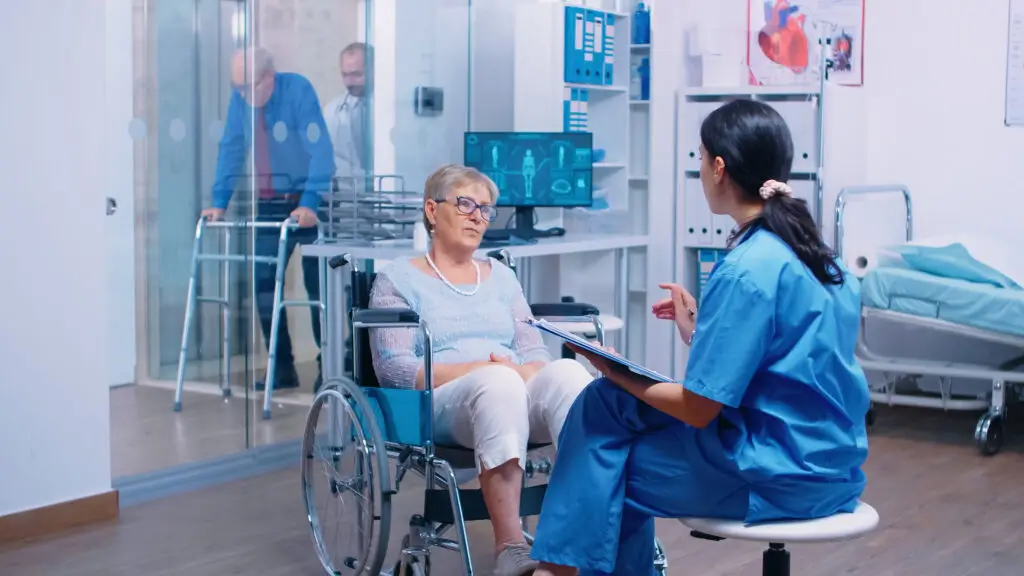
A patient with dementia becomes agitated during personal care. The care worker uses communication skills to identify a preferred approach from family, person-centred care to respect their routine, and empathy to remain calm through resistance. The episode completes without injury or distress.
A ward faces sudden staff shortage due to sickness. The nurse uses organisation to reprioritise safely, teamwork to redistribute tasks, resilience to maintain standards under pressure, and clinical observation to ensure no patient deteriorates unnoticed. The shift ends without incident.
A family raises concerns about their relative’s unexplained bruising. The senior care worker uses safeguarding knowledge to document and escalate, professionalism to maintain confidentiality, and communication to keep the family informed appropriately. Investigation confirms accidental cause but validates the vigilance.
These scenarios repeat daily across the UK. The ten skills are the toolkit that enables good outcomes in challenging circumstances.
Advantages of Working in Adult Nursing and Social Care
Beyond salary and job security, this sector offers unique rewards that attract and retain dedicated professionals. Understanding these advantages helps you decide whether this career path aligns with your values and lifestyle.
Meaningful Work
Few careers offer the daily opportunity to transform lives. Every shift brings moments where your presence prevents suffering, preserves dignity, or enables independence. The gratitude of patients and families provides satisfaction that outlasts difficult moments. This meaning sustains professionals through challenges that would exhaust those in less purposeful roles.
Job Security and Demand
The UK faces persistent shortages across health and social care. An ageing population, increasing chronic conditions, and workforce retirements guarantee ongoing demand. Unlike sectors vulnerable to economic cycles, care needs continue regardless of market conditions. Professionals with the ten essential skills enjoy unusual employment security.
Flexible Entry and Progression
No single entry route dominates. School leavers, graduates, career changers, and returners all find pathways. Apprenticeships enable earning while qualifying. Recognition of prior experience accelerates progression for those transferring from other sectors. The sector values demonstrated competence alongside formal qualifications.
Diverse Career Pathways
Clinical specialisation, management, education, research, and policy roles all remain accessible. A nurse might become a consultant practitioner, a care worker might become a registered manager, an HCA might become a nursing lecturer. The ten skills transfer across these pathways, enabling pivots without starting over.
Continuous Learning
Medicine, technology, and social care practice evolve constantly. Professionals committed to development find endless opportunities to expand knowledge. NHS and employer-funded training, degree apprenticeships, and professional doctorates support lifelong learning without prohibitive personal cost.
Community and Belonging
Health and social care teams develop strong bonds through shared challenges. The support of colleagues who understand the pressures creates workplace communities that sustain wellbeing. Many professionals cite their team as a primary reason for remaining in the sector despite difficulties.
Making a Societal Contribution
At population level, effective health and social care enables economic productivity, reduces family burden, and supports social cohesion. Individual professionals contribute to these outcomes daily. This societal impact provides purpose that transcends personal career advancement.
Transferable Skills
The ten essential skills developed in health and social care transfer to numerous other sectors. Communication, teamwork, problem solving, and resilience are universally valued. Professionals who eventually leave the sector carry capabilities that enhance employability elsewhere.
Pension and Retirement Security
NHS pension scheme membership provides defined benefit security increasingly rare in private employment. Even with recent changes, NHS pensions compare favourably to most alternatives. Social care employers vary, but larger providers increasingly offer competitive pension arrangements to attract and retain staff.
Flexible Working Arrangements
Part-time roles, job sharing, bank work, and agency flexibility accommodate diverse life circumstances. Parents, carers, students, and those with health conditions find arrangements impossible in more rigid sectors. This flexibility enables longer careers by adapting to changing needs over time.
The 10 Essential Skills: What to Check and How to Build Them
1. Communication
What employers want: Clear verbal, written, and non-verbal exchange with patients, families, and colleagues. Adjusts for capacity, culture, and urgency.
How to build it: Practice SBAR framework (Situation, Background, Assessment, Recommendation). Record yourself explaining tasks. Seek feedback on clarity. Complete handover simulations and reflective writing exercises.
Shows up in: Patient handovers, care plans, explaining procedures, de-escalating distress, documentation accuracy.
Evidence for portfolio: Handover audit results, patient feedback, reflective diary entry, communication training certificates.
2. Person-Centred Care
What employers want: Treating the individual as partner, respecting preferences, maintaining dignity, promoting autonomy.
How to build it: Study the 6 Cs framework. Observe senior staff, ask patients about their routines. Contribute to care plan reviews, collect and act on feedback.
Shows up in: Care planning, consent discussions, daily interaction choices, family involvement, personalised routines.
Evidence for portfolio: Care plan you contributed to, patient story, feedback form, 6 Cs reflection.
3. Safeguarding
What employers want: Recognising abuse, neglect, self-neglect. Acting promptly, escalating properly, documenting accurately.
How to build it: Complete mandatory training, analyse case studies, know your local safeguarding team. Attend multi-agency meetings, review serious incidents.
Shows up in: Concerns about bruising, financial exploitation, pressure sores, behavioural changes, staff whistleblowing.
Evidence for portfolio: Training certificates, scenario responses, incident you escalated appropriately, safeguarding supervision records.
4. Clinical Observation
What employers want: Accurate vital signs, fluid balance, skin integrity, mental state monitoring. Knowing normal ranges and when to escalate.
How to build it: Supervised practice, simulation, deliberate repetition. Complete competency assessments, maintain reflective logs.
Shows up in: Early warning scores, NEWS2, sepsis recognition, deterioration response, care escalation.
Evidence for portfolio: Competency sign-off, observation accuracy audit, early recognition case, skills lab completion.
5. Teamwork and Collaboration
What employers want: Working within multi-disciplinary teams, respecting scope, sharing information, supporting colleagues.
How to build it: Join group projects, interprofessional education, shadow other roles. Participate in team briefings, huddles, MDT meetings.
Shows up in: Ward rounds, discharge planning, incident response, staff shortages, interprofessional referrals.
Evidence for portfolio: MDT meeting notes, peer feedback, team project reflection, interprofessional learning record.
6. Problem Solving and Critical Thinking
What employers want: Assessing situations, prioritising interventions, adapting plans, recognising what you do not know.
How to build it: Study case studies, complete clinical reasoning exercises, seek feedback on decisions. Join root cause analysis, quality improvement projects.
Shows up in: Unexpected deterioration, equipment failure, conflicting priorities, patient refusal, resource limitations.
Evidence for portfolio: Complex situation you managed, root cause analysis participation, quality improvement suggestion, decision-making reflection.
7. Resilience and Self-Management
What employers want: Maintaining performance under pressure, seeking support, learning from setbacks, managing wellbeing.
How to build it: Build peer support, attend supervision, practice stress management techniques, set professional boundaries. Complete resilience training, access occupational health.
Shows up in: Busy shifts, emotional cases, complaints, organisational change, personal setbacks.
Evidence for portfolio: Supervision records, wellbeing plan, reflection on challenging experience, resilience training certificate.
8. Empathy and Compassion
What employers want: Understanding others’ perspectives, responding to distress, maintaining kindness without burnout.
How to build it: Engage in reflective practice, gather patient feedback, read literature on lived experience. Attend Schwartz rounds, develop compassion fatigue awareness.
Shows up in: End-of-life care, dementia support, mental health crisis, bereavement, chronic illness management.
Evidence for portfolio: Patient thank you letter, compassion fatigue self-assessment, reflective account, Schwartz round attendance.
9. Organisation and Time Management
What employers want: Prioritising tasks, managing caseloads, meeting deadlines, maintaining records alongside care delivery.
How to build it: Use to-do lists, prioritisation frameworks, electronic system practice. Conduct time-motion studies, participate in efficiency audits.
Shows up in: Medication rounds, multiple home visits, documentation deadlines, admissions, discharge planning.
Evidence for portfolio: Time management audit, efficiency improvement you implemented, inspection feedback, caseload management evidence.
10. Professionalism and Ethics
What employers want: Accountability, honesty, confidentiality, scope adherence, continuous improvement.
How to build it: Study Code of conduct, analyse ethics scenarios, plan CPD. Complete appraisals, revalidation, fitness to practice reflection.
Shows up in: Errors and near-misses, social media use, gifts from patients, scope challenges, professional boundaries.
Evidence for portfolio: CPD record, reflective account on ethical dilemma, appraisal documentation, revalidation evidence.
Skills by Career Stage
| Stage | Priority Skills | Development Focus |
|---|---|---|
| Student / Trainee | Communication, Person-Centred Care, Safeguarding | Foundation theory, first placements, Care Certificate |
| Newly Qualified / Entry Level | Clinical Observation, Teamwork, Organisation | Supervised practice, competency sign-offs, routine mastery |
| Experienced Practitioner | Problem Solving, Resilience, Mentoring | Autonomy, complex cases, supporting juniors |
| Senior / Leader | Leadership, Critical Thinking, Service Improvement | Delegation, strategic thinking, quality improvement |

How to Develop Each Skill
| What to Look For | Communication & Person-Centred | Clinical & Technical | Professional & Leadership |
|---|---|---|---|
| Courses | Health coaching, SBAR training | NEWS2, sepsis recognition, ANA | ILM Level 3, Mary Seacole programme |
| Cost | Often employer-funded | NHS funded or £50-200 | Employer or £300-800 self-funded |
| Workplace | Shadow senior nurses, patient feedback | Supervised practice 50+ times | Stretch assignments, project lead |
| Self-Directed | Reflective journal, case studies | Skills lab, simulation apps | Professional reading, CPD planning |
| Evidence | Feedback forms, reflective accounts | Competency sign-offs, audits | Certificates, appraisal records |
Easy Mistakes to Avoid
- Collecting certificates without practice. A safeguarding training day starts, not completes. You need to apply and reflect.
- Assuming personality substitutes for skill. Empathy is a behaviour, not a trait. It can be learned and must be maintained.
- Ignoring feedback. Defensive responses to criticism slow development. Active seeking of feedback accelerates it.
- Developing in isolation. Interprofessional skills require interprofessional practice. Shadowing other roles matters.
- Waiting for the perfect course. Most skills develop through deliberate practice in real or simulated settings, not just classrooms.
Final Thoughts
The best thing about developing skills for adult nursing and social care is not that the list is long or impressive. It is that the ten skills are practical. Each one can be observed, taught, tested, and improved. Each one protects patients and supports colleagues. Each one creates the foundation for a career that can move from entry level to specialist, management, or advanced practice. The trick is keeping your development simple. Focus on the ten. Evidence each one. Apply them deliberately. Reflect honestly. Do that, and these skills become the most useful career investment you can make rather than just another section on a job description.
Get valuable training, UK-focused support, and the skills employers want. No experience needed.
Join 50+ graduates who landed tech jobs with our industry-focused training programme designed for beginners.
Explore Now - Our Job Ready ProgrammeFrequently Asked Questions (FAQs)
What skills are needed to be an adult nurse?
Adult nurses need communication, empathy, clinical knowledge, teamwork, problem-solving, time management, and resilience to provide safe and effective patient care.
What are the essential skills for nursing?
Key skills include clinical competency, patient care, communication, empathy, teamwork, leadership, and safeguarding skills.
What are nursing skills listed?
Nursing skills can be grouped as:
- Clinical skills – medication, vital signs, patient monitoring
- Soft skills – empathy, communication, teamwork
Technical skills – electronic records, NHS software
What skills do you need to be an aged care nurse?
Aged care nurses require patience, empathy, physical care skills, communication, person-centred care, and safeguarding knowledge.
What do I need to do adult nursing?
You need a nursing degree or diploma, registration with the NMC (Nursing and Midwifery Council), practical training, and key skills in care, communication, and teamwork.
What skills does an adult nurse need?
An adult nurse needs clinical skills, patient care, communication, empathy, problem-solving, leadership, and resilience.
What are the big 10 skills?
The “Big 10 skills” often refer to communication, teamwork, problem-solving, leadership, adaptability, time management, critical thinking, digital literacy, creativity, and resilience.
What are the 6 life skills?
Commonly cited life skills include communication, decision-making, problem-solving, critical thinking, self-awareness, and empathy.
What is the 10 10 10 skill?
The “10-10-10” skill is a decision-making tool: consider the impact of a choice 10 minutes, 10 months, and 10 years from now.
Who has 12 life skills?
The WHO identifies 12 essential life skills: self-awareness, empathy, communication, interpersonal relationships, decision-making, problem-solving, creative thinking, critical thinking, coping with stress, coping with emotions, resilience, and self-management.


All Courses
Personal Development
Employability
Career Bundle
Management
Free QLS Certificate
IT & Software
Business
Technology
Health & Care
Quality Licence Scheme Endorsed Courses
Health & Safety
Training
Marketing
Job Ready Programme
Design
Accounting & Finance
Health and Fitness
Healthcare and Medical
Animal Care
Psychology
Microsoft Office
Teach & Education
I.T
HR and Leadership
Counselling and Therapy
Teaching & Child Care
Health and Social Care
Electrical & Electronics
Law
Food Nutrition
programming
Administration & Office Skills
Education
Language
Engineering
Cooking & Baking
Law & Criminology
Accounting
QLS Bundle
Office Skills
Awareness
Photography
Finance
Lifestyle
Diet and Nutrition
Makeup & Beauty
Therapy
Sports
First Aid
Accounting & Bookkeeping
Mathematics
Excel
Web Design
Top Rated Course
Diet and Fitness
Counselling
Agriculture
Networking & Design
General Education
Biotechnology
Audit
Economics
Lifestyle & Recreational
Adobe Photoshop
Travel and Tourism
Categories

Awarded By