
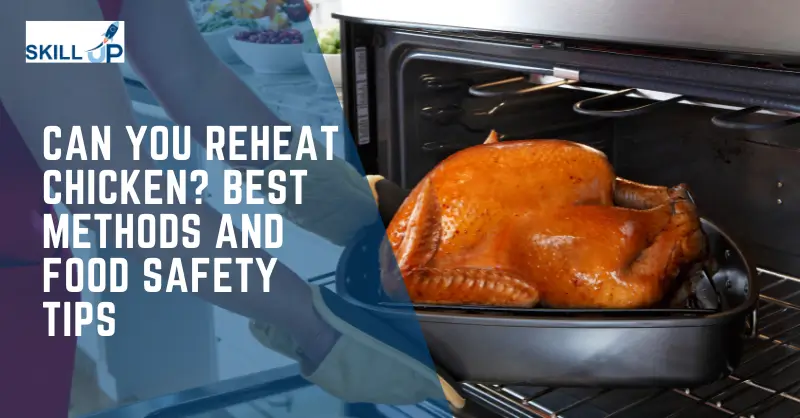
Reheating chicken is something many of us do to save time and reduce food waste, but it often raises an important question: can you reheat chicken safely without risking your health? When done the right way, reheating chicken can be perfectly safe, tasty, and convenient. However, using the wrong method or ignoring basic food safety rules can lead to dryness, loss of flavour, or even food poisoning.
In this blog, we’ll explain the best ways to reheat chicken, common mistakes to avoid, and simple food safety tips to help you enjoy your leftovers with confidence. Let’s get started!
Table of Contents
Is It Safe to Reheat Chicken?
The short answer is yes, it is perfectly safe to reheat cooked chicken, provided you follow specific safety protocols. According to the Food Standards Agency (FSA), chicken must be reheated until it is steaming hot all the way through. In a professional setting, this usually means reaching a core temperature of 75°C for at least 30 seconds.
Therefore, you should never simply “warm” your poultry. If you only warm up chicken to a lukewarm temperature, you are essentially creating a breeding ground for bacteria like Salmonella and Campylobacter. These are the leading causes of food poisoning in the UK. Consequently, ensuring the meat is piping hot is the only way to kill these pathogens effectively.
How Long Can You Keep Cooked Chicken in the Fridge?
Before you even think about warming up chicken, you need to know if it is still fresh. If the meat has been sitting in your fridge for too long, no amount of reheating will make it safe to eat.
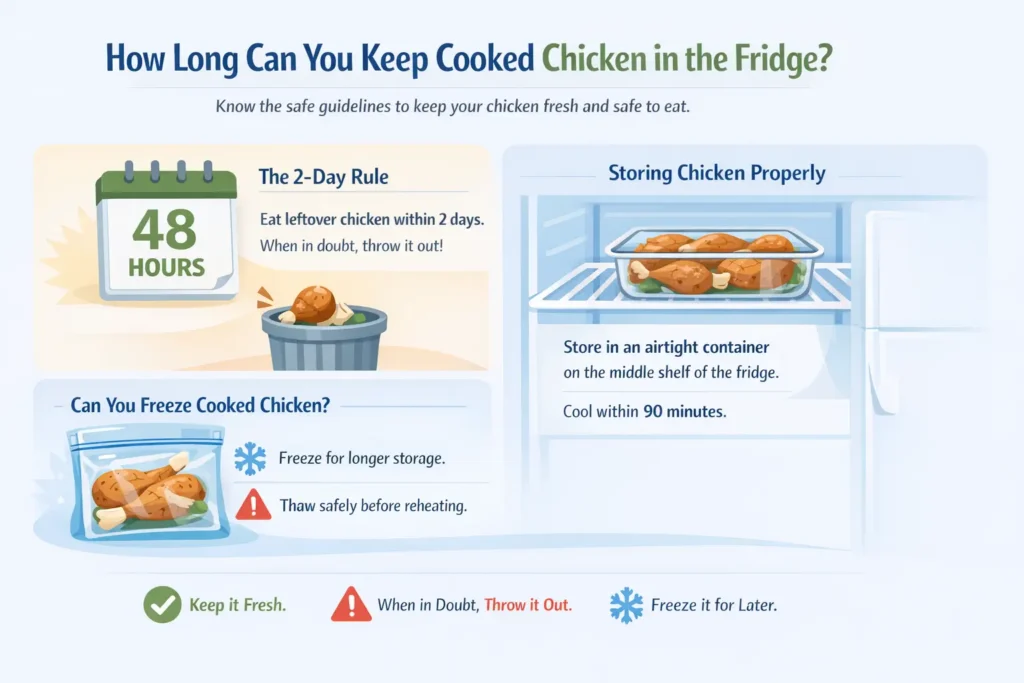
The 2-Day Rule
In the UK, the general advice for domestic kitchens is to eat leftover chicken within two days. While some sources suggest three to four days, the FSA recommends a stricter 48-hour limit for home-cooked meals to be extra cautious. If you aren’t sure when you cooked it, it is safer to bin it.
Storing Chicken Properly
To keep reheating chicken safe, storage starts the moment you finish your first meal. You must cool the chicken as quickly as possible—ideally within 90 minutes. Furthermore, you should store it in an airtight container on the middle or top shelf of the fridge. Never place cooked chicken below raw meat, as this prevents cross-contamination.
Can You Freeze Cooked Chicken?
If you can’t eat it within two days, you can absolutely freeze baked chicken or roasted pieces. Use freezer-safe bags and squeeze out as much air as possible to prevent freezer burn. When you are ready to eat it, ensure you follow a safe thawing process before rewarming chicken.
How Many Times Can You Reheat Chicken?
A common question many people ask is: can you reheat chicken twice? Technically, if you cool it, store it, and reheat it to the correct temperature every time, the risk of food poisoning is low. However, the FSA recommends that you only reheat chicken once.
Why reheating chicken more than once is unsafe
– Repeated cooling and reheating allows bacteria to multiply
– Microwaves can heat food unevenly, leaving cold spots
– The texture and taste of chicken get worse with each reheat
Safe reheating tips
– Only reheat the portion you plan to eat
– Make sure the chicken is piping hot all the way through
– Store cooked chicken in the fridge within 2 hours of cooking
– Eat refrigerated cooked chicken within 48 hours
Why Only Once?
Every time you heat up chicken and let it cool down, it passes through the “Danger Zone.” This is the temperature range between 8°C and 63°C where bacteria multiply rapidly. Moreover, the quality of the meat degrades each time. Therefore, only reheat cooked chicken once to ensure both safety and texture.
Safe Ways to Reheat Chicken (Quick Guide)
| Reheating Method | Best For | How to Reheat Safely | Food Safety Tips |
|---|---|---|---|
| Microwave | Small portions, quick meals | Cover chicken and heat in short bursts, turning halfway | Ensure chicken is steaming hot throughout |
| Oven | Large pieces, whole chicken | Cover with foil and reheat at 180°C | Add a little water or stock to prevent drying |
| Air Fryer | Crispy chicken | Reheat at 160–170°C for a few minutes | Check the centre is hot before serving |
| Hob / Pan | Sliced or shredded chicken | Reheat gently with a splash of liquid | Stir often to heat evenly |
| Slow Cooker | ❌ Not recommended | Reheats too slowly | Increases risk of bacteria growth |
Best Methods for Reheating Chicken (Step-by-Step)
Choosing the best way to reheat chicken depends on the cut of meat and how it was originally cooked. Here are the most effective methods used in British households.
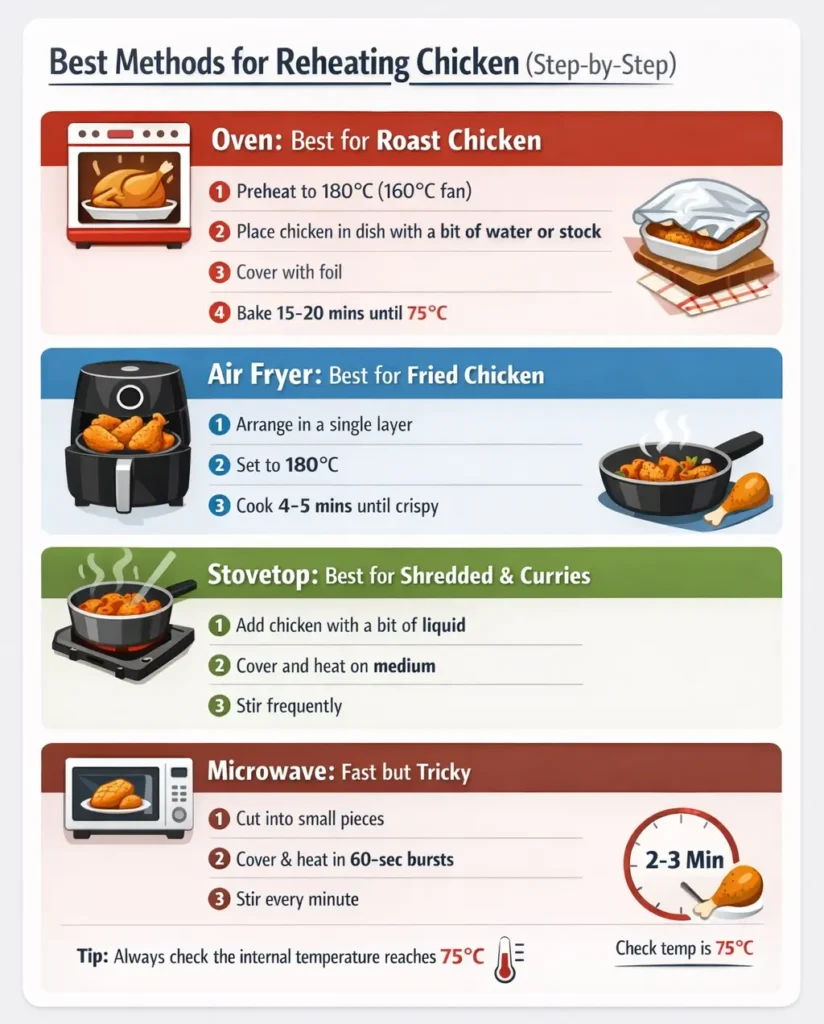
1. Oven – Best for Roast Chicken and Even Heating
The oven is the best way to reheat a roast chicken because it provides steady, dry heat. However, the oven can easily dry the meat out.
How to heat chicken in the oven:
1. Preheat your oven to 180°C (160°C for fan ovens).
2. Place the chicken in a baking dish and add a tablespoon of water or chicken stock.
3. Cover tightly with foil to trap the steam.
4. Bake for 15-20 minutes until the internal temperature reaches 75°C.
2. Air Fryer – Best for Crispy Fried Chicken or KFC
If you are wondering how to reheat fried chicken without it becoming soggy, the air fryer is your best friend. This is also how to reheat KFC chicken to its original glory.
– Place the pieces in the basket in a single layer.
– Set the temperature to 180°C.
– Heat for 4-5 minutes. Consequently, the skin will crisp up while the inside stays juicy.
3. The Hob – Best for Shredded Chicken and Curries
For stews, soups, or shredded pieces, the stovetop (hob) is excellent for reheating poultry.
– Place the chicken in a pan with a little liquid.
– Cover with a lid and heat over medium heat.
– Stir frequently to ensure even distribution of heat.
4. Microwave – Fast but Tricky
If you are short on time, you might choose reheating chicken in microwave settings. However, microwaves often heat unevenly.
How to reheat chicken in the microwave:
– Cut the chicken into smaller, even pieces.
– Cover with a microwave-safe lid or damp kitchen paper.
– Use 60-second bursts, stirring or turning the meat in between.
How long to reheat chicken in microwave? Usually 2-3 minutes, but always check the core temperature.
Potential Risks of Improper Reheating
Reheating chicken the wrong way can lead to more than just an unpleasant meal. From food poisoning to poor texture and loss of nutrients, improper reheating poses real health risks. Below are the key dangers you should be aware of when reheating chicken incorrectly.
1. Risk of Food Poisoning
According to the Centers for Disease Control and Prevention (CDC), eating improperly reheated poultry can cause food poisoning. Common symptoms include nausea, vomiting, diarrhoea, and fever.
The risk increases if cooked chicken is left out at room temperature for too long before reheating. Bacteria grow quickly between 4°C and 60°C, known as the danger zone, making chicken unsafe to eat if not handled properly.
2. Uneven Heating and Cold Spots
The Food Safety and Inspection Service (FSIS) warns that reheating chicken in a microwave can cause uneven heating. Cold spots may remain where bacteria survive, even if the food feels hot on the outside.
To reduce this risk, reheat chicken on medium power, turn or stir it halfway through, and ensure it is piping hot all the way through. Using an oven or hob often provides more even heat.
3. Loss of Nutritional Value
Research published in the Journal of Food Science and Technology shows that repeated reheating can break down protein structures in chicken. This not only makes the meat harder to digest but may also reduce its nutritional value over time.
4. Changes in Texture and Taste
Overheating chicken, especially lean cuts like breast meat, often makes it dry, rubbery, or tough. This happens because high heat tightens the proteins and removes moisture, leaving the chicken less enjoyable to eat.
5. Toxin Production from Improper Storage
The European Food Safety Authority (EFSA) explains that toxins can develop if cooked chicken is stored incorrectly before reheating. These toxins are not always destroyed by heat and can cause stomach cramps and diarrhoea.
Stay Safe When Reheating Chicken
To avoid these risks, always store cooked chicken in the fridge promptly, reheat it thoroughly until steaming hot, and avoid reheating it more than once. Proper handling keeps your meal both safe and tasty.
In addition to health risks, poor reheating ruins the dining experience. Overcooking leads to a loss of nutrients and a “rubbery” texture. Moreover, if the chicken was left out on the counter for too long before refrigerating, it might produce heat-stable toxins that cannot be killed by cooking.
What to Avoid When You Reheat Chicken
To ensure you are reheating chicken safely, avoid these common mistakes:
– Reheating Chicken Multiple Times: As discussed, this increases the chance of bacterial growth.
– Using Too High Heat: This burns the outside while leaving the inside cold.
– Forgetting to Add Moisture: Chicken loses water when it sits in the fridge; therefore, always add a splash of water or oil.
– Leaving Chicken Out: Never let cooked chicken sit at room temperature for more than two hours.
Storing Chicken Properly for Safe Reheating
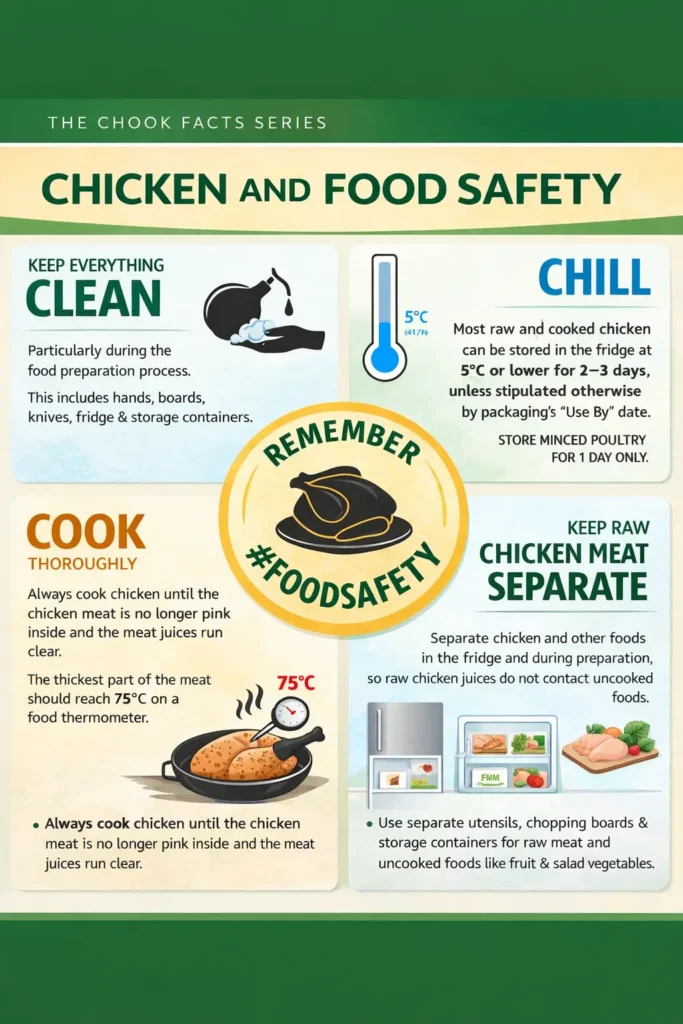
Safe reheating of cooked chicken starts with proper storage. In the UK, we must be diligent about fridge temperatures. Ensure your fridge is set to below 5°C.
Safe Thawing Methods
If you have frozen baked chicken, you must defrost it thoroughly before reheating. The best way is to leave it in the fridge overnight. In addition, you can use the defrost setting on a microwave if you plan to cook it immediately. However, never defrost chicken on the kitchen counter, as the outer layer will reach the “Danger Zone” while the middle is still frozen.
Secret Tips for Delicious Reheated Chicken
Reheated chicken doesn’t have to be dry or tasteless. Follow these simple, SEO-friendly reheating tips to keep your chicken moist, flavourful, and safe to eat.
– Steam it for extra juiciness – Place chicken in an oven-safe dish, add a splash of water or chicken stock, and cover with foil. Reheat at 150°C (300°F) for 10–15 minutes or on the hob over low heat for 5–7 minutes to lock in moisture.
– Use an ice cube in the microwave – Put an ice cube next to the chicken, cover with a damp paper towel, and microwave on medium power in 30-second bursts. The steam prevents the chicken from drying out.
– Reheat fried chicken the double-heat way – Warm the chicken in the microwave for 30 seconds, then finish in an air fryer or oven at 190°C (375°F) for 5–7 minutes to restore crispiness. Lightly spray with oil for extra crunch.
– Sear it for a fresh-cooked taste – Heat a non-stick or cast-iron pan with a little butter or oil and sear the chicken for 1–2 minutes per side to boost flavour and texture.
– Marinate before reheating – Soak cold chicken in a light marinade such as chicken stock, lemon juice, soy sauce, or olive oil for 10–15 minutes to rehydrate the meat and enhance flavour.
– Bring chicken to room temperature first – Take chicken out of the fridge 15–20 minutes before reheating to ensure even heating and avoid dry spots.
– Let it rest after reheating – Loosely cover reheated chicken with foil and rest for 2–3 minutes so the juices redistribute and keep the meat tender.
Use these easy reheating tips to enjoy juicy, flavour-packed chicken that tastes just as good as when it was first cooked.
Conclusion
In summary, you can absolutely reheat chicken as long as you are mindful of temperatures and storage times. Whether you choose the oven for a roast or the air fryer for fried wings, the goal is always to reach that 75°C mark. By following these UK food safety guidelines, you can enjoy your leftovers without any worry.
Get valuable training, UK-focused support, and the skills employers want. No experience needed.
Join 500+ graduates who landed tech jobs with our industry-focused training programme designed for beginners.
Explore Now - Our Job Ready ProgrammeFAQs
Can you reheat chicken safely?
Yes, chicken can be reheated safely if it was cooked properly, stored correctly, and reheated until piping hot all the way through.
Can you reheat chicken twice?
While you can do it if the temperature is controlled perfectly, the FSA recommends only reheating once to maintain food safety and quality.
Is it safe to eat cold chicken from the fridge?
Yes, provided it was cooled quickly after the initial cooking and stored at the correct temperature
Can you reheat KFC chicken?
Yes. The best way to reheat KFC is in an air fryer or oven at 180°C to ensure the breading stays crispy.
How long can defrosted chicken stay in the fridge?
Once fully thawed, you should eat the chicken within 24 hours. Therefore, plan your meals accordingly to avoid waste.






All Courses
Personal Development
Employability
Management
Free QLS Certificate
IT & Software
Career Bundle
Business
Technology
Health & Care
Quality Licence Scheme Endorsed Courses
Health & Safety
Training
Design
Marketing
Accounting & Finance
Health and Fitness
Job Ready Programme
Healthcare and Medical
Psychology
Animal Care
Microsoft Office
I.T
Teach & Education
Counselling and Therapy
HR and Leadership
Electrical & Electronics
Teaching & Child Care
programming
Food Nutrition
Language
Law
Accounting
Administration & Office Skills
Education
Health and Social Care
Law & Criminology
QLS Bundle
Finance
Awareness
Cooking & Baking
Photography
Lifestyle
Diet and Nutrition
Makeup & Beauty
Engineering
Office Skills
Accounting & Bookkeeping
First Aid
Mathematics
Sports
Excel
Web Design
Therapy
Diet and Fitness
Counselling
Agriculture
Biotechnology
General Education
Networking & Design
Free Courses
Audit
Economics
Lifestyle & Recreational
Adobe Photoshop
Travel and Tourism
Categories

Awarded By