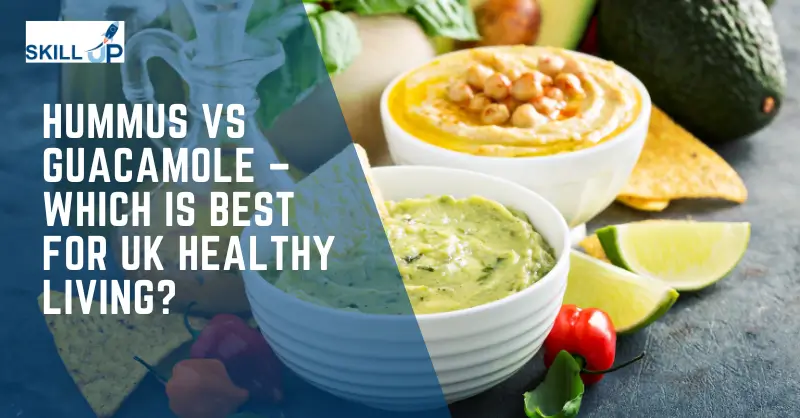
In the UK, hummus and guacamole have become everyday foods rather than occasional treats. Many people keep a tub in the fridge for quick lunches, work snacks, or easy meals after the gym. They often appear in supermarket meal deals, café wraps, and family dinners. However, when trying to eat well, it’s not always clear which option is the healthier choice.
This article looks at Hummus vs Guacamole in a practical way, using calories, nutrition, and typical UK portion sizes. It explains common hummus benefits, such as fibre and plant-based protein, and compares them with guacamole nutrition, including healthy fats and vitamins. Moreover, it considers how both fit into busy UK lifestyles, whether you work long hours, train regularly, or simply want better everyday food choices.
If you’ve ever stood in a supermarket deciding between these two dips, this guide will help you choose with confidence.
Table of Contents
Let’s Look at Some Stats
Before opinions, it helps to look at numbers. Therefore, this section breaks down the most searched nutritional comparisons.
Here Are Some Highlights
Per 100g (average supermarket versions in the UK):
– Hummus calories: ~240 kcal
– Guacamole calories: ~160 kcal
– Hummus protein per 100g: ~7–8g
– Guacamole fat: Higher, mostly healthy fats
– Hummus carbs: Significantly higher than guacamole
In addition, portion size matters. Most people eat 2–3 tablespoons, not 100g.
OUR WINNER: Guacamole!
Based purely on calorie density, fat quality, and carb load, guacamole edges ahead for most UK healthy living goals. However, hummus still has clear benefits, especially for plant-based diets.
What Is Hummus?
Hummus is a smooth dip made mainly from chickpeas, tahini, olive oil, lemon juice, and garlic. In the UK, it’s commonly eaten with wraps, salads, falafel, or raw vegetables.
Hummus Ingredients Explained
Traditional hummus is simple. However, many UK supermarket versions add extra oil, preservatives, or flavourings. Therefore, nutrition can vary widely between brands.
Hummus Nutrition Content (Per 100g)
– Calorie content of hummus: ~240 kcal
– Protein: 7–8g
– Carbohydrates: ~14g
– Fat: ~17g
Moreover, hummus provides fibre, iron, and B vitamins, and this overall nutritional content hummus makes it appealing for vegetarians.
How Many Calories in Hummus?
This is one of the most searched questions in the UK.
– Calories in a tbsp of hummus: ~35–40 kcal
– How many calories hummus in a typical serving (50g): ~120 kcal
Therefore, hummus is not low-calorie, but small portions fit well into a balanced diet. In addition, the balanced nutritional content hummus supports energy needs in plant-based diets.
Hummus Macros at a Glance
Hummus macros lean towards carbs and fats. As a result, it works well as an energy food rather than a strict weight-loss option.
Is Hummus Healthy for You?
Yes, hummus is healthy for you when eaten in moderation. It supports gut health and provides plant protein. However, large portions can add calories quickly. This matters for office workers or drivers with limited daily movement.
What Is Guacamole?
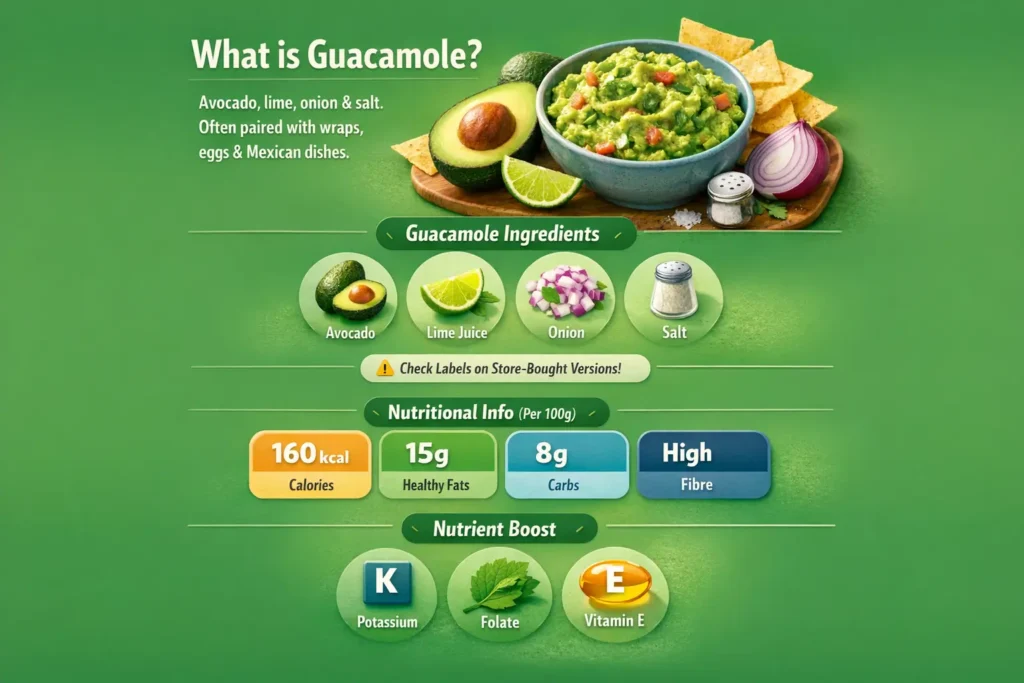
Guacamole is made primarily from avocado, lime juice, onion, and salt. In the UK, it’s often paired with wraps, eggs, toast, or Mexican-style meals.
Guacamole Ingredients Explained
Homemade guacamole is very clean nutritionally. However, some shop-bought versions include starches or oils. Therefore, reading labels is essential.
Guacamole Nutritional Information (Per 100g)
– Calories in guacamole: ~160 kcal
– Fat: ~15g (mostly unsaturated)
– Carbohydrates: ~8g
– Fibre: High
Moreover, guacamole nutrition includes potassium, folate, and vitamin E.
Calories in Guacamole Explained
– Calories in guacamole per tablespoon: ~25 kcal
– Guacamole vs hummus: Guacamole is lower in calories per serving
– Diet-friendly dip: Works well for weight-conscious meals
As a result, guacamole fits better into calorie-controlled diets.
Is Guacamole Fattening?
This is a common myth. Although guacamole is high in fat, it is not fattening when portions are sensible. In fact, healthy fats increase fullness, which may reduce snacking.
Guacamole – Is It Healthy?
Yes, guacamole is healthy. Moreover, studies referenced by the British Heart Foundation show that replacing saturated fats with unsaturated fats supports heart health.
| Nutrient Strengths & Weaknesses | |||
|---|---|---|---|
| Nutrient Focus | Hummus | Guacamole | |
| Fibre | ✔ Strong | ✔ Strong | |
| Protein | ✔ Higher | ❌ Lower | |
| Healthy fats | ❌ Moderate | ✔ High | |
| Potassium | ❌ Lower | ✔ Higher | |
| Vitamin C | ❌ Minimal | ✔ Present | |
| Carbohydrates | ✔ Higher | ✔ Lower | |
Note: Shows what each dip is best at, not just numbers.
Hummus Benefits vs Guacamole Nutritional Information: What UK Readers Should Know
When choosing between dips, many UK shoppers want clear health facts. Therefore, understanding hummus benefits and accurate guacamole nutritional information helps you make better everyday food choices.
Hummus Benefits for Everyday UK Diets
One of the main hummus benefits is that it provides plant-based protein and fibre. This makes it popular with vegetarians, vegans, and people cutting back on meat. Moreover, hummus benefits digestion by feeding healthy gut bacteria, which supports long-term wellbeing.
Another key point about hummus benefits is its role in steady energy levels. Because hummus contains complex carbohydrates, it releases energy slowly. Therefore, it works well for office workers, delivery drivers, and students who need lasting fuel.
In addition, hummus benefits heart health when made with olive oil and eaten in sensible portions. However, large servings can raise calorie intake. For this reason, enjoying hummus benefits fully means sticking to 2–3 tablespoons at a time.
Guacamole Nutritional Information Explained Simply
Clear guacamole nutritional information shows why this dip is often seen as a healthier option. Guacamole is lower in carbohydrates and higher in healthy fats than hummus. As a result, many people following low-carb or calorie-controlled diets prefer it.
Looking at guacamole nutritional information, avocados provide monounsaturated fats, which support heart health. Moreover, these fats help you feel full, reducing unnecessary snacking during the day.
Another advantage shown in guacamole nutritional information is its vitamin content. Guacamole contains vitamin C, vitamin E, and potassium, which support immunity and blood pressure. Therefore, it fits well into balanced UK eating patterns.
Guacamole Calories: Are They a Problem?
Many people worry about guacamole calories, but the concern is often misplaced. Although guacamole contains fat, guacamole calories are lower per serving than many creamy dips.
On average, guacamole calories are around 150 kcal per 100g, while a tablespoon contains roughly 25 kcal. Therefore, guacamole calories are easier to manage than expected when portions are controlled.
Because guacamole calories mainly come from healthy fats, they support satiety. As a result, people often eat less overall, which helps with weight management.
Nutritional Content of Guacamole: What Makes It Healthy
The nutritional content of guacamole is one of its strongest points. It is rich in potassium, which helps regulate blood pressure. Moreover, the nutritional content of guacamole includes fibre, supporting digestion and gut health.
Another key part of the nutritional content of guacamole is its low sugar level. This makes it suitable for people managing blood sugar levels. Therefore, the nutritional content of guacamole suits modern UK diets focused on balance rather than restriction.
Nutritional Value of Guacamole Compared to Other Dips
When comparing dips, the nutritional value of guacamole stands out. Unlike mayonnaise or creamy sauces, the nutritional value of guacamole comes from whole foods rather than processed oils.
The nutritional value of guacamole also supports heart health due to its unsaturated fat profile. Moreover, the nutritional value of guacamole includes vitamins that many UK adults lack, especially potassium.
For these reasons, the nutritional value of guacamole makes it a strong everyday option when eaten in moderation.
Guacamole: Is It Healthy or Just a Trend?
So, guacamole is it healthy? In short, yes. When made from simple ingredients, guacamole is it healthy for most people.
The reason guacamole is it healthy lies in its fat quality, fibre, and micronutrients. Moreover, guacamole is it healthy for weight control because it increases fullness and reduces cravings.
However, even though guacamole is it healthy, portion size still matters. Eating half a tub in one sitting can add unnecessary calories. Therefore, balance remains key.

Hummus vs Guacamole: Nutrition Comparison
Now let’s compare both directly, using clear numbers and well-known nutrition facts for hummus alongside guacamole data.
Calories: Hummus vs Guacamole
– Calories in guac are lower per tablespoon
– How many calories in a hummus serving is often double
Therefore, guacamole usually wins for weight management.
Fat, Carbs, and Protein Compared
– Hummus: Higher carbs and protein according to common nutrition facts for hummus
– Guacamole: Higher healthy fats, lower carbs
As a result, hummus suits active lifestyles, while guacamole suits low-carb eaters.
Which Is Better for Weight Loss in the UK?
For most UK adults following calorie-controlled plans, guacamole is easier to fit in. Moreover, NHS guidance encourages healthy fats over refined carbs.
Which Is Better for Heart Health?
Guacamole performs better due to monounsaturated fats. However, hummus still offers fibre benefits, which also support cholesterol control.
| Hummus vs Guacamole: Complete Nutritional Comparison (Per 100g) | |||
|---|---|---|---|
| Nutrition Category | Hummus (per 100g) | Guacamole (per 100g) | What This Means for Your Health |
| Serving size | 1 serving (approx. 100g) | 1 serving (approx. 100g) | Allows fair, like-for-like comparison |
| Calories | 166 kcal | 150 kcal | Guacamole is slightly lower in calories, supporting weight control |
| Protein | 8 g | 2 g | Hummus offers more plant protein, useful for vegetarians |
| Total fat | 10 g | 13 g | Guacamole is higher in fat, but mostly healthy fats |
| Saturated fat | 1 g | 2 g | Lower saturated fat supports heart health |
| Monounsaturated fat | 4 g | 8 g | Guacamole excels in heart-healthy fats |
| Carbohydrates | 14 g | 9 g | Guacamole is better for low-carb diets |
| Fibre | 6 g | 6 g | Both support digestion and fullness |
| Vitamin A | 30 IU | 449 IU | Guacamole supports eye and immune health |
| Vitamin C | 0 mg | 13 mg | Guacamole contributes to immune defence |
| Folate | 83 mcg | 78 mcg | Both support red blood cell production |
| Potassium | 228 mg | 452 mg | Guacamole helps blood pressure control |
Note: This table compares the average UK supermarket hummus and guacamole. Values are approximate and based on standard recipes.
Why This Comparison Matters
– Weight loss: Guacamole’s lower calories and higher fat satiety make portion control easier
– Heart health: Guacamole’s monounsaturated fats align with UK heart health guidance
– Plant-based diets: Hummus provides more protein and iron
– Low-carb eating: Guacamole is the better option
– Everyday snacking: Both work well when portions are managed
Important UK Nutrition Notes
– Typical UK portions are 2–3 tablespoons, not 100g
– Calories in a tablespoon of hummus: ~35–40 kcal
– Calories in guac per tablespoon: ~25 kcal
– Shop-bought versions may contain added oils or starches—always check UK traffic-light labels
Which Dip Fits Your UK Lifestyle Best?
Best for Vegetarians & Vegans
Hummus provides more protein, making it useful for meat-free diets. Therefore, it’s popular in UK vegan lunches.
Best for Low-Carb or Keto Diets
Guacamole is the clear winner here. Its low carb count fits modern low-carb eating trends.
Best for Meal Prep & Lunchboxes
Hummus lasts longer in the fridge. However, guacamole browns quickly unless prepared carefully.
Best for Kids and Families
Hummus is often more familiar to children. However, guacamole works well when paired with wraps or eggs.
How to Make Healthier Choices in UK Supermarkets
Reading Nutrition Labels Correctly
UK traffic-light labels make comparison easier. Therefore, choose dips with amber or green fat ratings where possible.
Healthier Hummus Options
Look for:
– Higher chickpea percentage
– Less sunflower oil
– Short ingredient lists
Healthier Guacamole Options
Choose products with:
– Avocado as the first ingredient
– No added starches
– Simple seasoning
Get valuable training, UK-focused support, and the skills employers want. No experience needed.
Join 500+ graduates who landed tech jobs with our industry-focused training programme designed for beginners.
Explore Now - Our Job Ready ProgrammeFinal Verdict: Hummus or Guacamole for Healthy UK Living?
Both dips deserve a place in a healthy UK diet. However, if the goal is lower calories, heart health, and better fat intake, guacamole comes out on top. That said, hummus remains a valuable plant-based food when portions are managed.
Ultimately, the healthiest choice is the one that fits your lifestyle, tastes good, and supports consistency. Choose wisely, eat mindfully, and enjoy both without guilt.
FAQs: Hummus vs Guacamole
Is guacamole healthier than hummus in the UK?
Generally, yes, due to lower calories and better fat quality.
How many calories are in a tablespoon of hummus?
Around 35–40 calories per tablespoon.
Is guacamole fattening if eaten every day?
No, provided portions are controlled.
Which dip is better for weight loss in the UK?
Guacamole is usually better for calorie control.
Is hummus a good source of protein?
It provides moderate protein but shouldn’t be the sole source.






All Courses
Personal Development
Employability
Career Bundle
Management
Free QLS Certificate
IT & Software
Business
Technology
Health & Care
Quality Licence Scheme Endorsed Courses
Health & Safety
Training
Marketing
Job Ready Programme
Design
Accounting & Finance
Health and Fitness
Healthcare and Medical
Animal Care
Psychology
Microsoft Office
Teach & Education
I.T
HR and Leadership
Counselling and Therapy
Teaching & Child Care
Health and Social Care
Electrical & Electronics
Law
Food Nutrition
programming
Administration & Office Skills
Education
Language
Engineering
Cooking & Baking
Law & Criminology
Accounting
QLS Bundle
Office Skills
Awareness
Photography
Finance
Lifestyle
Diet and Nutrition
Makeup & Beauty
Therapy
Sports
First Aid
Accounting & Bookkeeping
Mathematics
Excel
Web Design
Top Rated Course
Diet and Fitness
Counselling
Agriculture
Networking & Design
General Education
Biotechnology
Audit
Economics
Lifestyle & Recreational
Adobe Photoshop
Travel and Tourism
Categories

Awarded By