
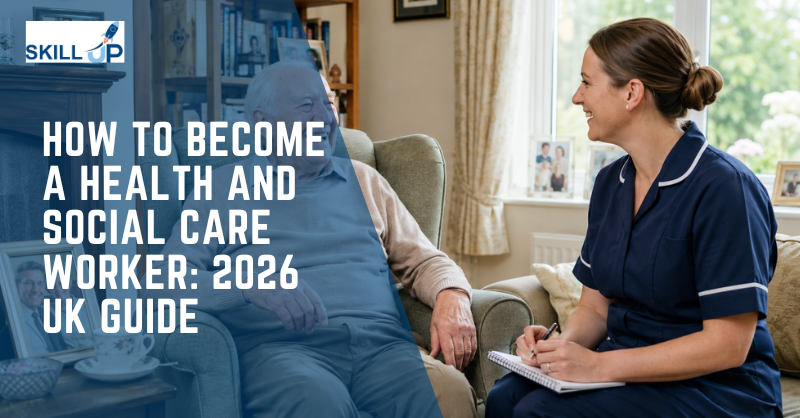
Health and Social Care Worker careers begin with a question: how can I enter care without experience? Care can feel demanding, even when you bring customer service or caring skills. The Health and Social Care Level 3 Diploma, Level 4 Diploma in Health and Social Care Management and Level 5 Diploma in Health and Social Care can build confidence first.
Poor mobility support, missed changes or unsafe equipment can reduce independence and increase the risk of falls. Around one-third of people aged 65 and over fall at least once each year, while 10.4 million working-age people were classed as disabled in the UK in 2025. Occupational therapy assistant knowledge helps you support daily activities, use equipment safely, observe progress and report concerns to qualified therapists. The National Careers Service lists salaries from £26,000 to £31,000, while NHS Band 3 and Band 4 pay starts at £25,760 and £28,392. With rising support needs, this career offers meaningful work and a practical route into rehabilitation services.
Here, you will learn what health and social care workers do, which qualifications employers value, how apprenticeships work, what roles pay and where progression can lead. You will understand care standards, legal duties and workplace settings. Ready for health and social care jobs? Start with the Health and Social Care Level 3 Diploma, Level 4 Diploma in Health and Social Care Management and Level 5 Diploma in Health and Social Care and use this guide as your roadmap.
What Is a Health and Social Care Worker? Meaning, Purpose and Core Care Values
A health and social care worker helps people live safely, independently and with dignity. The role connects health care, which often supports treatment and recovery, with social care, which focuses on daily living, wellbeing and independence. Together, these services help people manage life with confidence.
Workers may support older adults, disabled people, children, families or people experiencing mental health challenges. However, the job involves more than completing tasks. You listen, notice changes, protect rights and help each person make choices.
So, what is care value in health and social care? It means turning dignity, privacy, respect, equality, choice and person-centred care into action. You knock before entering, explain before helping, protect confidential information and encourage independence.
Think of care values as the compass that guides every decision. Therefore, your behaviour matters as much as practical support.
Moreover, development in health and social care includes physical, intellectual, emotional and social change throughout life. Understanding these changes helps workers recognise changing needs, adapt support and respond with patience, empathy and professional judgement.

What Does a Health and Social Care Worker Do? Daily Duties and Workplace Reality
Daily work changes with the setting, but every task should protect safety, dignity and independence. The care assistant job role may involve early mornings, nights, weekends and emotionally difficult situations. You might help someone wash, eat, attend an appointment and stay connected with family before updating records. Health and social care worker skills matter because changes in appetite, skin, mood or movement may require prompt reporting. In addition, the Skills for Care Code of Conduct reinforces accountability and respectful practice.
Here are the main duties that show how health and social care workers protect dignity, promote independence and provide safe, person-centred support every day:
Provide Personal Care and Support Daily Hygiene While Respecting Privacy and Choice
Firstly, ask permission before helping with washing, dressing or toileting. Protect privacy. Encourage each person to complete tasks they can manage independently wherever safely possible.
Assist with Meals, Hydration, Mobility and Safe Transfers According to Care Plans
Next, follow care plans when serving meals, offering drinks or supporting movement. Use approved techniques. Report swallowing, appetite, hydration or mobility concerns promptly and accurately.
Offer Companionship, Emotional Support and Encourage Social Engagement
Moreover, listen without rushing, encourage meaningful activities and support family contact. Notice loneliness or distress. Share significant emotional changes with the appropriate senior colleague promptly.
Support Medication, Maintain Accurate Records and Monitor Changes in Health or Behaviour
Then, support medication only within your training and authorised role. Record care immediately. Report changes in appetite, skin, mood, movement or behaviour accurately and promptly.
Follow Safeguarding Procedures and Report Concerns or Significant Observations Promptly
Finally, recognise signs of abuse, neglect or unsafe practice. Follow safeguarding procedures. Record facts clearly, then report concerns promptly without investigating the allegation any further yourself.
Professional, observant care protects wellbeing, strengthens trust and helps every person retain dignity, choice, safety and independence each day.

What Is a Healthcare Assistant? HCA Job Description, Duties and Responsibilities
A healthcare assistant supports patients and registered professionals in hospitals, GP practices, mental health services, community teams and people’s homes. Employers may also call the role healthcare support worker or nursing assistant. A typical health care assistant job description includes personal care, mobility, meals, comfort and authorised observations. Although a health care aide job description may describe similar work, UK employers rarely use the word “aide” in formal vacancies today.
The following duties and responsibilities of health care assistant in UK services show how HCAs deliver safe, compassionate support under registered professionals:
Support Personal Care, Patient Comfort, and Emotional Wellbeing While Respecting Privacy and Independence
Firstly, ask permission before helping. Protect privacy and comfort. Encourage patients to complete suitable tasks independently while offering calm reassurance whenever they need support most.
Assist with Mobility, Safe Transfers, Meals, Nutrition, and Hydration According to Care Plans
Next, follow care plans during movement and mealtimes. Use approved techniques. Report swallowing difficulties, poor appetite, dehydration signs or mobility changes promptly to senior staff.
Take Basic Clinical Observations, Monitor Patient Conditions, and Report Any Concerns Promptly
Moreover, measure authorised observations accurately. Watch temperature, pulse, breathing and weight. Record results immediately, then alert registered staff whenever readings or behaviour suddenly change unexpectedly.
Maintain Accurate Patient Records, Share Information, and Keep Care Environments Clean and Safe
Then, update records clearly and promptly. Share relevant facts with authorised colleagues. Clean equipment, remove hazards and maintain an orderly environment that supports safer care.
Work Within Professional Boundaries, Follow Infection Prevention Practices, and Complete Only Authorised Duties
Finally, follow infection-control procedures and professional boundaries. Complete only trained, delegated tasks. Ask staff for guidance whenever instructions, risks or responsibilities seem uncertain or unsafe.
According to NHS England, healthcare support workers may assist with personal care, mobility, meals, appointments and basic observations, depending on their competence and workplace.
The Health and Social Care Level 3 Diploma course introduces essential areas such as person-centred care, safeguarding, communication, professional responsibilities and safe working practices.
The flexible online course supports beginners, career changers and existing care workers who want to strengthen their theoretical knowledge before applying for care-related opportunities or completing employer-led training.
Care Worker vs Support Worker vs Healthcare Assistant vs Social Worker
Care workers, support workers, healthcare assistants and social workers all help people, but they carry different responsibilities. In practice, care workers usually support daily living and personal care. Support workers often help people develop independence, routines and community skills. Healthcare assistants provide patient care under registered clinical professionals. Social workers assess complex needs, manage risk and coordinate statutory support. Therefore, always read the vacancy carefully because employers sometimes use job titles differently.
The following definitions clarify each role’s main purpose before you compare their workplaces, duties, training requirements and level of professional responsibility:
Care Worker
Firstly, a care worker helps people wash, dress, eat, move safely and manage routines, while promoting dignity, comfort, choice, wellbeing and personal independence each day.
Support Worker
Secondly, a support worker helps individuals build life skills, manage routines, access communities and achieve personal goals, often within supported living or specialist care services.
Healthcare Assistant
Next, a healthcare assistant supports patients with personal care, mobility, meals and authorised observations while working under nurses or other registered healthcare professionals each day.
Social Worker
Finally, a social worker assesses needs and risks, protects children or adults, coordinates support and uses legal powers within a regulated professional role responsibly daily.
Meanwhile, this comparison shows where the roles overlap and where their responsibilities, clinical involvement and professional requirements clearly differ:
Comparison Area | Care Worker | Support Worker | Healthcare Assistant | Social Worker |
Core purpose | Supports daily activities, safety, wellbeing and independence. | Helps people develop routines, life skills and community independence. | Supports patient care and assists registered healthcare professionals. | Assesses needs and risks, safeguards people and coordinates suitable support. |
Workplace | Care homes, supported living and people’s homes. | Residential services, supported living and community settings. | Hospitals, GP practices, clinics and community teams. | Councils, NHS services, schools, charities and teams. |
Personal care | Helps with washing, dressing, meals and mobility. | May provide personal care when support plans require it. | Assists with hygiene, nutrition, movement and comfort. | Rarely provides hands-on personal care. |
Clinical involvement | Completes trained, authorised care-plan tasks. | Usually limited unless specialist training applies. | May take delegated observations after competency assessment. | Completes professional assessments, not clinical treatment. |
Qualification or regulation | Employers may recruit beginners and provide training. | Entry requirements vary by service and employer. | Employers provide training; requirements differ. | Requires an approved qualification and professional registration. |
The National Careers Service confirms that care and healthcare support roles vary by employer, while social workers need approved training and registration.
Therefore, never choose a role by title alone; compare the daily duties, workplace expectations, supervision, qualifications and progression route carefully.
Where Do Health and Social Care Workers Work?
Health and social care workers support people across care homes, supported living, hospitals, GP practices, mental health services, councils, agencies and private homes. Each setting creates different responsibilities, pressures and working patterns. For example, home care requires travel and independent decision-making, while hospitals demand teamwork and quick communication. Therefore, explore the National Careers Service, then compare supervision, shifts, training, personal care and development opportunities carefully before choosing your workplace setting.
These five settings show how daily responsibilities and working conditions can change:
Care Homes and Supported Living
Firstly, support residents with personal care, meals and routines. Encourage choice. Notice changing needs and help each person maintain confidence, dignity and independence every day.
Home Care and Community Services
Secondly, travel between appointments and deliver consistent support in people’s homes. Follow care plans. Manage time carefully and report concerns without direct supervision each day.
Hospitals and GP Practices
Next, assist patients during clinics or wards. Protect confidentiality. Communicate clearly with registered professionals and complete authorised observations within your assessed competence at all times.
Mental Health Services
Moreover, respond to distress with patience and respect. Use calm communication. Follow risk plans and report changes in mood, behaviour or safety without unnecessary delay.
Councils and Care Agencies
Finally, coordinate support through councils or adapt across agency placements. Learn local procedures. Communicate with unfamiliar teams and confirm duties before providing any care safely.
Choosing the right workplace helps you match your strengths, availability and values with care work you can sustain confidently long term.

How to Become a Health and Social Care Worker in the UK: Step-by-Step Route
Many frontline care roles accept direct applications, so you do not always need previous experience to begin. However, employers look for compassion, reliability, communication and a clear understanding of safe care. The National Careers Service confirms that people can enter care through direct applications, college courses, apprenticeships or volunteering. Your strongest route combines role research, relevant learning, practical evidence and preparation for employment checks, interviews, induction and supervised workplace assessment.
Follow these five practical steps to move from initial research towards suitable care work:
Choose a Specific Care Role and Understand Its Entry and Registration Requirements
Firstly, choose a precise role and setting. Check entry requirements, protected titles, professional registration, shift expectations and whether the employer accepts applicants without previous experience.
Identify Transferable Skills, Complete Introductory Training, and Gain Volunteer or Work Experience
Secondly, identify skills from retail, hospitality, childcare or unpaid caring. Complete introductory training, then gain volunteering or work experience that clearly proves your care values.
Create a Care-Focused CV and Personal Statement, Then Apply for Jobs or Apprenticeships
Next, create a focused CV and personal statement. Match your evidence to the person specification, then apply for suitable jobs, apprenticeships and trainee opportunities locally.
Prepare for Identity, Reference, Right-to-Work, DBS Checks, and Values-Based Interviews
Moreover, prepare identity documents, references and right-to-work evidence. Practise values-based answers, while your employer arranges the DBS check appropriate for your role.
Complete Your Induction, Shadowing, and Workplace Assessments to Begin Your Career
Finally, complete induction, shadow experienced colleagues and demonstrate competence through workplace assessments. Ask questions, follow care plans and accept supervision before working independently with people.
Use week one for research, week two for preparation, week three for applications and week four for interviews and follow-up.

What Qualifications Do You Need to Work in Health and Social Care?
No single Health and Social Care Worker qualification suits every role. Employers may train beginners or ask for English, maths, experience, or Level 2 or Level 3 study. Routes include diplomas, apprenticeships, T Levels, regulated qualifications and employer training. The Care Certificate has 16 standards, but workers must prove practical competence. The Level 4 Diploma in Health and Social Care Management develops knowledge of leadership, safeguarding, finance and service delivery, but it does not replace regulated qualifications or workplace assessment.
Use the Skills for Care guidance and prepare answers to these interview questions:
Which care qualifications have prepared you for this particular role?
My Level 2 or Level 3 care qualification, safeguarding training and supervised workplace learning prepared me to support people safely, respectfully, confidently, professionally and consistently.
How would you apply safeguarding knowledge during everyday care work?
I would recognise possible abuse, record facts clearly, protect immediate safety and report concerns promptly through my employer’s safeguarding procedure without investigating the concern myself.
What practical experience proves you can support people safely now?
My supervised care experience proves I can follow care plans, communicate clearly, protect dignity, record accurately and request help whenever risks exceed my current competence.
How do you maintain professional boundaries while delivering compassionate care?
I build trust without becoming personally involved, protect confidentiality, follow care plans, explain my role clearly and refer requests beyond my responsibility to appropriate supervisors.
Which training would you complete first after joining our team?
I would complete induction, safeguarding, infection prevention, moving and handling, medication awareness and all role-specific training before carrying out duties independently, confidently, safely and effectively.
How do CPD courses differ from regulated care qualifications exactly?
CPD develops knowledge and professional awareness, while regulated qualifications meet defined standards, require formal assessment and appear on an official qualifications register for public verification.
When would you request supervision before completing an unfamiliar task?
I would request supervision whenever a task feels unfamiliar, exceeds my training, carries risk, conflicts with instructions or could compromise someone’s safety, dignity or rights.
A CPD Health and Social Care Worker certification supports knowledge, but it does not replace regulated qualifications or workplace assessment. Registered social workers need approved qualifications and registration with Social Work England, Social Care Wales, SSSC or NISCC.
Choosing the right qualification strengthens your application, protects people and creates a clearer route towards safe, lasting career progression.
Apprenticeships in Health and Social Care: Earn While You Learn
Want to earn while building a care career? A health and social care apprenticeship combines paid work, structured learning and assessment through routes such as Adult Care Worker, Healthcare Support Worker and Social Worker degree apprenticeships. The Level 5 Diploma in Health and Social Care can complement this pathway by developing knowledge of care systems, safeguarding and professional responsibilities. However, it supports additional CPD and QLS-endorsed learning rather than replacing an apprenticeship, regulated qualification, workplace assessment or employer-led practical training requirements.
In England, apprentices receive rights, holiday pay and training time. Programmes can last from eight months to six years. From April 2026, the apprentice minimum wage is £8.00, with higher age-based rates applying after year one.
Use the official Find an Apprenticeship service and prepare for questions:
- Why have you chosen a health and social care apprenticeship?
- How have you protected someone’s privacy during a difficult situation?
- When have you remained calm while another person felt distressed?
- How would you report a safeguarding concern to your manager?
- What does person-centred care mean during everyday support work situations?
- How do you communicate with people who have different needs?
- Which transferable skills would you bring from previous work experience?
Clear, relevant examples show employers your values, judgement and readiness for long-term care employment.
Essential Skills and Qualities of a Health and Social Care Worker
Effective care workers combine practical ability with behaviour that makes people feel safe, heard and respected. The National Careers Service highlights sensitivity, teamwork, patience, calmness, communication and digital confidence as important care-worker skills. However, employers also assess values because technical knowledge alone cannot create compassionate support. Your qualities of a Health and Social Care Worker shape how you respond to pressure, protect dignity, communicate concerns and build trust every day.
Alongside communication, observation, teamwork, time management, digital record-keeping, numeracy, problem-solving and confidentiality, these five qualities shape safe daily care:
Compassion, Empathy, and Respect for Others
Firstly, listen carefully. Notice feelings behind words. Show kindness without judgement, protect dignity and involve each person in choices about their care whenever possible daily.
Patience and Calmness Under Pressure
Secondly, stay steady during delays, distress or unexpected behaviour. Pause before reacting. Calm responses reduce tension, support safer decisions and reassure everyone involved during care.
Emotional Resilience and Professionalism
Next, manage difficult emotions without becoming detached. Reflect after challenging situations. Professional resilience helps you remain dependable while seeking supervision and support when needed appropriately.
Honesty and Reliability in Daily Practice
Moreover, tell the truth, follow procedures and complete records accurately. Arrive prepared. Reliable practice protects continuity, strengthens teamwork and gives people confidence in care daily.
Cultural Awareness and Respect for Diversity
Finally, respect different beliefs, identities, languages and routines. Ask rather than assume. Cultural awareness helps you adapt support fairly while preserving each person’s individuality safely.
At interviews, use clear situation-action-result examples from retail, hospitality, childcare, administration or caring to prove these qualities confidently.
The Four Main Working Relationships in Health and Social Care
The 4 main working relationships in health and social care connect workers with everyone involved in a person’s support. Strong relationships improve communication, reduce mistakes and keep care focused on individual needs. However, each relationship requires trust, respect, confidentiality and clear professional boundaries. Skills for Care’s Standard 1 groups these relationships into four categories and explains that partnership working helps people receive coordinated, consistent and person-centred care across services, families and communities.
These four relationships show how partnership working supports safer care:
Individuals Receiving Care and Their Families or Friends
Firstly, listen to individuals and involve trusted relatives appropriately. Respect consent, choices and privacy. Share necessary updates without letting families override the person’s own wishes.
Colleagues and Managers
Secondly, communicate clearly with colleagues and managers. Record facts accurately, follow agreed procedures and ask for guidance whenever duties, risks or decisions exceed your authority.
Professionals From Other Workplaces, Including Advocates
Next, coordinate with nurses, GPs, therapists, social workers and advocates. Share relevant information lawfully, understand each professional’s role and support consistent care planning effectively together.
Volunteers and Community Groups
Finally, work respectfully with volunteers and community groups. Explain boundaries, protect confidential information and use local support to reduce isolation and strengthen individual wellbeing safely.
Clear boundaries and respectful communication help every partner protect wellbeing, resolve concerns and keep support centred on the individual’s needs.

Health and Social Care Standards, Care Values and UK Legislation
Health social care standards protect people, guide decisions and turn professional values into safe daily action. They help workers respect consent, dignity, privacy, equality and independence while meeting legal duties. The Care Certificate and Code of Conduct support good practice, while UK legislation sets enforceable responsibilities. However, laws differ across the UK, so workers must follow local policies, current guidance and the rules that apply to their setting carefully.
Together, this practical list of legislation in health and social care UK explains how workers should act during ordinary care:
Care Act 2014 and Mental Capacity Act 2005
Firstly, the Care Act guides wellbeing and safeguarding in England. The Mental Capacity Act protects decision-making. Workers must presume capacity and support informed choices daily.
Equality Act 2010 and Human Rights Act 1998
Secondly, the Equality Act prevents unlawful discrimination. The Human Rights Act protects dignity, privacy and family life. Workers must provide fair, respectful and inclusive support.
Health and Safety at Work etc. Act 1974
Next, the Health and Safety at Work Act controls workplace risks. Employers provide safe systems. Workers follow training and protect colleagues and people receiving care.
Data Protection Act 2018, UK GDPR, and Mental Health Act 1983
Moreover, data protection law controls personal information. The Mental Health Act governs compulsory assessment and treatment. Staff must respect rights, records and lawful procedures carefully.
Children Acts 1989 and 2004, Safeguarding Guidance, and Moving and Handling Regulations
Finally, the Children Acts and safeguarding guidance protect children. Moving-and-handling rules require risk assessment. Workers must use equipment and safer techniques during care every day.
Strong legal knowledge helps care workers protect rights, manage risks and make safer, fairer decisions in every working situation.
Health and Social Care Jobs in London and Across the UK
Health and social care vacancies appear across London and the UK in hospitals, councils, care homes, supported-living services and people’s homes. Search by role, employer, location and contract type rather than relying on one job title. NHS and care roles may involve rotating shifts, personal care or community travel. Therefore, compare the job description with the person specification before deciding whether your experience, training and availability meet the employer’s requirements.
Before applying through NHS Jobs, check these five requirements because each employer may set different essential and desirable criteria:
A Valid Driving Licence and Flexibility for Weekend or Night Work (Where Required)
Firstly, confirm whether driving supports community visits. Check insurance and vehicle requirements carefully. Also, decide whether nights, weekends and changing rotas suit your availability fully.
Personal Care Skills and Previous Care Experience
Next, show how you protect dignity during washing, dressing or mobility support. Use examples from employment, volunteering, family care or relevant supervised practical experience confidently.
Professional Registration (If Required for the Role)
Moreover, confirm whether the position uses a protected professional title. Social workers need registration, while many frontline care roles follow employer-led requirements and employment checks.
Medication Competence and Safe Medication Support
Then, explain any authorised medication experience. Follow care plans, record support accurately and report errors immediately. Never administer medicines beyond your training or assessed competence.
Relevant Qualifications and Role-Specific Training
Finally, match certificates and training to the person specification. Employers may request care knowledge, safeguarding, moving and handling, infection prevention or role-specific workplace competence evidence.
Careful vacancy checks help you target suitable roles, write stronger applications and avoid jobs that conflict with your qualifications or availability.
Health and Social Care Salary UK: Care Worker, HCA and Social Worker Pay
Health and Social Care Worker Salary levels vary because each role carries different duties, qualifications and responsibility. Care workers may earn £20,000–£25,000, healthcare assistants £25,000–£27,000, and registered social workers £32,000–£48,000. Meanwhile, NHS Agenda for Change rates in England start at £25,272 for Band 2, £25,760 for Band 3 and £28,392 for Band 4. Location, experience, shifts, overtime and employer benefits can raise total earnings, particularly in London and agency work.
Job Role | Short Description | Estimated UK Salary |
Care Worker | Supports personal care, daily routines, safety and independence. | £20,000–£25,000 |
Senior Care Worker | Supervises care assistants, coordinates shifts and monitors support quality. | £24,000–£29,000 |
Healthcare Assistant | Supports patients and completes authorised duties under registered professionals. | £25,000–£27,000 |
Nursing Associate | Delivers nursing care while working alongside registered nurses. | £26,000–£31,000 |
Registered Nurse | Assesses patients, plans care and delivers regulated nursing support. | £32,000–£48,000 |
Residential Support Worker | Supports vulnerable adults or children within residential care services. | £22,000–£30,000 |
Social Work Assistant | Helps people access practical, emotional and community support. | £20,000–£28,000 |
Registered Social Worker | Assesses needs, manages risk and protects vulnerable people. | £32,000–£48,000 |
Emergency Care Assistant | Supports paramedics during emergencies, transport and urgent patient care. | £26,000–£31,000 |
Care Home Manager | Leads staff, manages services and maintains safe care standards. | £25,000–£55,000 |
The pay of social worker roles may rise with experience, responsibility, management and location. Agency rates can look higher, but compare holiday pay, pension, hours, travel and training. London supplements and unsocial hours may also change earnings.
Career Progression: From Care Assistant to Specialist, Clinical or Management Roles
Career progression in health and social care rarely follows one fixed route. You can move from frontline support into senior care, clinical practice, safeguarding, coordination or management by combining experience with training and, where required, registration. Some roles allow workplace progression, while nursing and social work require approved qualifications. Therefore, your next step should reflect the people you want to support, the responsibility you want and the setting you prefer.
Common progression routes within health and social care include:
- Care worker → senior care worker → team leader → registered manager
- Healthcare assistant → senior HCA → nursing associate → registered nurse
- Support worker → specialist support worker → service manager
- Social work assistant → approved social work degree → registered social worker
- Registered social worker → senior practitioner → team manager
- Healthcare support worker → emergency care assistant
- Care worker → care coordinator, trainer or quality officer
However, emergency care assistant jobs involve ambulance work alongside paramedics rather than ordinary care duties. Nursing and social work routes require approved education and professional registration. Search care coordinator NHS or social work manager jobs for leadership vacancies. Meanwhile, NHS Confed jobs usually focus on policy, professional networks and healthcare leadership rather than frontline care.
With clear goals and recognised development, frontline care can lead into specialist practice, clinical work or responsible service leadership.

Can International Applicants Become Health and Social Care Workers in the UK?
Can you build a UK health and social care career from overseas? Yes, but rules demand checking. Since 22 July 2025, overseas applications for care worker and senior care worker sponsorship have closed. However, eligible nurses, doctors, social workers, nursing auxiliaries and assistants may still qualify. Some UK-based care workers can change sponsors under transitional rules.
Check these essential requirements first:
- Choose an occupation eligible for the Health and Care Worker visa.
- Secure a genuine offer from an approved, licensed UK sponsor.
- Confirm the salary meets the applicable threshold and going rate.
- Obtain a valid Certificate of Sponsorship directly from your employer.
- Provide acceptable English-language evidence and all required identity documents promptly.
- Complete professional registration whenever your chosen occupation legally requires it.
- Check your international healthcare qualifications with the appropriate professional regulator.
- Search official NHS visa sponsorship jobs and verify every employer carefully.
Use the official register of licensed sponsors instead of unverified approved UK care sponsors lists. Never pay recruitment fees, sponsorship charges or an employer’s immigration skills charge. Government guidance states that recruitment agencies must not charge candidates for finding work.
Careful research helps international applicants avoid scams, follow visa rules and pursue legitimate UK healthcare opportunities with confidence.
Final Thought: Build a Health and Social Care Career That Makes a Difference
Becoming a Health and Social Care Worker in the UK is not about having the perfect background. It is about showing that you can support people safely, communicate clearly, respect professional boundaries and protect dignity, wellbeing and independence.
Start small. First, decide whom you want to support and where you want to work. Next, build your care knowledge. Then, gain experience through employment or volunteering and apply for entry-level roles. After that, keep learning as your responsibilities grow.
The Health and Social Care Level 3 Diploma covers core areas such as safeguarding, communication and person-centred care. The Level 4 Diploma in Health and Social Care Management develops leadership, compliance and service-management knowledge, while the Level 5 Diploma in Health and Social Care explores care systems, legal responsibilities and strategic planning. Use these courses as learning steps alongside experience, employer training and focused applications. Ultimately, aim to become someone people can trust.
Get valuable training, UK-focused support, and the skills employers want. No experience needed.
Join 50+ graduates who landed tech jobs with our industry-focused training programme designed for beginners.
Explore Now - Our Job Ready ProgrammeFrequently Asked Questions (FAQs)
Can I Become a Health and Social Care Worker with No Experience?
Yes. Many entry-level care worker and healthcare support worker roles accept applicants without previous experience. Employers usually prioritise compassion, communication, reliability and willingness to learn. Volunteering, transferable customer-service skills, introductory training and a strong care-focused application can improve your prospects considerably in the UK today.
Do I Need a Degree to Work in Health and Social Care?
You do not usually need a degree for care worker, support worker or healthcare assistant roles. Employers may request English, maths, relevant experience or Level 2 or Level 3 study. However, becoming a registered social worker requires an approved social work qualification and professional registration.
What Qualifications Do I Need for Home Care Jobs?
Home care employers may recruit beginners and provide induction training, although requirements vary. Helpful preparation includes English and maths skills, the Care Certificate, Level 2 or Level 3 adult care study, safeguarding knowledge, moving and handling training, and readiness to complete an employer-requested DBS check.
Is a Healthcare Assistant the Same as a Care Worker?
Not exactly. Healthcare assistants usually support patients in hospitals, clinics or community health services under registered professionals. Care workers more commonly support daily living, personal care and independence in homes or social care settings. Titles overlap, so always check the employer’s duties and personal specifications.
What Is the Difference Between a Care Worker and a Support Worker?
Care workers commonly provide personal care and practical help with everyday living. Support workers often help people develop independence, access education, manage housing or participate in their community. However, employers use both titles differently, and many support-worker positions also include personal care responsibilities when required.
Can I Find Part-Time Health and Social Care Work in the UK?
Yes. Part-time health and social care jobs are widely available through care homes, domiciliary agencies, councils, charities, NHS organisations and staffing banks. Opportunities may include daytime, evening, night or weekend shifts. Check contracted hours, travel expectations, training arrangements and enhanced pay before accepting a role.
Do Health and Social Care Workers Need a DBS Check?
Many health and social care roles require DBS checks because workers may provide regulated activity for children or adults. The appropriate level depends on the duties. Employers can request an enhanced DBS check, sometimes including barred-list checks, when the position meets the legal eligibility criteria.
How Long Does a Health and Social Care Apprenticeship Take?
A Level 2 Healthcare Support Worker apprenticeship typically includes about 12 months of training, followed by end-point assessment. Other health and social care apprenticeships may take longer, especially advanced or degree routes. Duration also depends on contracted hours, prior learning and the apprenticeship standard selected.
What Is the Pay of a Social Worker in the UK?
The National Careers Service estimates that UK social workers earn approximately £32,000 when starting and up to £48,000 with experience. Actual pay varies by employer, location, specialism, responsibility and working pattern. NHS, local authority and agency salaries may therefore differ from the published national range.
Can a Healthcare Assistant Become a Nurse in the UK?
Yes. A healthcare assistant can progress towards nursing through further study and workplace development. Routes may include becoming a trainee nursing associate, completing a nursing associate qualification, or entering a registered nurse degree apprenticeship. Entry requirements, employer support and programme availability vary across NHS organisations.




All Courses
Personal Development
Employability
Career Bundle
Management
Free QLS Certificate
IT & Software
Business
Technology
Health & Care
Quality Licence Scheme Endorsed Courses
Health & Safety
Training
Marketing
Job Ready Programme
Design
Accounting & Finance
Health and Fitness
Healthcare and Medical
Animal Care
Psychology
Microsoft Office
Teach & Education
I.T
HR and Leadership
Counselling and Therapy
Teaching & Child Care
Health and Social Care
Electrical & Electronics
Law
Food Nutrition
programming
Administration & Office Skills
Education
Language
Engineering
Cooking & Baking
Law & Criminology
Accounting
QLS Bundle
Office Skills
Awareness
Photography
Finance
Lifestyle
Diet and Nutrition
Makeup & Beauty
Therapy
Sports
First Aid
Accounting & Bookkeeping
Mathematics
Excel
Web Design
Top Rated Course
Diet and Fitness
Counselling
Agriculture
Networking & Design
General Education
Biotechnology
Audit
Economics
Lifestyle & Recreational
Adobe Photoshop
Travel and Tourism
Categories

Awarded By