
Overview
Ready to build the networking skills needed for a successful IT career? This CompTIA Network+ Course helps aspiring Network Administrators, IT Support Specialists, and technology professionals understand modern network environments. As businesses depend on secure and reliable systems, certified networking skills remain highly valued.
This CompTIA Network+ Online Course covers essential areas of the CompTIA Network+ Certification, including:
✓ TCP/IP Networking, IP addressing, subnetting, routing, and switching.
✓ Network infrastructure, wireless technologies, cloud, and virtualisation.
✓ Network Security, authentication, and protection methods.
✓ Network Troubleshooting aligned with CompTIA Network+ N10-008 objectives.
By completing this CompTIA Network+ UK programme, you will develop the knowledge to support, manage, and troubleshoot networks while progressing towards IT career opportunities.
Course Description
Modern businesses depend on secure and efficient networks to support communication, cloud platforms, applications, and daily operations. Therefore, skilled networking professionals play a crucial role in maintaining reliable technology environments. This CompTIA Network+ Course follows the CompTIA Network+ N10-008 objectives, providing a structured learning experience that develops your understanding of networking concepts from the ground up.
The course begins with core networking foundations, including the OSI model, network frames, MAC addresses, IP addressing, cabling, Ethernet standards, and network topologies. As you progress, you will explore essential areas such as subnetting, routing, TCP/IP applications, DNS, switching, VLANs, IPv6, wireless networking, and WAN technologies. In addition, the programme introduces modern infrastructure concepts, including cloud computing, virtualisation, data centres, IoT, and connected devices.
Furthermore, this CompTIA Network+ Training explores the security and operational skills required in today’s IT environments. You will learn about encryption methods, authentication, certificates, access controls, firewalls, intrusion prevention, monitoring systems, SIEM, and network protection strategies. The course also covers documentation, incident response, disaster recovery, and business continuity to provide a broader understanding of network operations.
Unlike basic networking courses, this CompTIA Network+ Online Course combines technical knowledge, security awareness, and troubleshooting skills into one comprehensive learning journey. It also works as an effective CompTIA Network+ Study Guide, supporting your preparation for Network+ Certification while helping you develop skills valued by employers across the IT sector.
Learning Outcome
After completing this CompTIA Network+ Course, you will be able to:
- Understand networking fundamentals, including OSI models, Ethernet, IP addressing, subnetting, and TCP/IP Networking.
- Analyse network designs, cabling, routing, switching, wireless systems, and infrastructure.
- Apply Network Troubleshooting methods to identify and resolve connectivity issues.
- Evaluate Network Security concepts, including encryption, authentication, firewalls, VPNs, and access controls.
- Demonstrate knowledge of cloud computing, virtualisation, IPv6, IoT, and data centre technologies.
- Implement network monitoring methods using SIEM, SNMP, logs, and documentation.
- Develop the knowledge needed for CompTIA Network+ Certification (N10-008) and IT networking roles.
Who Is This Course For?
- Aspiring Network Administrators building networking skills and preparing for Network+ Certification.
- IT Support Professionals improving TCP/IP Networking, troubleshooting, and infrastructure knowledge.
- Career changers entering IT seeking structured CompTIA Network+ Training for networking roles.
- Systems Administrators strengthening skills in routing, switching, cloud, and Network Security.
- Beginners and learners wanting a flexible CompTIA Network+ Online Course covering core concepts.
- IT professionals validating their skills with a recognised CompTIA Network+ Certification.
- Certification candidates using a detailed CompTIA Network+ Study Guide for N10-008 exam preparation.
Certificate of Achievement
Earn Your Accredited Certificate with Transcript
Save 20% with the coupon code SKILL20
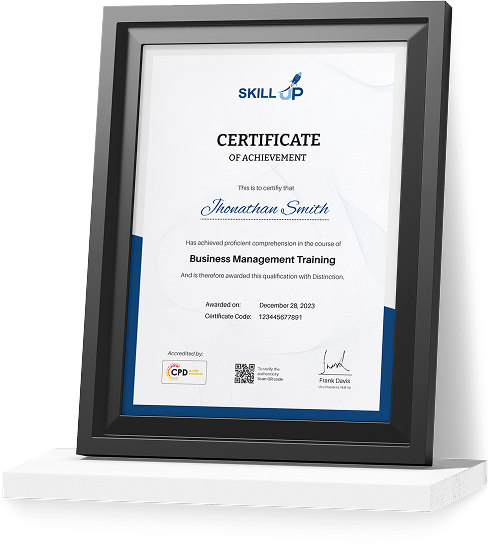
Show Your Certified Identity with a CPD-QS Certificate
Perfect for employers, clients, or academic verification.

Career Path
- Network Support Technician – Maintain network connections, resolve connectivity issues, and assist users with technical problems. This role is ideal for those starting their IT journey after completing CompTIA Network+ Training and developing core networking knowledge.|Entry-level professionals typically earn around £25,000–£38,000 per year.
- IT Support Engineer – Support businesses by troubleshooting hardware, software, and network challenges. Strong Network Troubleshooting skills, along with knowledge of TCP/IP concepts, can help you progress into advanced technical roles.|Professionals in this position often receive £28,000–£42,000 annually.
- Network Administrator – Configure and manage routers, switches, VLANs, wireless networks, and essential network services. A CompTIA Network+ Certification provides valuable knowledge for maintaining reliable business networks.|Average earnings range from £35,000–£50,000 each year.
- Systems Administrator – Manage servers, user access, cloud platforms, backups, and infrastructure security. This career path suits learners who want to expand their networking and IT operations expertise.|Typical pay falls between £35,000 and £55,000 annually.
- Network Security Analyst – Monitor network activity, identify vulnerabilities, and support security improvements through effective protection strategies. Understanding Network Security can help you move towards cybersecurity-focused opportunities.|Experienced professionals can earn approximately £40,000–£65,000 per year.
- Infrastructure Engineer – Design, maintain, and optimise enterprise networks across physical and cloud environments. The knowledge gained from this CompTIA Network+ Course can support progression into senior infrastructure roles.|Skilled engineers may achieve salaries of £45,000–£70,000+ annually.
Frequently Asked Questions
The CompTIA Network+ Certification validates your understanding of TCP/IP Networking, Network Security, and Network Troubleshooting. As a result, it can strengthen your CV, prepare you for networking roles, and provide a solid foundation for further IT certifications.
The CompTIA Network+ N10-008 exam covers networking, routing, switching, wireless technologies, and security. However, with structured CompTIA Network+ Training and regular study, learners can build the knowledge needed to approach the exam with confidence.
Yes. Many learners prepare within two months through consistent study. This CompTIA Network+ Online Course also serves as a structured CompTIA Network+ Study Guide, making complex networking topics easier to understand.
If you are new to networking, Network+ Certification is often the best starting point because it covers broad networking concepts before moving to vendor-specific technologies such as Cisco CCNA.
This CompTIA Network+ UK programme supports careers including Network Support Technician, IT Support Engineer, Network Administrator, Systems Administrator, and Infrastructure Engineer across many industries.
The course covers TCP/IP Networking, IP addressing, routing, switching, wireless networking, cloud computing, virtualisation, Network Security, and Network Troubleshooting, following the CompTIA Network+ N10-008 certification objectives.
CompTIA Network+ Certification (N10-008) Reviews

Excellent
98%
Would Recommend147
Certified Learners100%
Authentic ReviewsAn excellent course that explains networking concepts in a clear and structured way.
A comprehensive Network+ course with practical explanations and easy-to-follow content.
Fantastic preparation for anyone studying towards the CompTIA Network+ certification.
Curriculum
-
Introduction to Network+
00:03:00
-
What’s on the Network+ Exam
00:02:00
-
What Can You Do with a Network+ Certification
00:03:00
-
The OSI Model
00:13:00
-
Meet the Frame
00:06:00
-
The MAC Address
00:07:00
-
Broadcast vs. Unicast
00:04:00
-
Introduction to IP Addressing
00:08:00
-
Packets and Ports
00:05:00
-
Network Topologies
00:05:00
-
Coaxial Cabling
00:05:00
-
Twisted Pair Cabling
00:05:00
-
Fiber Optic Cabling
00:09:00
-
Fire Ratings
00:05:00
-
What is Ethernet?
00:06:00
-
Ethernet Frames
00:07:00
-
Terminating Twisted Pair
00:08:00
-
Hubs vs. Switches
00:12:00
-
Connecting Switches
00:05:00
-
100BaseT
00:05:00
-
Gigabit Ethernet and 10-Gigabit Ethernet
00:05:00
-
Transceivers
00:07:00
-
Connecting Ethernet Scenarios
00:14:00
-
Introduction to Structured Cabling
00:04:00
-
Terminating Structured Cabling
00:08:00
-
Equipment Room
00:07:00
-
Alternative Distribution Panels
00:04:00
-
Testing Cable
00:09:00
-
Troubleshooting Structured Cabling, Part-1
00:04:00
-
Troubleshooting Structured Cabling, Part-2
00:04:00
-
Using a Toner and Probe
00:03:00
-
Wired Connection Scenarios
00:10:00
-
Introduction to IP Addressing and Binary
00:13:00
-
Introduction to ARP
00:04:00
-
Subnet Masks
00:12:00
-
Classful Addressing
00:10:00
-
Subnetting with CIDR
00:10:00
-
More CIDR Subnetting Practice
00:10:00
-
Dynamic and Static IP Addressing
00:05:00
-
Special IP Addresses
00:07:00
-
IP Addressing Scenarios
00:15:00
-
Introducing Routers
00:15:00
-
Understanding Ports
00:03:00
-
Network Address Translation (NAT)
00:06:00
-
Implementing NAT
00:02:00
-
Forwarding Ports
00:18:00
-
Tour of a SOHO Router
00:12:00
-
SOHO vs. Enterprise
00:09:00
-
Static Routes
00:13:00
-
Dynamic Routing
00:10:00
-
Routing Information Protocol (RIP)
00:04:00
-
Open Shortest Path First (OSPF)
00:03:00
-
Border Gateway Protocol
00:06:00
-
Transmission Control Protocol (TCP) and User Datagram Protocol (UDP)
00:07:00
-
ICMP and IGMP
00:06:00
-
Handy Tools
00:07:00
-
Introduction to Wireshark
00:10:00
-
Introduction to netstat
00:09:00
-
Web Servers
00:12:00
-
File Transfer Protocol (FTP)
00:12:00
-
E-mail Servers and Clients
00:09:00
-
Securing E-mail
00:06:00
-
Telnet and SSH
00:09:00
-
Network Time Protocol (NTP)
00:03:00
-
Network Service Scenarios
00:09:00
-
Understanding DNS
00:07:00
-
Applying DNS
00:19:00
-
net Command
00:08:00
-
Windows Name Resolution
00:11:00
-
Dynamic DNS
00:05:00
-
DNS Troubleshooting
00:13:00
-
Making TCP/IP Secure
00:04:00
-
Symmetric Encryption
00:05:00
-
Asymmetric Encryption
00:03:00
-
Cryptographic Hashes
00:05:00
-
Identification
00:08:00
-
Access Control
00:04:00
-
AAA
00:05:00
-
Kerberos/EAP
00:07:00
-
Single Sign-On
00:10:00
-
Certificates and Trust
00:14:00
-
Certificate Error Scenarios
00:08:00
-
Switch Management
00:09:00
-
Introduction to VLANs
00:10:00
-
InterVLAN Routing
00:03:00
-
Trunking
00:08:00
-
Cisco Commands
00:06:00
-
Switch Port Protection
00:07:00
-
Port Bonding
00:07:00
-
Port Mirroring
00:03:00
-
Quality of Service
00:05:00
-
IDS vs. IPS
00:04:00
-
Proxy Servers
00:13:00
-
Load Balancing
00:08:00
-
Device Placement Scenarios
00:13:00
-
Introduction to IPv6
00:13:00
-
IPv6 Addressing
00:15:00
-
IPv6 in Action
00:13:00
-
IPv4 and IPv6 Tunneling
00:05:00
-
Understanding IP Tunneling
00:06:00
-
WAN Technologies
00:06:00
-
Digital Subscriber Line (DSL)
00:04:00
-
Connecting with Cable Modems
00:04:00
-
Connecting with Satellites
00:02:00
-
Cellular Technologies
00:04:00
-
Remote Desktop Connectivity
00:04:00
-
Virtual Private Networks (VPNs)
00:09:00
-
WAN Troubleshooting Scenarios
00:05:00
-
Introduction to 802.11
00:12:00
-
802.11 Standards
00:12:00
-
Power Over Ethernet (PoE)
00:04:00
-
Antennas
00:09:00
-
Wireless Security Standards
00:06:00
-
Implementing Wireless Security
00:07:00
-
Threats to Your Wireless Network
00:07:00
-
Enterprise Wireless
00:06:00
-
Installing a Wireless Network
00:15:00
-
Wireless Scenarios
00:06:00
-
More Wireless Scenarios
00:09:00
-
Virtualization Basics
00:07:00
-
Your First Virtual Machine
00:07:00
-
Cloud Basics
00:03:00
-
Cloud Services
00:07:00
-
Cloud Ownership
00:02:00
-
Infrastructure as Code (IaC)
00:03:00
-
Heroku Demo
00:09:00
-
Enterprise Virtualization
00:05:00
-
Cloud Implementation
00:11:00
-
Classic Data Center Architecture
00:12:00
-
NAS and SAN
00:16:00
-
The Modern Data Center
00:09:00
-
High Availability
00:11:00
-
Documenting the Datacenter
00:08:00
-
Network Types
00:04:00
-
Internet of Things (IoT)
00:07:00
-
Voice Over IP (VoIP)
00:11:00
-
Industrial Control Systems and SCADA
00:09:00
-
What are Network Operations?
00:03:00
-
Hardening and Security Policies
00:08:00
-
Change Management
00:07:00
-
Patching and Updating
00:07:00
-
Security Risk Management
00:05:00
-
Points of Failure
00:04:00
-
Standard Business Documentation
00:05:00
-
Incident Response and Forensics
00:05:00
-
Disaster Recovery and Backups
00:12:00
-
Business Continuity
00:12:00
-
Deployment Models
00:05:00
-
Security Concepts
00:06:00
-
Defense in Depth
00:05:00
-
Rogue DHCP Servers
00:04:00
-
Denial of Service (DoS)
00:10:00
-
On-Path and Spoofing Attacks
00:23:00
-
Password Attacks
00:06:00
-
VLAN Hopping
00:06:00
-
System Life Cycle
00:04:00
-
Malware
00:06:00
-
Social Engineering
00:08:00
-
Common Vulnerabilities
00:03:00
-
Physical Security
00:13:00
-
Network Hardening
00:08:00
-
Demilitarized Zone (DMZ)
00:05:00
-
Introduction to Firewalls
00:04:00
-
Firewalls
00:10:00
-
Networking Monitoring
00:08:00
-
SNMP
00:15:00
-
Documenting Logs
00:07:00
-
System Monitoring
00:08:00
-
Security Information and Event Management (SIEM)
00:07:00
-
Network Troubleshooting Theory
00:05:00
-
Order Your Certificate

Offer Ends in
-
Duration:21 hours, 28 minutes
-
Access:1 Year
-
Units:171

9 Reviews

TAKE ALL COURSES FOR £99