
Nursing Associate career plans often start with one stressful question: “How do I move from care work into nursing without choosing the wrong route?” You may understand patients, teamwork and compassion, but regulated nursing roles can feel confusing. The Level 3 Diploma in Nursing Assistant Training and Nursing Assistance help you build core care knowledge before moving towards an approved nursing associate pathway.
The risk is starting care work without knowing patient safety, clinical limits or NMC registration rules. Good training helps you understand your role, protect patients and apply with confidence. Demand is clear: NHS England reported over 5,500 nursing associates already working in the NHS, with training places planned to rise to 10,500 by 2031/32, making this a strong route into nursing.
In this guide, you will learn what nursing associates do, how to become one, what qualifications you need, how trainee nurse associate jobs work, what Band 4 pay looks like, and how the role can lead towards registered nursing, newly qualified nurses NHS roles, practice development nurse opportunities and wider nursing career pathways.
Ready to build confidence before applying for Nursing Associate roles? Start with the Level 3 Diploma in Nursing Assistant Training or Nursing Assistance and use this guide as your roadmap into healthcare, patient support and future nursing progression in the UK.
What Is a Nursing Associate in the UK? Role, Meaning and 2026 Career Outlook
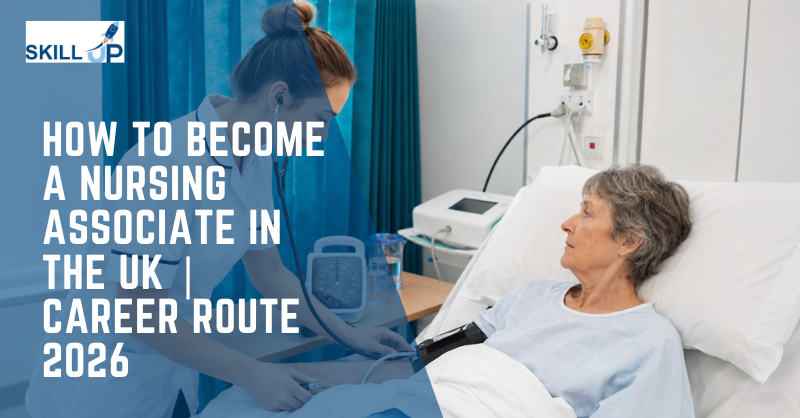
A nursing associate is a registered healthcare professional in England who supports patients while working alongside registered nurses and wider care teams. The role sits between healthcare assistant work and registered nursing. You may check observations, support care plans, help with personal care, record patient information, communicate with families and raise concerns when a patient’s condition changes.
However, a nursing associate does not replace a registered nurse. Registered nurses assess complex needs, plan care and make higher-level clinical decisions. Instead, nursing associates strengthen the team by bringing care knowledge, patient contact and clinical support together in one regulated role.
Think of the nursing associate as a bridge between patients and the wider nursing team. When someone feels anxious, confused or vulnerable, your words, checks and actions matter. Careful observation can highlight risk. Clear notes can support safer care. A calm conversation can help the patient feel seen.
Moreover, nursing associates work across hospitals, GP surgeries, community teams, care homes, mental health services and private healthcare. This makes the role a strong route for care assistants, healthcare assistants and support workers who want structured career progression.

What Does a Nursing Associate Do? Daily Duties, Patient Care and Clinical Support
A nursing associate supports patients, families, registered nurses and wider care teams across hospitals, GP surgeries, community services and care homes. The National Careers Service explains that nursing associates care for sick people of all ages in hospital and community settings while working closely with registered nurses. Therefore, the role needs care, accuracy, confidence and clear communication every day.
Here are the main duties that show how nursing associates support safer, calmer and more organised patient care:
Checking temperature, pulse, breathing and blood pressure
Firstly, you monitor key observations so the nursing team can understand how a patient is doing. You record readings clearly and report changes quickly. This matters because small changes can sometimes show early signs of risk.
Supporting safe movement and comfort
Next, you help patients move, sit, stand or settle safely. You follow moving and handling guidance and notice pain, weakness or distress. As a result, patients feel supported while the team reduces avoidable injury.
Helping patients with personal care
Moreover, you support washing, dressing, toileting, eating and dignity. You do this with patience and respect. Good personal care protects comfort, confidence and emotional wellbeing.
Recording clear care notes
Then, you update records with observations, concerns and care actions. You use clear language so other staff can understand the patient’s situation. Accurate notes support continuity and safer decisions.
Supporting infection prevention
Finally, you follow hygiene, PPE and cleaning procedures. You help reduce the spread of infection in busy care environments. This protects patients, staff and visitors.
Job description of assistant in nursing
If you search for the job description of assistant in nursing, you may see similar care duties such as observations, personal care and patient support. However, a nursing associate has a regulated title in England and works within an NMC-defined professional scope.
In simple words, nursing associates connect patient care, clinical support and clear communication when people need safety and reassurance most.

Nursing Associate vs Healthcare Assistant vs Registered Nurse: Key Differences Explained
These roles often sit close together, but they differ in training, registration, clinical responsibility and career scope.
Healthcare assistants provide personal care, comfort and basic observations while working under supervision. By contrast, nursing associates complete an approved programme and join the NMC register. Registered nurses carry a wider scope and lead complex assessments, care planning and clinical decisions.
Think of the three roles as stages on a healthcare career ladder rather than competing positions. Healthcare assistant work builds frontline care experience. Nursing associate practice adds regulated knowledge and broader clinical support. Meanwhile, registered nursing brings greater accountability for assessment, planning and complex care.
A simple comparison helps:
Healthcare Assistant:
A Healthcare Assistant supports basic care, comfort, communication and observations.
Nursing Associate:
Nursing Associate bridges care assistant and registered nurse work in England.
Registered Nurse:
Registered Nurse assesses, plans, leads and manages more complex nursing care.
A Nursing Assistant Course can support early confidence, especially if you are new to patient care. It does not make you a nursing associate, but it can prepare you for healthcare language, duties and expectations.
Nursing Associate vs Healthcare Assistant vs Registered Nurse:
These three roles support patient care, but each one carries a different level of training, responsibility and clinical scope. Therefore, the best way to understand them is to compare what each role can do, how much responsibility it holds and where it can lead.
Key Difference | Healthcare Assistant | Nursing Associate | Registered Nurse |
Main role | Supports patients with daily care, comfort, hygiene, mobility and basic observations. | Bridges healthcare assistant work and registered nursing by providing wider clinical support. | Leads patient assessment, care planning, clinical decisions and complex nursing care. |
Training level | Employers usually provide workplace training, with care certificates or short courses helping beginners. | Completes an NMC-approved nursing associate programme before joining the register. | Completes an approved nursing degree and registers with the NMC as a nurse. |
Clinical responsibility | Works under supervision and reports concerns to senior staff. | Works within a defined scope and supports registered nurses with patient care. | Holds accountability for nursing care, risk decisions and care coordination. |
Career use | Builds frontline healthcare experience. | Offers progression from care work towards nursing. | Opens wider nursing, leadership and specialist pathways. |
How to Become a Nursing Associate in the UK: Step-by-Step Route for Beginners
Becoming a nursing associate starts with one simple move: understand the role before you apply. The route usually combines care experience, English and maths evidence, approved Level 5 study and NMC registration. The National Careers Service says you can start as a healthcare assistant or care worker, then apply for a nursing associate higher apprenticeship after gaining experience.
Here is the beginner-friendly route that can take you from care experience to registered nursing associate work:
Build care experience through HCA, care assistant or support worker roles
Firstly, start where patient care happens every day. HCA, care assistant and support worker roles help you understand dignity, communication, personal care and teamwork. This experience also gives you real examples for your application and interview.
Gain English and maths evidence
Next, check your English and maths qualifications. Many routes ask for GCSEs or Functional Skills evidence. Strong literacy and numeracy help you record notes, understand instructions and support safer care.
Apply for trainee nurse associate jobs or foundation degree routes
Then, look for trainee nurse associate jobs, NHS apprenticeship posts or foundation degree options. Read each advert carefully. Employers want people who can care well and study at Level 5.
Complete an approved Level 5 nursing associate programme
After that, complete approved study with workplace learning. You build knowledge in patient care, observation, communication and professional practice. This step prepares you for regulated responsibilities.
Register with the NMC
Once you complete the programme, apply to join the NMC register. Registration matters because nursing associate is a protected title in England. Without it, you cannot call yourself a nursing associate.
Apply for Band 4 nursing associate roles
Finally, apply for registered nursing associate jobs. Many NHS roles sit at Band 4. Use your care experience, training and NMC registration to show you are ready.
With the right route, you can turn care experience into a regulated nursing associate career with clear progression.
Level 5 Nursing Associate Apprenticeship Jobs in the UK with NHS Employers
The Level 5 nursing associate apprenticeship is one of the main routes into the role. It usually combines paid work with study. Skills England lists the nursing associate apprenticeship at Level 5, and official apprenticeship listings describe the role as providing care for people of different ages, backgrounds and beliefs. Many NHS employers recruit trainee nursing associates from existing staff. That means healthcare assistants, care workers and support workers may have a route to progress without leaving employment. This is why trainee nurse associate jobs are attractive. You can earn while learning and build evidence in a real health or care setting. However, places can be competitive.
Before applying, focus on the qualities NHS employers often look for in trainee nurse associate jobs:
Care experience
Firstly, care experience shows that you understand patients, routines and workplace pressure. HCA, care assistant or support worker roles can help you build this foundation. Employers value real examples from daily care.
English and maths readiness
Next, you need strong English and math skills. These help you write accurate notes, follow instructions and understand clinical information. Many employers ask for GCSE or Functional Skills evidence.
Teamwork
Moreover, nursing associates rarely work alone. You support nurses, doctors, therapists and care staff. Good teamwork keeps patient care coordinated and safe.
Patient respect
Then, you must treat every patient with dignity. This includes privacy, choice, culture and emotional comfort. Respect builds trust during vulnerable moments.
Clear communication
Clear communication helps you explain, listen and report concerns. It also reduces errors. A calm message can make a busy ward feel safer.
Willingness to study
The apprenticeship requires commitment. You must balance work, learning and assessments. Therefore, motivation matters.
Understanding of confidentiality
Finally, you need to protect patient information. Confidentiality supports trust and professional behaviour. A Safeguarding Training Course can strengthen your awareness before working with vulnerable people.
Build Your Nursing Knowledge Before Applying
Not ready to apply for a Level 5 nursing associate apprenticeship yet? The Level 3 Diploma in Nursing Assistant Complete Training can help you build essential knowledge of patient care, safeguarding, infection control, communication and healthcare responsibilities.
A Level 5 apprenticeship can turn care experience into nursing associate progression with paid learning, structure and stronger career direction.
Nursing Associate Entry Requirements: GCSEs, Functional Skills and Access Routes
Nursing associate entry requirements can vary by employer, university and apprenticeship provider. However, English, maths and care readiness matter in almost every route. NHS nursing associate guidance says learners usually need GCSEs grade 9 to 4, or A* to C, in English and maths, or Functional Skills Level 2 in both subjects before starting nursing associate training.
The National Careers Service also says the apprenticeship route usually needs two or more GCSEs at grades 9 to 4, including English and maths.
Some universities or employers may ask for care experience, Level 3 study, a strong interview, references or evidence that you can study at foundation degree level. If you studied overseas, you may need evidence that your qualifications match UK standards.
Before you apply, look at the common access routes that can help you move towards trainee nursing associate opportunities:
Healthcare assistant experience
Firstly, healthcare assistant work gives you direct patient contact. You learn observations, dignity, communication and team routines. This experience helps you show employers that you understand real care settings.
Care assistant work
Next, care assistant roles build confidence with personal care, mobility support and emotional reassurance. You support people through daily needs. Therefore, this route can strengthen your patient-centred examples.
Support worker experience
Moreover, support worker roles help you understand independence, safeguarding and person-centred planning. You may work in mental health, disability or community care. This broad experience can make your application stronger.
Access to Nursing courses
Then, Access to Nursing courses can prepare you for higher-level study. They may help if you lack traditional academic qualifications. Always check whether your chosen provider accepts the course.
Level 3 health and social care study
Level 3 study can show subject knowledge and learning readiness. It introduces care values, safeguarding, communication and health needs. Employers may see it as useful preparation.
Functional Skills English and maths
Finally, Functional Skills Level 2 can support learners without GCSE English and maths. These skills help you write notes, understand instructions and use numbers safely.
The right entry route helps you move from care experience to nursing associate training with stronger confidence and clearer direction.
Can You Become a Nursing Associate Online? CPD Courses, Access to Nursing Courses and What They Can Actually Do
You cannot become a registered nursing associate through a short online CPD course alone. The NMC protects the nursing associate title in England, so you must complete an approved programme and join the NMC register before using it. However, online learning can still prepare you for care language, patient communication, safeguarding, infection control and interview confidence before you apply.
Before choosing a course, understand how online learning can support your journey without replacing NMC-approved training:
Understand care values
Firstly, online learning can introduce dignity, respect, compassion and person-centred care. These values shape every healthcare role. When you understand them early, you can speak more confidently in applications and interviews.
Improve healthcare communication
Next, you learn how to speak with patients, families and care teams clearly. Good communication reduces confusion and supports safer care. It also helps you recognise when you must report a concern to senior staff.
Prepare for interviews
Moreover, CPD study can give you useful examples for interview answers. You can explain what you learned about safeguarding, patient safety or confidentiality. This makes your application sound more prepared and focused.
Build subject awareness
Then, online courses can introduce common healthcare topics such as infection control, personal care and record keeping. These topics help you understand job adverts more easily. They also make the workplace feel less unfamiliar.
Support your CV
A CPD course can show motivation and interest in healthcare. It does not make you a registered nursing associate, but it can strengthen your beginner profile. Employers often value learners who take career preparation seriously.
Explore whether healthcare suits you
Finally, online learning helps you test your interest before committing to a longer route. You can see whether patient care, study and responsibility feel right for you. This can help you make a better career decision.
Online courses can build confidence, but only an NMC-approved programme can lead to nursing associate registration. The Nursing Assistance course introduces patient care, healthcare communication, infection prevention, mobility support, nutrition, patient comfort and professional responsibilities.
NMC-Approved Nursing Associate Programmes and Registration Explained
If you want to become a nursing associate, one fact matters more than anything else: registration protects the role. The NMC regulates nursing associates in England, sets education standards, approves training programmes and keeps the official register. Therefore, you cannot simply complete a short course and use the title. You must complete an approved nursing associate programme, then apply to join the NMC register.
This rule protects patients, employers and learners. It draws a clear line between career preparation and professional registration. A CPD course can build confidence, but an NMC-approved programme gives you the regulated route. The Nursing and Midwifery Council advises learners to check approved programmes before choosing training.
Here is what NMC registration means in simple terms:
- Choose an NMC-approved nursing associate programme before starting your training.
- During the programme, you study patient care, professional standards, safety and clinical responsibility.
- Academic learning combines with supervised workplace experience.
- After completing the programme, apply to join the NMC register.
- Only registered professionals can use the nursing associate title in England.
- Every nursing associate must follow the NMC Code in daily practice.
- Safe working also requires you to understand your professional limits and report concerns appropriately.
- Continued learning helps you keep your knowledge, skills and practice current.
NMC registration turns nursing associate training into professional recognition, giving patients, employers and learners a safer, clearer route forward.
Nursing Associate Salary UK 2026/27: Trainee Pay, Band 4 Pay, Band 5 Progression and Registered Nurse Hourly Wage
Nursing Associate pay matters because it shows where the role sits in the NHS career ladder. Trainee roles often align with Band 3, registered nursing associate posts usually sit at Band 4, and registered nurse progression usually starts at Band 5. NHS Employers lists 2026/27 pay as Band 3 from £25,760, Band 4 from £28,392 and Band 5 from £32,073.
Many learners compare nurse salary per hour because hourly pay makes shifts, overtime, part-time work and bank roles easier to understand. For nursing associates, pay often starts around Band 4 after registration, while registered nurse progression usually begins at Band 5.
Here is what the pay route means in simple terms:
- Trainee nursing associate apprenticeship roles often align with Band 3.
- After NMC registration, nursing associates usually enter Band 4 positions.
- Further approved nurse training can open Band 5 registered nurse opportunities.
- London roles may add high-cost area payments to basic salary.
- Hourly pay helps compare shifts, overtime and part-time work.
- Private employers may use different pay rates and benefits.
- Experience can increase earnings through NHS pay progression points.
- Further nurse training can open Band 5 and specialist routes.
So, when people search for a nurse salary per hour, they are really asking about progression, responsibility and long-term opportunity.

Latest Nursing Associate Jobs in London: NHS Trusts, Private Hospitals and Current Nursing Vacancies
London offers many routes for nursing associates because healthcare runs across hospitals, GP practices, community services, mental health teams and private clinics. However, competition can feel high because many learners search for the same roles. NHS Jobs updates vacancies regularly, so check listings often and compare duties, salary, shift patterns and registration requirements before applying.
Use different search terms so you do not miss relevant roles across NHS and private healthcare:
nursing associate jobs London
Firstly, use this broad search when you want Band 4 registered roles across London. It can show jobs in hospitals, community trusts and specialist services. Always check whether the advert asks for active NMC registration.
trainee nursing associate London
Next, search this phrase if you still need the apprenticeship route. These roles usually combine paid work with study. Employers may ask for care experience, English and maths evidence and strong motivation.
Band 4 nursing associate
Moreover, Band 4 searches help you find NHS registered nursing associate roles. These posts usually need NMC registration. Read the person specification carefully before applying.
registered nursing associate
Then, use this term to find roles that clearly require professional registration. It helps you avoid support roles that sound similar. You can check live NHS vacancies through NHS Jobs.
current nursing vacancies London
This wider search can reveal related nursing and support roles. It may include HCA, nursing assistant, registered nurse and community posts. Use filters to narrow location and pay band.
private hospital nursing associate jobs
Finally, check private hospital career pages as well as NHS listings. Private employers may use different titles, pay rates and benefits. Compare the job description before applying.
Smart searching helps you find nursing associate opportunities faster, compare routes clearly and apply with stronger confidence.
Where Can Nursing Associates Work? NHS, GP Surgeries, Community Care, Care Homes and Private Healthcare
Nursing associates can work across many healthcare and social care settings. The NMC explains that nursing associates support people of all ages in health and care services. You may work with adults, children, older people, mental health patients or people with learning disabilities. Therefore, this role gives you flexible career options, not just hospital-based work.
Here are the main workplaces where nursing associates can build experience and support safer patient care:
NHS Hospitals
Firstly, NHS hospitals offer busy ward, outpatient and specialist department experience. You may check observations, support personal care and report changes to registered nurses. This setting suits people who enjoy fast teamwork and clear routines.
GP Surgeries and Primary Care Networks
Next, GP surgeries and primary care networks bring care closer to local communities. You may support health checks, long-term condition reviews and patient communication. This setting suits learners who enjoy steady patient contact and organised appointments.
Community Nursing Teams
Moreover, community teams support patients in their own homes or local clinics. You may help with observations, care updates and wellbeing checks. This work builds independence, confidence and strong communication skills.
Mental Health Services
Then, mental health settings need patience, listening and emotional awareness. You may support daily care, safety checks and therapeutic communication. A Mental Health Support Worker Course can help you understand this environment before applying.
Care Homes and Hospices
Care homes and hospices focus on dignity, comfort and long-term support. You may build strong relationships with residents, families and care teams. This setting suits people who value compassion, patience and continuity of care.
Private Hospitals
Private hospitals may offer surgical, outpatient or specialist clinic roles. You still need to follow professional standards and work within your scope. However, pay, benefits and job titles may differ from NHS roles.
Rehabilitation Services
Finally, rehabilitation services help people recover after illness, injury or surgery. You may support mobility, confidence, personal care and progress tracking. This setting suits people who enjoy seeing patients regain independence step by step.
Different workplaces shape different strengths, so choose the setting that matches your confidence, interests and long-term nursing plans.

How to Apply for Trainee Nursing Associate and NHS Nurse Jobs: CV, Supporting Statement and Interview Tips
Applying for trainee nursing associate and NHS nurse jobs is not about sounding perfect. It is about showing care, judgement and readiness to learn. Employers want people who can support patients safely, respect confidentiality and work well in busy teams. Before applying, read the advert on NHS Jobs and match your examples to the role.
Use your CV and supporting statement to prove you understand patient care, not just that you want a healthcare job:
- Show real care experience: Mention HCA, care assistant, support worker, volunteering or family care experience.
- Highlight communication skills: Explain how you listened, reassured someone or passed information clearly.
- Include safeguarding awareness: Show that you understand risk, reporting concerns and protecting vulnerable people.
- Mention confidentiality: Employers need to know you can handle patient information responsibly.
- Use examples from pressure situations: Describe how you stayed calm, followed instructions and supported others.
- Connect non-healthcare skills: Retail, hospitality and admin can show patience, accuracy and teamwork.
- Match the person specification: Use the employer’s own keywords, then support them with evidence.
- Show willingness to study: Trainee roles need motivation, discipline and Level 5 learning readiness.
Interview questions may include:
- Why do you want to become a nursing associate in the NHS?
- How would you support a distressed patient with dignity and patience?
- What does confidentiality mean in a busy healthcare setting?
- How do you manage pressure during a difficult shift?
- When would you escalate a concern to a registered nurse?
A strong application tells one clear story: you care about patients, understand responsibility and feel ready to grow.

Nursing Career Pathways After Nursing Associate: Registered Nurse, Band 5, Practice Development Nurse and Specialist Roles
A nursing associate role can become a powerful career bridge, especially if you want to move from patient support into registered nursing. Some people stay in Band 4 roles and build deeper experience, while others progress into nurse training, Band 5 posts and specialist pathways. NHS 2026/27 pay places Band 5 at £32,073–£39,043, Band 6 at £39,959–£48,117 and Band 7 at £49,387–£56,515.
Job Role | Short Description | Salary Estimation |
Registered Nurse | Provides patient assessment, care planning, medicines support and clinical decision-making. | £32,073 – £39,043 |
Community Nurse | Supports patients at home, in clinics and across local community services. | £32,073 – £48,117 |
Mental Health Nurse | Supports people with mental health needs in hospitals and community settings. | £32,000 – £48,000 |
Children’s Nurse | Cares for babies, children and young people with health needs. | £32,073 – £48,117 |
Practice Nurse | Works in GP surgeries, supporting screening, checks and long-term condition care. | £40,000 – £57,000 |
Practice Development Nurse | Supports nurse training, service improvement, mentoring and professional development. | £39,959 – £56,515 |
Clinical Educator | Teaches healthcare staff, supports learning plans and improves clinical practice. | £39,959 – £56,515 |
Specialist Nurse | Develops advanced knowledge in areas such as diabetes, cancer, respiratory care or safeguarding. | £39,959 – £56,515 |
A nursing associate pathway can help you grow from frontline care into registered, specialist and leadership-focused nursing careers. Nursing associate experience can support your future confidence if you later move into registered nurse training. After completing approved nurse education and NMC registration, you may apply for newly qualified nurses NHS roles, usually starting at Band 5.
Related Nursing Vacancies to Explore: Neonatal Nurse, Paediatric Nurse, Children’s Nurse, Mental Health Nurse, Occupational Health Nurse and Maternity Nurse Jobs
Once you understand the nursing associate route, you may start seeing wider nursing vacancies differently. Some roles need registered nurse status, while others may suit early healthcare experience. Therefore, use this section as a career map, not a shortcut. The National Careers Service explains that nurses can work across adult, child, mental health and learning disability care.
Explore these related roles as your confidence, training and registration develop:
- Neonatal nurse roles support newborn babies needing specialist clinical care.
- Paediatric nurse jobs focus on children, young people and families.
- Children’s nurse roles usually require child-field registered nurse training.
- Mental health nurse jobs support people facing emotional distress or illness.
- Occupational health nurse roles focus on employee health and workplace wellbeing.
- Maternity nurse jobs may include midwifery, nursery or maternity support routes.
- Community nurse roles support patients at home and local clinics.
- Specialist nurse vacancies often need experience, registration and extra training.
These roles show why nursing associate experience matters: it can help you understand patients, teams and future nursing pathways.
NHS, Private, Agency and Nurseplus Healthcare Jobs: Full-Time, Part-Time, Live-In, Community and Flexible Nursing Vacancies Across the UK
Healthcare work is not one single job market. You can find roles in the NHS, private healthcare, community providers, care homes, agencies and organisations such as Nurseplus. However, each advert uses different titles, duties and registration rules. Therefore, always check whether the role asks for a healthcare assistant, nursing associate or registered nurse before you apply.
Use these search terms to explore the wider healthcare job market with more confidence:
NHS Nursing Associate Jobs
Firstly, NHS nursing associate jobs often sit within hospitals, community trusts, mental health teams and primary care services. Many registered nursing associate roles require NMC registration. You can search live roles through NHS Jobs.
Private Healthcare and Nurseplus Healthcare Jobs
Next, private healthcare providers may offer nursing associate, healthcare assistant and support worker roles. Nurseplus and similar organisations may also list flexible healthcare vacancies. Always compare pay, duties, training and contract type before applying.
Agency Community Nurse and Live-in Nurse Jobs with Accommodation
Moreover, agency and live-in roles may offer flexible patterns or accommodation. Some roles need registered nurse status, while others focus on care support. Read the qualification rules carefully.
Care Worker Vacancies
Care worker vacancies can help beginners gain patient-facing experience. You may support personal care, mobility, meals and wellbeing. This experience can strengthen future trainee nursing associate applications.
Full-Time and Part-Time Nursing Jobs in London
Finally, London offers full-time, part-time and bank healthcare roles across NHS and private settings. Competition can be strong. A clear CV and focused supporting statement can help you stand out.
The right job search helps you compare routes, avoid confusion and choose healthcare roles that match your skills and goals.

Final Thought: Your Nursing Associate Career Does Not Need a Perfect Start
Becoming a nursing associate in the UK is not about rushing towards a job title. Instead, it means building the right foundation, choosing an approved route and understanding what the NMC expects.
If you are new to healthcare, start by developing your care knowledge, communication skills and confidence. For example, a Level 3 Diploma in Nursing Assistant Training or Nursing Assistance can support your early career preparation. However, these courses do not replace an approved nursing associate programme.
Once you feel ready, search for trainee nurse associate jobs, Level 5 apprenticeship routes and NMC-approved programmes. Then, check the entry requirements carefully before submitting your application. Ultimately, the route is clear: understand the role, meet the requirements, complete approved training and register correctly. Therefore, each informed step can move you closer to a nursing associate career in the UK.
Get valuable training, UK-focused support, and the skills employers want. No experience needed.
Join 50+ graduates who landed tech jobs with our industry-focused training programme designed for beginners.
Explore Now - Our Job Ready ProgrammeFrequently Asked Questions (FAQs)
How do I become a Nursing Associate in the UK?
To become a nursing associate in the UK, you normally need to complete an NMC-approved nursing associate programme, often through a Level 5 apprenticeship. You then apply for NMC registration before using the protected nursing associate title in England and working safely in registered practice.
What does a Nursing Associate do in the UK?
A nursing associate supports registered nurses by delivering planned care, monitoring patients, recording observations and helping people with daily health needs. The role bridges healthcare assistant and registered nurse work, so it suits learners who want more responsibility without starting directly on a nursing degree.
What is the difference between a Healthcare Assistant and a Nursing Associate?
A healthcare assistant mainly supports personal care, comfort, observations and basic clinical tasks under supervision. A nursing associate has completed approved training, joins the NMC register in England and can take on wider delegated clinical duties while still working under registered nurse direction and accountability.
What is the Level 5 Nursing Associate Apprenticeship?
The Level 5 nursing associate apprenticeship usually combines paid employment with university or approved education provider study. Learners work in health or care settings, complete practice learning, build clinical skills and prepare for NMC registration, making it a popular earn-while-you-learn route into UK nursing careers.
What qualifications do I need to become a Nursing Associate?
Entry requirements vary by employer and education provider, but applicants often need GCSE English and maths or Functional Skills Level 2. Relevant care experience, healthcare assistant work, volunteering, communication skills and a strong supporting statement can also improve your chance of securing a trainee role.
Can I become a Nursing Associate through an online course?
You cannot become a registered nursing associate through a short online course alone. Online CPD or access-style learning can build confidence, healthcare knowledge and application readiness, but the protected role requires an NMC-approved nursing associate programme and successful registration before clinical practice safely in England.
How much does a Nursing Associate earn in the UK?
Nursing associate salary in the NHS usually aligns with Agenda for Change pay. Trainee roles may sit around Band 3, while registered nursing associate posts commonly sit at Band 4. Progression towards registered nurse training may later open Band 5 opportunities after further approved study.
Where can I find Nursing Associate jobs in London and the UK?
Search NHS Jobs using terms like trainee nursing associate, nursing associate apprenticeship, Band 4 nursing associate and London nursing associate. Also check NHS trust career pages, private hospitals, community providers, care organisations and recruitment agencies for full-time, part-time, community and flexible current nursing healthcare vacancies.
How do I apply for NHS Nursing Associate or nurse jobs?
To apply for NHS nurse jobs, read the person specification first, then match your supporting statement to essential criteria. Use examples from care, communication, safeguarding, teamwork and patient safety. For trainee nursing associate roles, show motivation, reliability, study readiness and clear understanding of supervised practice.
Can a Nursing Associate become a Registered Nurse?
Yes, a nursing associate can progress towards registered nursing through further approved education, such as a shortened nursing degree or degree apprenticeship where accepted. This makes the role valuable for healthcare assistants, support workers and care workers who want a structured route into nursing careers.





All Courses
Personal Development
Employability
Career Bundle
Management
Free QLS Certificate
IT & Software
Business
Technology
Health & Care
Quality Licence Scheme Endorsed Courses
Health & Safety
Training
Marketing
Job Ready Programme
Design
Accounting & Finance
Health and Fitness
Healthcare and Medical
Animal Care
Psychology
Microsoft Office
Teach & Education
I.T
HR and Leadership
Counselling and Therapy
Teaching & Child Care
Health and Social Care
Electrical & Electronics
Law
Food Nutrition
programming
Administration & Office Skills
Education
Language
Engineering
Cooking & Baking
Law & Criminology
Accounting
QLS Bundle
Office Skills
Awareness
Photography
Finance
Lifestyle
Diet and Nutrition
Makeup & Beauty
Therapy
Sports
First Aid
Accounting & Bookkeeping
Mathematics
Excel
Web Design
Top Rated Course
Diet and Fitness
Counselling
Agriculture
Networking & Design
General Education
Biotechnology
Audit
Economics
Lifestyle & Recreational
Adobe Photoshop
Travel and Tourism
Categories

Awarded By