
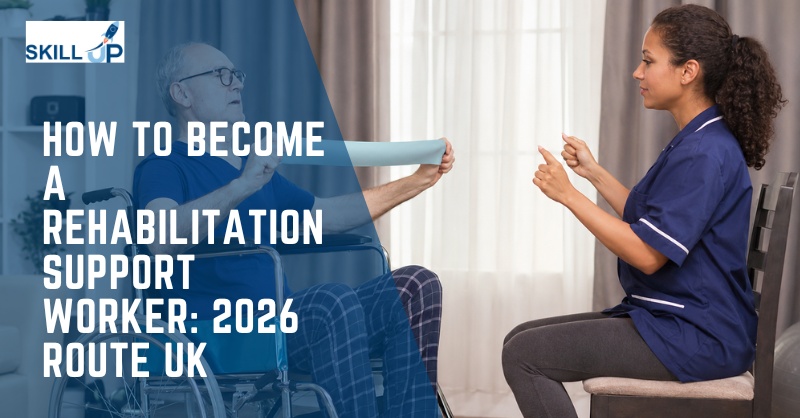
Rehabilitation Support Worker career goals often begin with one stressful question: how do I enter rehabilitation care when every advert asks for skills? You may have care or communication experience, but therapy support can feel complex because mobility, recovery plans and patient safety are involved. The Comprehensive Therapy & Rehabilitation Diploma Bundle: Play, Occupational, Physiotherapy & Speech Disorders can help you understand core therapy principles before you apply. In addition, it introduces various types of therapy and rehabilitation support.
The risk is simple: poor rehabilitation support can slow recovery, reduce independence and place people at risk. As a result, strong knowledge helps workers follow therapy plans, recognise changes and report concerns safely. Demand also remains significant. England’s adult social care sector had around 111,000 vacant posts during 2024/25, despite a 7% vacancy rate, while the NHS workforce reached more than 1.54 million in March 2026. Meanwhile, NHS Band 3 pay starts at £25,760 and Band 4 at £28,392.
This guide explains the Rehabilitation Support Worker role, daily duties, entry requirements, NHS pay bands and specialist career options. You will also learn how rehabilitation differs from clinical support, reablement, recovery work and psychological wellbeing practice. Most importantly, you will receive a practical roadmap for finding vacancies, writing applications and preparing for interviews. Ready to build confidence for rehabilitation support jobs? Start with the Comprehensive Therapy & Rehabilitation Diploma Bundle: Play, Occupational, Physiotherapy & Speech Disorders and use this roadmap.
What Is a Rehabilitation Support Worker? UK Job Description, Purpose and Alternative Job Titles
A Rehabilitation Support Worker helps people rebuild movement, confidence and independence after illness, injury or disability. In other words, the role sits at the heart of recovery. You may support exercises, daily routines, mobility practice and communication tasks while helping each person move towards agreed goals.
However, you do not diagnose conditions or design treatment plans. Instead, physiotherapists, occupational therapists, nurses and speech and language therapists lead those decisions. Instead, you follow assigned rehabilitation programmes, observe progress, record changes and report concerns.
Think of the Rehabilitation Support Worker as the link between therapy plans and everyday practice. For example, a person recovering from a stroke may need help walking safely. Similarly, someone with a brain injury may need support preparing food, remembering routines or communicating clearly. Therefore, your encouragement, patience and attention can shape progress.
Moreover, employers use several job titles for similar work. You may see rehabilitation assistants, therapy support workers, occupational therapy support workers, physiotherapy support workers, clinical support workers, reablement workers, technical instructors or neuro-rehabilitation assistants.
Still, titles can mislead. Two roles may sound identical but involve different patients, settings, supervision and responsibilities. Therefore, always read the job description carefully. In simple terms, you help people practise recovery skills safely, consistently and with dignity.

What Does a Rehabilitation Support Worker Do? Duties, Daily Routine and Patient Care
A Rehabilitation Support Worker turns a therapist’s plan into meaningful daily action. You may begin by reviewing recovery goals, preparing equipment and speaking with patients about their progress. Throughout the day, you support movement, personal care and everyday tasks while watching for changes. In addition, you update records and share concerns promptly. Therefore, NHS rehabilitation teams expect assistants to combine safe practical support with empathy, observation, teamwork and clear professional communication skills.
Current NHS therapy assistant roles centre on goal-directed rehabilitation under the supervision and delegation of registered therapists:
Following Assigned Rehabilitation Programmes and Supporting Mobility, Balance and Strengthening Exercises
Follow the therapist’s plan carefully. Then, guide each exercise safely. Adjust your encouragement as patients practise mobility, balance and strength within agreed clinical limits each day.
Helping with Personal Care, Everyday Living Skills and Independent Task Completion
Support washing, dressing and meals respectfully. Where possible, encourage patients to attempt manageable tasks. Step in only when safety, dignity or fatigue makes extra assistance genuinely necessary.
Using Approved Mobility Aids and Rehabilitation Equipment Safely
Check each aid before use. Before use, explain its purpose clearly. Help patients use frames, hoists or transfer equipment according to training and individual clinical safety instructions.
Observing Changes and Updating Care Notes and Clinical Records
Watch movement, mood and behaviour closely. Record clear facts. Report pain, confusion, weakness or emotional distress before the change affects recovery or immediate patient safety.
Reporting Progress, Protecting Confidentiality and Maintaining Professional Boundaries
Share progress promptly with registered professionals. Protect private information. Maintain boundaries, follow assigned goals and request supervision whenever a task exceeds your current professional competence.
Ultimately, your consistent support turns clinical plans into safer practice, stronger confidence and meaningful progress for every patient.

Who Do Rehabilitation Support Workers Help? Conditions, Ages and Rehabilitation Goals
Rehabilitation Support Workers help children, working-age adults and older people rebuild abilities that illness, injury, disability or addiction have affected. Depending on the person, their support may focus on movement, communication, memory, emotional stability or everyday independence. As a result, each person follows different goals, so workers must adapt their approach while following professional guidance. The National Careers Service explains that rehabilitation assistants help ill, injured and older people become as independent as possible through safe support.
The following patient groups show how widely individual rehabilitation needs and recovery goals can vary:
Stroke, Acquired Brain Injury, Neurological Conditions and Spinal Injuries
After a stroke, brain injury or spinal injury, people may struggle with movement, memory, speech or coordination. For this reason, workers support agreed exercises, daily routines and communication strategies. They also watch for fatigue, pain or behavioural changes and report concerns promptly to the rehabilitation team for review.
Orthopaedic Conditions, Physical Disabilities and Age-Related Loss of Independence
Orthopaedic conditions, physical disabilities and ageing can make washing, dressing, cooking or walking harder. Workers help people practise these tasks safely, use mobility aids correctly and conserve energy. Moreover, they encourage independence instead of completing every activity for the person unnecessarily during daily rehabilitation sessions.
Learning Disabilities, Autism and Mental Health Conditions
People with learning disabilities, autism or mental health conditions may need structured routines, clear communication and emotional reassurance. Workers adapt instructions, respect sensory needs and encourage informed choices. However, they must avoid assumptions because every person communicates, learns and responds to support in different ways.
Communication or Swallowing Difficulties and Rehabilitation Needs
Communication or swallowing difficulties may follow stroke, neurological illness or developmental conditions. Speech and language therapists design exercises, while workers prepare resources, support practice and record responses. Therefore, they must follow swallowing guidance precisely because unsafe food, drink or positioning can create serious immediate health risks.
Substance Misuse, Recovery Needs and Long-Term Functional Support
A recovery worker or therapeutic support worker may help people manage substance misuse, rebuild routines and maintain contact with treatment services. Long-term support can also involve housing, relationships and community participation. Nevertheless, these workers must follow care plans and respect professional boundaries throughout individual recovery.
Ultimately, effective rehabilitation starts with understanding each person’s condition, strengths, choices and goals—not simply completing tasks on their behalf.
Where Do Rehabilitation Support Workers Work? NHS Hospitals, Community Services and Residential Settings
A Rehabilitation Support Worker may work in hospitals, patients’ homes, specialist centres or residential services. However, each setting changes the pace, patient needs and level of independence expected. Hospital work often involves several patients and rapid discharge goals, while community work requires travel, time management and lone working. Nevertheless, wherever you work, you must follow rehabilitation plans, communicate with multidisciplinary teams and adapt support to each person’s environment, condition and recovery priorities.
Current NHS rehabilitation vacancies show how these five settings shape daily duties and working patterns:
NHS Rehabilitation Wards and Community Rehabilitation Teams
In NHS wards, you support several patients. By contrast, community teams often visit homes. Both settings require teamwork, accurate records and safe delivery of assigned rehabilitation plans.
Stroke Early Supported Discharge Services and Patients’ Homes
Stroke discharge teams help people return home sooner. You practise agreed activities in familiar surroundings. Therefore, you must communicate closely with families and clinicians regularly.
Neuro-Rehabilitation Centres and Mental Health Rehabilitation Units
Neuro-rehabilitation centres support complex physical and cognitive needs. Meanwhile, mental health units focus on recovery, routines and confidence. Both demand patience, observation and consistent boundaries daily.
Care Homes, Private Clinics and Charities with Residential Services
Care homes provide ongoing support. Similarly, private clinics may offer focused programmes. Charities and residential services often combine rehabilitation with social inclusion and practical daily living.
Local Authority Reablement Teams and Other Community-Based Rehabilitation Services
Reablement teams help people regain short-term independence at home. Community services require travel and time management. In addition, some posts need a driving licence and vehicle.
Ultimately, your ideal setting should match your strengths, preferred pace, travel options and interest in particular rehabilitation needs.
How to Become a Rehabilitation Support Worker in the UK: Step-by-Step Career Roadmap
There is no single route into rehabilitation support work. Employers assess your education, experience, values and ability to help people safely. You can enter through care work, volunteering, apprenticeships or related NHS clinical support roles. However, successful applicants understand rehabilitation goals, communicate clearly and respect professional boundaries. A focused plan helps you build relevant knowledge, present stronger evidence and target vacancies that match your current skills and long-term ambitions confidently.
The National Careers Service outlines several entry routes, so use these five steps to build a practical and focused application:
Learning How Rehabilitation Differs from General Care and Reviewing NHS and Private-Sector Job Descriptions
First, compare rehabilitation with general care. Read NHS and private job descriptions closely. Note assigned duties, patient groups, supervision levels and required practical skills carefully.
Checking English, Maths and Experience Requirements While Gaining Care, Support or Voluntary Experience
Next, check English, maths and experience requirements. Gain evidence through care work or volunteering. Record examples that show empathy, reliability, teamwork and safe judgement clearly.
Completing Relevant Introductory Training and Developing Safeguarding, Confidentiality and Communication Knowledge
Then, complete suitable introductory training. Build safeguarding, confidentiality and communication knowledge. Learn when to follow instructions, report concerns and request supervision from registered professionals promptly.
Preparing an NHS-Style CV and Supporting Statement While Searching Under Related Job Titles
Afterwards, create an NHS-style CV and tailored supporting statements. Match every essential criterion with evidence. Search for rehabilitation assistant, therapy support worker and reablement roles.
Applying for Suitable Band 2 or Band 3 Roles and Completing Induction and Workplace Competency Assessments
Finally, apply for suitable Band 2 or Band 3 vacancies. Prepare for values-based interviews. Complete employer induction, supervised practice and required workplace competency assessments successfully.
Ultimately, a focused route helps you enter rehabilitation support with stronger evidence, realistic expectations and safer professional foundations.

Rehabilitation Support Worker Entry Requirements, Qualifications and Mandatory Training
Entry requirements vary between employers, services and patient groups. Some organisations request GCSE English and maths, while others accept Functional Skills, care experience or qualifications. The Comprehensive Therapy Diploma Bundle can build introductory rehabilitation knowledge, but CPD does not replace a regulated qualification, employer induction or workplace competency assessment. Employers value compassion, communication, reliability and the judgement to follow instructions, report concerns and request supervision when responsibilities exceed your role. Build essential rehabilitation knowledge with the Comprehensive Therapy & Rehabilitation Diploma Bundle, covering occupational therapy, physiotherapy, play therapy and speech disorders to support informed preparation for future rehabilitation support careers.
The following development areas can strengthen your knowledge while preparing you for employer-led induction, supervision and workplace competency assessment:
The Care Certificate and Healthcare Support Worker Apprenticeships
First, complete the Care Certificate where required. Consider a healthcare support worker apprenticeship. As a result, both routes combine structured learning with supervised workplace development and formal assessment.
First Aid, Basic Life Support and Moving and Handling Training
Next, study first aid and basic life support. Learn safe moving techniques. Follow approved handling plans, equipment guidance and escalation procedures during everyday patient support.
Infection Prevention and Safeguarding Adults and Children
Moreover, learn infection prevention and safeguarding duties. Recognise possible abuse, neglect or contamination risks. Report concerns immediately through your employer’s approved procedures and reporting channels.
Learning Disability, Autism Awareness and Information Governance
Then, understand learning disability and autism support. Respect individual communication and sensory needs. Protect personal information by following information-governance rules and access controls consistently.
Confidentiality, Record Keeping and Professional Practice
Finally, maintain accurate records and confidentiality. Write factual observations promptly. Follow professional boundaries, assigned instructions and organisational policies while requesting guidance whenever uncertainty arises professionally.
The Care Certificate standards now contain 16 standards, including awareness of learning disability and autism.
Ultimately, suitable qualifications build knowledge, while induction, supervision and competency assessment prepare you to support rehabilitation safely and responsibly.
Can You Become a Rehabilitation Support Worker with No Experience?
Yes, you can become a Rehabilitation Support Worker without direct rehabilitation experience. The National Careers Service lists college, apprenticeships, healthcare assistant work, volunteering and direct applications as possible entry routes. However, employers still expect responsibility, dignity and safe judgement. For example, customer service and unpaid caring can demonstrate transferable skills. For example, agency healthcare assistant jobs with flexible shifts may build experience, but permanent roles often provide beginners with steadier supervision.
To convince employers, use clear examples that prove the following five qualities in real situations:
Show Empathy While Maintaining Professional Boundaries
First, show empathy through respectful listening. Protect professional boundaries. Support personal choice without making unrealistic promises, sharing private details or becoming emotionally dependent on patients.
Demonstrate Reliability, Punctuality and Calm Communication
Next, arrive prepared and on time. Communicate calmly under pressure. Consequently, reliability helps patients trust routines and allows colleagues to coordinate safe, consistent rehabilitation support.
Respect Confidentiality and Professional Standards
Moreover, protect every patient’s privacy. Share information only with authorised colleagues. Follow policies, record facts accurately and discuss sensitive matters only in appropriate private spaces.
Display Resilience During Difficult or Challenging Situations
Then, remain steady when progress slows or behaviour changes. Use healthy coping strategies. Seek support before stress affects your judgement, communication or patient care quality.
Follow Instructions Carefully and Seek Supervision When Needed
Finally, follow the assigned instructions exactly. Never improvise beyond your competence. Ask a supervisor whenever equipment, symptoms, behaviour or clinical directions create uncertainty or immediate risk.
Ultimately, beginners progress fastest when they combine strong values, structured supervision and consistent evidence of safe, dependable behaviour.
Rehabilitation Support Worker vs Clinical Support Worker, Therapy Assistant and Reablement Worker
Rehabilitation Support Workers, Clinical Support Workers, Therapy Assistants and Reablement Workers all help people maintain health, safety and independence. However, each role serves a different purpose. Rehabilitation staff support longer recovery goals, clinical staff assist wider healthcare tasks, therapy assistants follow assigned treatment activities, and reablement workers help people regain short-term independence at home. Understanding these differences helps you target vacancies and explain your experience accurately during applications and interviews.
Although these roles share care, communication and teamwork skills, their main duties, working environments and recovery goals differ considerably:
Rehabilitation Support Worker
A Rehabilitation Support Worker helps people rebuild abilities after illness, injury or disability. They follow rehabilitation plans, encourage independence and report progress safely to professionals.
Clinical Support Worker
In contrast, a Clinical Support Worker assists nurses and clinical teams with personal care, observations and routine procedures. Their duties depend on the hospital department or service.
Therapy Assistant
Meanwhile, a Therapy Assistant supports physiotherapy, occupational therapy or speech programmes. They prepare equipment, guide assigned activities, record responses and work safely under registered therapist supervision.
Reablement Worker
Finally, a Reablement Worker provides short-term support at home. They help people relearn everyday tasks, reduce dependency and regain confidence after illness, discharge or personal crisis.
The following table highlights the practical differences you should consider before choosing a role or submitting an application:
Comparison Area | Rehabilitation Support Worker | Clinical Support Worker | Therapy Assistant | Reablement Worker |
Primary Purpose | Promotes recovery after illness, injury or disability through structured practice. | Provides safe care across clinical departments within defined procedures. | Assists with occupational therapy, physiotherapy or speech programmes during planned sessions. | Restores everyday independence after illness or discharge over several weeks. |
Main Duties | Guides mobility, personal care and agreed rehabilitation activities. | Provides personal care, observations, records and assigned routine tasks. | Prepares equipment, guides exercises and records patient responses. | Practises washing, dressing, cooking, mobility and household routines. |
Setting and Supervision | Operates across hospitals, homes or specialist centres under multidisciplinary supervision. | Mainly assists nurses in hospitals, clinics or community services. | Supports registered therapists in hospitals, clinics, schools or homes. | Usually works in homes through councils or community care providers. |
Key Difference | Targets longer-term independence and functional progress. | Offers broad clinical assistance rather than rehabilitation alone. | Follows discipline-specific treatment plans and therapy goals. | Provides short-term support intended to reduce ongoing dependency. |
Overall, each role supports wellbeing differently, so choose the path that best matches your strengths, interests and preferred working environment.
NHS Speech and Language Therapy Assistant Jobs: Duties, Requirements and Vacancies
Could you help someone find their voice, understand instructions or swallow safely? NHS speech and language therapy assistant jobs in the UK turn that question into daily work. Under therapist supervision, you prepare resources, guide exercises, support sessions and record responses. For example, vacancies appear in hospitals, community teams and specialist schools. The National Careers Service reports salaries of £25,000 to £31,000 and 37 to 40 weekly hours. Employers value English, IT skills, teamwork and communication-support experience.
Before an interview, prepare examples that answer questions such as:
- How would you support someone struggling to communicate their needs clearly?
- What would you do if swallowing difficulties suddenly became worse?
- How do you record observations accurately without making clinical judgements?
- How would you adapt an activity for different communication abilities?
- When should you stop an exercise and contact the supervising therapist?
- How do you protect confidentiality when working with children and families?
- What experience shows you can work independently within assigned instructions?
- Why do you want to support speech and language rehabilitation?
With experience, you may progress into senior support, assistant practitioner or professional training.
Ultimately, this role suits careful listeners who turn therapy guidance into safer communication, confidence and everyday participation.
NHS Physiotherapy Assistant and Physical Rehabilitation Careers
Could you help someone regain movement after surgery, stroke or illness? NHS physiotherapy assistants turn rehabilitation plans into progress. They work under physiotherapists, guiding exercises, mobility practice, walking aids and equipment. Hospital roles involve several patients, while community assistants may visit homes and manage travel. The National Careers Service reports salaries of £25,000 to £31,000 and working weeks of 37 to 42 hours. Search for physiotherapy support worker, therapy assistant and physical rehabilitation worker vacancies too. Over time, experience may lead to senior support, Band 4 assistant-practitioner roles or approved physiotherapy training.
Before applying, prepare examples for these interview questions:
- How would you encourage a patient who fears movement after surgery?
- What would you do if a patient reported sudden severe pain?
- How do you follow assigned exercises without exceeding professional boundaries?
- How would you support safe walking with approved mobility equipment?
- What warning signs would make you stop an exercise immediately?
- How do you record progress accurately without making clinical judgements?
- How would you communicate with someone recovering from a stroke?
- Why do you want to work in physical rehabilitation services?
Ultimately, this career suits patient communicators who can turn professional guidance into safer movement, confidence and meaningful recovery.

Specialist Support Careers: Brain Injury, Autism, Learning Disability, Childcare and Behaviour Support
Specialist support careers connect through compassion, communication and safeguarding, yet each role solves a different problem. Brain injury workers rebuild routines, movement and confidence. Autism and learning disability workers support choice, communication and participation. Meanwhile, childcare, behaviour and SEN roles focus more strongly on development and education. Therefore, understanding these boundaries helps you target suitable vacancies, explain your skills honestly and avoid treating every support position as clinical rehabilitation work alone.
The National Careers Service shows how responsibilities change across the following five specialist support careers.
Residential Childcare Support Worker:
Residential childcare support workers protect children, support routines and encourage development. They record concerns, follow care plans and create safe, stable home environments every day.
Behaviour Support Assistant:
Behaviour support assistants help pupils manage emotions and participate in lessons. They follow school strategies, observe triggers and reinforce positive behaviour consistently across daily activities.
Therapeutic Support Worker:
Therapeutic support workers promote emotional stability through planned activities and relationships. They follow agreed approaches, maintain boundaries and report changes to relevant professionals very promptly.
SEN Learning Support Assistant:
SEN learning support assistants help pupils access education. They adapt classroom tasks, support communication and encourage independence while working closely with teachers and families daily.
Neuro-Rehabilitation Assistant:
Neuro-rehabilitation assistants support people after brain injury or neurological illness. They guide assigned activities, reinforce routines and monitor changes in movement, memory or behaviour closely.
Ultimately, the right specialist role depends on the people you want to support, the setting and your long-term career direction.

Mental Health, Wellbeing and Recovery Careers Related to Rehabilitation Support
Mental health, wellbeing and recovery careers help people rebuild routines, manage challenges and reconnect with everyday life. However, similar job titles can hide differences in training, responsibility and scope. A recovery worker may address substance misuse, while a psychological wellbeing practitioner delivers structured mental health interventions. Therefore, you must understand each pathway before applying. This knowledge helps you target vacancies, present experience and avoid entering a role with unrealistic expectations.
The following pathways show how responsibilities, training and daily work change across this broad mental health career cluster:
Assistant Psychological Wellbeing Practitioner NHS Careers UK
These assistants support practitioners and patients within NHS mental health services. They organise care, reinforce agreed activities and record observations. Entry requirements vary between employers.
Trainee Psychological Wellbeing Practitioner Jobs NHS
Trainees combine formal study with supervised NHS practice. They deliver structured low-intensity interventions. Therefore, applicants must meet academic requirements and show communication and reflective skills.
Wellbeing Practitioner and Wellbeing Officer Jobs UK
Wellbeing practitioners and officers promote routines, engagement and access to support. Duties vary widely. Therefore, read each person’s specification before assuming clinical responsibilities or qualifications.
Drug and Alcohol Recovery Worker Jobs UK
Recovery workers help people affected by alcohol or drugs access treatment and services. They assess needs, encourage engagement and maintain boundaries. Crisis awareness remains essential.
Health and Wellbeing Jobs Across the UK
These vacancies cover coaching, prevention, outreach and mental health support. Responsibilities differ by setting. Therefore, compare required qualifications, patient groups and supervision before applying carefully.
Ultimately, choose the pathway that matches your interests, qualifications and preferred way of supporting people through recovery safely.
Rehabilitation Support Worker Salary UK: NHS Bands, Agency Pay and Working Hours
Rehabilitation salaries vary by NHS band, responsibility, location and employer. In England, 2026/27 Agenda for Change rates start at £25,272 for Band 2, while Band 3 pays £25,760 to £27,476 and Band 4 pays £28,392 to £31,157. In addition, London supplements and unsocial-hours enhancements may increase earnings. However, private and agency rates differ, so compare guaranteed hours, pension, sick pay, travel costs, supervision and training before accepting an employment offer.
Job Role | Short Description | Estimated Salary |
Healthcare Support Worker | Supports personal care, observations, comfort and routine clinical tasks. | £25,272–£27,476 |
Rehabilitation Support Worker | Helps patients practise mobility, self-care and agreed recovery activities. | £25,760–£27,476 |
Clinical Support Worker | Assists nurses and clinical teams with assigned patient-care responsibilities. | £25,272–£27,476 |
Physiotherapy Assistant | Supports exercise, mobility, walking practice and rehabilitation equipment use. | £25,000–£31,000 |
Occupational Therapy Support Worker | Helps people rebuild everyday living skills and greater independence. | £26,000–£31,000 |
Speech and Language Therapy Assistant | Supports assigned communication, eating, drinking and swallowing activities. | £25,000–£31,000 |
Neuro-Rehabilitation Assistant | Supports people with neurological conditions, stroke or acquired brain injuries. | £25,760–£31,157 |
Senior Rehabilitation Assistant | Coordinates broader rehabilitation tasks and may support junior colleagues. | £28,392–£31,157 |
Therapy Assistant Practitioner | Completes advanced assigned therapy work across multidisciplinary rehabilitation services. | £28,392–£31,157 |
Physiotherapist | Assesses movement difficulties and develops professional rehabilitation treatment plans. | £32,000–£48,000 |
Importantly, these figures provide estimates rather than guaranteed pay. Current NHS vacancies commonly place rehabilitation and therapy assistant roles at Bands 3 and 4, while National Careers Service ranges support the estimates for physiotherapy, occupational therapy and speech therapy careers.
Ultimately, compare the whole employment package, not salary alone, when choosing the rehabilitation role that best supports your future.
How to Find and Apply for Rehabilitation Support Worker Jobs
Finding the right Rehabilitation Support Worker job requires more than searching for one title. For example, NHS trusts, councils, charities and private providers use different names for similar roles. Therefore, compare duties, settings, supervision and essential criteria before applying. A strong application connects your experience to the person specification, uses clear STAR examples and addresses practical requirements such as travel, DBS eligibility, right-to-work evidence and any sponsorship conditions listed by the employer carefully.
Use these targeted searches on NHS Jobs and other reputable vacancy platforms to uncover suitable opportunities:
Rehabilitation Support Worker NHS Jobs in the UK
Search NHS Jobs using several titles. Compare band, duties and person specifications. Save suitable vacancies and tailor every application before each closing date carefully online.
Community Rehabilitation Assistant and Reablement Worker Jobs
Explore council and community providers. In particular, reablement roles often involve home visits. Check driving requirements, lone-working expectations and short-term independence goals before applying successfully today safely.
Neuro-Rehabilitation Support Worker and Therapy Support Worker Jobs
Search specialist hospitals, charities and private centres. More specifically, these roles may support neurological recovery. Highlight experience with mobility, behaviour, communication or structured daily routines clearly professionally.
Clinical Support Worker Jobs in Rehabilitation Settings
Look for clinical support posts within rehabilitation wards. Show safe care experience. Explain how you record observations, communicate concerns and follow assigned instructions consistently safely.
NHS Physiotherapy Assistant and Related Rehabilitation Support Roles
Use physiotherapy assistant, therapy assistant and rehabilitation assistant searches. Read supervision requirements closely. Match exercise, mobility and equipment experience to each essential criterion clearly accurately.
Ultimately, focused searches and evidence-led applications help you reach suitable rehabilitation employers and present your strengths with greater confidence.
Rehabilitation Support Worker Career Progression and Therapy Assistant Practitioner Pathways
A Rehabilitation Support Worker career can lead towards specialist therapy, senior support or service leadership. Progress depends on experience, workplace competence, vacancies and further study. You may advance through rehabilitation assistant, therapy assistant practitioner or management roles. However, strong progression comes from regular supervision, multidisciplinary experience and recognised training, not job titles alone. For this reason, choose opportunities that expand your responsibilities safely while helping you build evidence for your next career step.
The National Careers Service confirms that support workers may progress into assistant practitioner positions or professional healthcare training:
Progress from Rehabilitation Support Worker to Senior Rehabilitation Support Worker
First, build experience supporting rehabilitation plans and patient independence. Senior workers may coordinate daily activities, mentor colleagues and manage more complex assigned responsibilities safely consistently.
Advance into a Band 4 Rehabilitation Assistant Role
Next, Band 4 rehabilitation assistants often undertake broader assigned work. They may coordinate caseload tasks, support assessments and contribute more actively to multidisciplinary planning meetings.
Develop into a Therapy Assistant Practitioner or Assistant Practitioner
Then, therapy assistant practitioners deliver advanced assigned interventions across rehabilitation services. Employers usually expect proven competence, further study and confidence working with greater responsibility independently.
Move into Team Leader or Rehabilitation Coordinator Positions
Later, team leaders and rehabilitation coordinators organise staff, caseloads and service communication. They monitor standards, support colleagues and help multidisciplinary teams maintain consistent patient pathways.
Progress to a Rehabilitation Service Manager Role
Finally, service managers oversee staffing, budgets, quality and performance. Progress usually requires substantial experience, leadership development and evidence that you can improve services effectively consistently.
Ultimately, choose progression opportunities that strengthen your competence, broaden your experience and move you towards meaningful rehabilitation leadership.

Final Thought: Become a Rehabilitation Support Worker Who Helps People Regain Independence
Becoming a Rehabilitation Support Worker is not about taking control of someone’s recovery. Instead, it is about helping that person take control again.
Start by understanding the role, strengthening your care knowledge and gaining relevant experience. Then search broadly, tailor every application and show employers how your values influence your actions.
The Comprehensive Therapy & Rehabilitation Diploma Bundle: Play, Occupational, Physiotherapy & Speech Disorders can introduce the theories behind several rehabilitation disciplines. Afterwards, use that knowledge as preparation and build practical competence through employer-led training and supervised experience.
Ready to help people rebuild movement, communication and everyday independence? Start developing the rehabilitation knowledge that can make your first application clearer, stronger and more focused.
Get valuable training, UK-focused support, and the skills employers want. No experience needed.
Join 50+ graduates who landed tech jobs with our industry-focused training programme designed for beginners.
Explore Now - Our Job Ready ProgrammeFrequently Asked Questions (FAQs)
How do I become a rehabilitation support worker in the UK?
To become a rehabilitation support worker in the UK, build relevant care experience, develop communication and safeguarding knowledge, then apply for NHS, community or private roles. Employers may recruit directly, offer apprenticeships, or value recognised Level 2 or Level 3 health and social care qualifications.
Can I become a rehabilitation support worker with no experience?
You can become a rehabilitation support worker without previous experience because some employers prioritise values, empathy and transferable skills. Volunteering, personal caring experience or entry-level healthcare assistant work can strengthen applications. Check each vacancy because specialist neurorehabilitation or community positions may request prior care experience.
What does a rehabilitation support worker do?
Rehabilitation support workers deliver delegated rehabilitation programmes, encourage mobility, support daily living activities, prepare equipment, record observations and report progress to therapists. They help patients regain independence after illness, injury or disability while working within agreed responsibilities, supervision arrangements and their assessed level of competence.
What qualifications do rehabilitation support workers need?
Employers set their own entry requirements. Some request GCSE English and maths, care experience or a Level 2 or Level 3 health and social care qualification. Others provide workplace training. Relevant routes include direct applications, healthcare apprenticeships, volunteering and starting as a healthcare assistant role.
Do I need a degree to become a rehabilitation support worker?
A degree is not normally required for rehabilitation support worker jobs. However, occupational therapists, physiotherapists and speech and language therapists require approved professional education and registration. Support workers carry out delegated activities under supervision rather than independently diagnosing conditions, prescribing treatment or replacing registered practitioners.
What is the rehabilitation support worker salary in the UK?
In England, NHS rehabilitation support roles may fall within Bands 2, 3 or 4, depending on responsibility and competence. For 2026/27, Band 2 pays £25,272, Band 3 pays £25,760 to £27,476, and Band 4 pays £28,392 to £31,157 before applicable additions and London weighting allowances.
Do rehabilitation support workers need a DBS check?
Most rehabilitation support workers need a DBS check because they may provide care to vulnerable adults or children. The appropriate level depends on exact duties and whether regulated activity is involved. Employers determine eligibility and usually arrange Standard, Enhanced or barred-list checks where legally permitted.
Where can I find rehabilitation support worker NHS jobs in the UK?
Rehabilitation support workers work in NHS hospitals, community rehabilitation teams, care homes, private clinics, specialist neurorehabilitation services and patients’ homes. Related vacancies may appear under rehabilitation assistant, therapy support worker, reablement worker, occupational therapy assistant, physiotherapy support worker or clinical support worker titles used nationally.
What hours does a rehabilitation support worker work?
Working patterns vary by employer and setting. Hospital and residential rehabilitation services may require evenings, weekends, bank holidays or rota work, while some community teams operate mainly during daytime hours. Job descriptions should also confirm travel, lone-working, driving and seven-day-service expectations before you apply successfully.
Can a rehabilitation support worker become a therapy assistant practitioner?
With experience and further training, rehabilitation support workers may progress to senior support roles, Band 4 rehabilitation assistant or therapy assistant practitioner positions. Further approved study can support routes into nursing associate, occupational therapy, physiotherapy or speech and language therapy careers, depending on entry requirements.




All Courses
Personal Development
Employability
Career Bundle
Management
Free QLS Certificate
IT & Software
Business
Technology
Health & Care
Quality Licence Scheme Endorsed Courses
Health & Safety
Training
Marketing
Job Ready Programme
Design
Accounting & Finance
Health and Fitness
Healthcare and Medical
Animal Care
Psychology
Microsoft Office
Teach & Education
I.T
HR and Leadership
Counselling and Therapy
Teaching & Child Care
Health and Social Care
Electrical & Electronics
Law
Food Nutrition
programming
Administration & Office Skills
Education
Language
Engineering
Cooking & Baking
Law & Criminology
Accounting
QLS Bundle
Office Skills
Awareness
Photography
Finance
Lifestyle
Diet and Nutrition
Makeup & Beauty
Therapy
Sports
First Aid
Accounting & Bookkeeping
Mathematics
Excel
Web Design
Top Rated Course
Diet and Fitness
Counselling
Agriculture
Networking & Design
General Education
Biotechnology
Audit
Economics
Lifestyle & Recreational
Adobe Photoshop
Travel and Tourism
Categories

Awarded By