
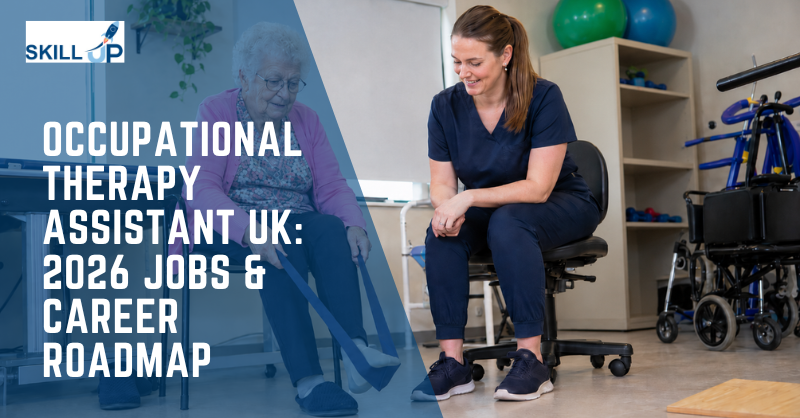
Occupational therapy assistant career goals often begin with one stressful question: how do I enter therapy support when every advert asks for different skills? You may have care or customer service experience, but OT can feel confusing because the role involves rehabilitation and patient records. Therefore, a clear beginner roadmap can make the first step feel less overwhelming. For many beginners, the right guidance also helps turn uncertainty into a practical career plan. The Comprehensive Therapy Diploma Bundle: Play, Occupational & Physiotherapy Assistant builds confidence before applying safely online.
The risk is simple: without occupational therapy knowledge, people may lose independence after illness, injury or disability. Support helps them practise daily tasks, use equipment safely and follow care plans. As a result, the right support can turn small daily activities into meaningful progress. In practical terms, occupational therapy assistant knowledge can make everyday recovery safer and more structured. RCOT reported 67% of OT respondents saw demand increase, while NHS Employers lists Band 2 pay at £25,272, Band 3 from £25,760 and Band 4 from £28,392. With this demand, occupational therapy assistant knowledge offers an essential route into UK healthcare and rehabilitation support.
In this guide, you will learn what an occupational therapy assistant does, what employers expect, which training helps, how NHS bands work, where to find community occupational therapy jobs, and how to progress towards assistant practitioner or therapist routes. Finally, if you are ready to build therapy support confidence, start with the Comprehensive Therapy Diploma Bundle and use this guide as your roadmap today.
What Is an Occupational Therapy Assistant in the UK?
An occupational therapy assistant, often called an OT assistant or occupational therapy support worker, helps people rebuild independence when illness, injury, disability, ageing or mental health needs make life harder. In practice, the role sits close to people and routines. For example, you may support someone as they practise washing, dressing, cooking, moving safely, using equipment or following a therapy plan.
However, an occupational therapy assistant does not replace an occupational therapist. Registered occupational therapists assess needs, set goals and design care plans. Instead, you help carry out those plans with patience, accuracy and encouragement. You notice progress, report concerns and help each person take the next safe step.
In simple terms, think of the OT assistant as the bridge between therapy goals and daily life. Making tea or getting dressed can feel huge after illness. Therefore, your support matters every day.
Moreover, UK job titles can vary. Employers may advertise OT technician, rehabilitation assistant, therapy assistant or technical instructor. Each title may differ, but the purpose stays the same: helping people regain confidence, function and dignity.

Occupational Therapy Assistant vs Occupational Therapist vs Therapy Assistant
This difference matters because each role carries a different level of responsibility, training and decision-making. An occupational therapy assistant supports agreed therapy plans under supervision. By contrast, an occupational therapist assesses needs, sets goals and designs treatment plans. Meanwhile, a therapy assistant may support several therapy teams, not only occupational therapy. Therefore, knowing the difference helps you choose the right job, training route and long-term healthcare career path.
Before comparing the roles in detail, here is the easiest way to understand each one:
Occupational Therapy Assistant:
Supports occupational therapists by helping people practise daily living skills, use equipment, follow therapy activities and build independence under supervision.
Occupational Therapist:
Assesses physical, mental or social barriers, creates therapy plans, recommends adaptations and holds professional responsibility as a registered healthcare practitioner.
Therapy Assistant:
Supports wider rehabilitation teams, including occupational therapy, physiotherapy or speech therapy, depending on the service, patient group and workplace needs.
Key Difference | Occupational Therapy Assistant | Occupational Therapist | Therapy Assistant |
Main focus | Helps people practise everyday tasks, follow therapy plans and regain independence. | Assesses needs, sets goals, plans treatment and reviews progress. | Supports one or more therapy services with rehabilitation activities. |
Responsibility level | Works under supervision and reports progress or concerns. | Holds clinical responsibility and makes professional decisions. | Follows instructions from different registered therapy professionals. |
Registration | Does not need HCPC registration for assistant-level support roles. | Must register with the HCPC to use the protected title. | Usually does not need professional registration for support-level roles. |
Typical setting | OT teams, hospitals, community services, care homes and rehabilitation units. | NHS, private healthcare, social care, schools and specialist services. | Mixed therapy teams across hospitals, clinics and community rehabilitation. |
Career route | Progression may lead to senior assistant, assistant practitioner or occupational therapy degree routes. | Registered occupational therapists may progress into specialist, Band 6, Band 7 or leadership roles. | This route can lead towards occupational therapy, physiotherapy or broader rehabilitation support pathways. |
What Does an Occupational Therapy Assistant Do Day to Day?
Day to day, an occupational therapy assistant helps people turn therapy goals into real-life progress. Although the setting may change, the purpose stays the same: support independence. In a hospital, you may help someone prepare for discharge. By contrast, community teams may support home routines, equipment use and safe daily living. NHS Scotland explains that occupational therapy support workers help people continue everyday tasks and activities they enjoy.
To understand the role clearly, look at the tasks you may carry out each day:
Helping people practise daily living skills
You may help someone practise washing, dressing, cooking, eating or managing a simple home routine. These tasks can look ordinary. However, they often decide whether a person feels independent. You give encouragement, follow the therapy plan and help the person build confidence step by step.
Supporting mobility and safe movement
You may support someone as they move from a bed to a chair, walk short distances or use a mobility aid. Safety comes first, so you observe posture, balance and fatigue. In addition, you report any concern before a small issue becomes a bigger risk.
Preparing therapy equipment
You may prepare walking aids, adaptive cutlery, dressing aids, transfer boards or activity materials before a session begins. As a result, the therapy session stays smooth and focused. Moreover, you help maintain a clean, organised and safe therapy environment.
Encouraging routines and confidence
You may help people rebuild daily routines after illness, surgery, stroke, disability or mental health challenges. A calm voice can reduce fear. Therefore, you support progress by praising effort, setting a steady pace and keeping the person involved.
Recording progress clearly
You may write brief notes about what the person practised, how they responded and what support they needed. Clear records help the occupational therapist review progress. Furthermore, they protect continuity because the wider team can understand what happened.
Reporting concerns to the occupational therapist
You may notice pain, confusion, low mood, falls risk, equipment problems or changes in ability. Instead of guessing, you report concerns quickly. This helps the occupational therapist adjust the care plan and keep the person safe.
Supporting families and carers with basic guidance
You may help families understand simple routines, equipment use or safe ways to encourage independence. However, you stay within your role and follow the therapist’s instructions. This support helps carers feel less unsure at home.
Small therapy tasks can create big life changes when they help someone regain safety, dignity and everyday confidence.

Occupational Therapy Assistant Duties and Responsibilities
Occupational therapy practitioner roles and responsibilities in the UK depend on training, supervision and workplace policy. However, assistant-level roles usually focus on safe, practical support. You may help people follow care plans, practise daily activities, use equipment and build confidence. The National Careers Service explains that occupational therapy support workers help people become as independent as possible.
To understand the role better, here are the main responsibilities you may handle:
Follow Instructions from Registered Therapists and Support Patient Care Plans
You follow the occupational therapist’s plan and help each person work towards agreed goals. This may include practising movement, daily tasks or therapy activities. Moreover, you report progress so the therapist can review the next step.
Help Patients Practise Activities of Daily Living and Encourage Progress
You may support washing, dressing, eating, cooking, standing, walking or using adaptive equipment. These tasks help people rebuild confidence in ordinary routines. Therefore, your encouragement can turn a difficult moment into steady progress.
Keep Equipment Clean, Safe, and Ready for Therapy Sessions
You may prepare mobility aids, activity resources, transfer equipment or daily living aids before therapy starts. Also, check that items remain clean, safe and organised. As a result, the session runs more smoothly and safely.
Record Session Activities Using Basic IT Systems and Patient Notes
You write clear notes about what the person practised, how they responded and whether any concern appeared. Good records help the wider team understand progress. They also support safe, joined-up care.
Maintain Dignity, Privacy, Consent, Safeguarding, and Confidentiality
You respect each person’s choices, personal space and private information. At the same time, follow safeguarding rules and report concerns quickly. In this role, trust matters as much as technique.
Training helps you see the person behind the task, not just the routine written in the care plan.
Where Do Occupational Therapy Assistants Work in the UK?
Occupational therapy assistants work wherever daily life has become difficult and someone needs support to regain control. For this reason, the role can take you far beyond one ward or one workplace. For example, you may support recovery after surgery, help someone adjust at home, encourage a child through play, or guide an older person through safe routines. The National Careers Service explains that OT support workers help people become more independent.
You may find occupational therapy assistant roles in:
- NHS hospitals supporting discharge, recovery, mobility and daily living practice.
- Community rehabilitation teams helping people rebuild confidence at home.
- Local authority reablement services supporting independence after illness or injury.
- Private healthcare settings assisting patients through structured rehabilitation programmes.
- Mental health services encourage routine, confidence, activity and social participation.
- Care homes support older adults with movement, dignity and safe routines.
- Schools help children develop play, movement and learning participation skills.
- Charities and rehabilitation centres supporting people with long-term conditions.
In short, this career gives you variety, purpose and a real chance to support people when independence matters most.

How to Become an Occupational Therapy Assistant with No Experience
You can become an occupational therapy assistant with no experience, but you need to show employers that you understand people, care and safety. First, start by learning how occupational therapy supports independence after illness, injury, disability or mental health challenges. Then build evidence through training, volunteering and entry-level healthcare experience. After that, use your examples to strengthen your CV and interview answers. The National Careers Service explains that OT support workers help people become more independent. A course such as the Comprehensive Therapy Diploma Bundle: Play, Occupational & Physiotherapy Assistant can help you build this foundation before applying.
Here is a simple beginner route you can follow step by step:
Learn the Role and Common Therapy Assistant Job Titles
Start by understanding what an occupational therapy assistant actually does. Employers may also use titles such as therapy assistant, rehabilitation assistant, OT technician or occupational therapy support worker. Therefore, search for all these titles when looking for jobs.
Complete Relevant Therapy or Health and Social Care Training
Build your foundation with topics such as daily living support, safeguarding, communication, moving and handling, rehabilitation and patient dignity. The Comprehensive Therapy Diploma Bundle: Play, Occupational & Physiotherapy Assistant can help you understand therapy support before applying. Moreover, training shows employers that you take the role seriously.
Gain Experience Through Volunteering in Care, Schools, Disability Support, or Charities
Experience does not always need to come from paid healthcare work. You can volunteer in care homes, disability charities, schools, community groups or support services. As a result, you build real examples for your CV and interviews.
Build a Strong CV and Apply for Band 2 or Band 3 Therapy Assistant Roles
Use your CV to show communication, patience, teamwork, reliability and care awareness. Match your examples to the job advert. Then apply for Band 2 or Band 3 therapy assistant, rehabilitation assistant or support worker roles.
Improve Through Interviews and Progress into Senior Support or Assistant Practitioner Roles
Each interview teaches you what employers value. Keep improving your answers, examples and confidence. Over time, you may progress into senior support, Band 4 assistant practitioner or occupational therapy degree routes.
Your first role may not be perfect, but every care-related step can move you closer to occupational therapy support.

Entry Requirements, GCSEs and Skills Employers Look For
Entry requirements for occupational therapy assistant roles can vary, but employers usually look for safe, caring and reliable people. Some roles ask for GCSEs in English and maths, or equivalent skills. Meanwhile, others value care experience, volunteering, communication and confidence with patients. The National Careers Service explains that people can enter this role through college, apprenticeships, work experience or direct application.
To stand out, you need to show these core skills clearly:
Good Spoken and Written English with Basic Numeracy Skills
Clear English helps you speak confidently with patients, families, carers and therapy teams. Accurate reading also matters because care notes and written instructions guide safe support. Moreover, basic numeracy helps when checking times, measurements, equipment details or session information.
Calm Communication, Empathy, and Patience
People may feel scared, frustrated or embarrassed when they struggle with daily tasks. Therefore, your tone can change the whole session. You need to listen carefully, explain slowly and encourage progress without making the person feel rushed.
Strong Teamwork and Observation Skills
This role rarely happens in isolation. You may support occupational therapists, physiotherapists, nurses, carers and wider healthcare teams. As a result, you need to notice changes in mood, movement, pain, fatigue or confidence and share concerns quickly.
Confidence Using Basic IT Systems and Maintaining Confidentiality
Many employers expect you to update patient notes, record session details or use digital care systems. Accuracy matters because the wider team uses your notes to understand progress. At the same time, you must protect private information and follow confidentiality rules.
Safeguarding Awareness with Respect for Dignity and Patient Choice
You need to understand safeguarding because some people may face abuse, neglect or avoidable risk. However, support should never take away personal choice. You must respect dignity, ask for consent and help people stay involved in their own care.
You do not need clinical expertise on day one, but you must show safety, kindness, curiosity and willingness to learn.
Best Occupational Therapy Assistant Training and Online Courses
Many learners search for occupational therapy online courses because they want a clear starting point. That makes sense. Before you apply for assistant-level roles, you need to understand therapy language, patient support, rehabilitation, safeguarding and daily living skills. Online learning can build that foundation. However, it must support your career plan, not replace approved professional training.
The Comprehensive Therapy Diploma Bundle: Play, Occupational & Physiotherapy Assistant can help you explore therapy support across different patient needs. It gives beginners a stronger base before volunteering, applying or writing an NHS supporting statement. For registered occupational therapist routes, RCOT explains approved degree and apprenticeship pathways, so always check the level you need.
For example, useful training topics may include:
- Occupational therapy principles and person-centred rehabilitation support.
- Daily living skills, independence, routine building and patient confidence.
- Safeguarding awareness, dignity, consent and confidentiality in care.
- Moving and handling knowledge for safer therapy support.
- Mental health awareness and meaningful activity in recovery.
- Child development, play support and therapy-based learning activities.
- Physiotherapy assistant basics, mobility support and rehabilitation teamwork.
- NHS supporting statement preparation and healthcare communication skills.
Online training works best when you combine it with experience, volunteering, reflection and focused job applications.
Occupational Therapy Apprenticeships and Degree Routes in the UK
Apprenticeships can turn occupational therapy from an idea into a real career route. Instead of choosing between earning and learning, you can build workplace experience while studying. As a result, apprenticeships can feel more practical for learners who need income and structure. For support roles, you may start through healthcare support worker, senior healthcare support worker or assistant practitioner pathways. However, if you want to become a registered occupational therapist, you need an approved degree or degree apprenticeship. RCOT explains occupational therapy degree apprenticeship routes here.
In particular, these routes can help you understand your next step clearly:
- Healthcare support worker apprenticeships build basic care and communication skills.
- Senior support routes develop confidence with patients and therapy teams.
- Assistant practitioner pathways can support progression into Band 4 roles.
- Occupational therapy degree apprenticeships combine paid work with academic study.
- Approved degree routes support future HCPC registration as an occupational therapist.
- Work-based learning helps you understand real patients, not just theory.
- Apprenticeship routes suit learners who want structure, income and progression.
Therefore, you can start in support, learn the workplace and decide whether degree-level occupational therapy is right for you.
Occupational Therapy Assistant Salary UK 2026: NHS Band 2, Band 3 and Band 4 Pay
Occupational therapy assistant salary UK 2026 depends on band, setting, location and experience. In the NHS, entry support roles often sit at Band 2 or Band 3, while senior therapy assistant and assistant practitioner posts may move towards Band 4. According to NHS Employers’ 2026/27 Agenda for Change pay scales, Band 2 is £25,272, Band 3 ranges from £25,760 to £27,476, and Band 4 ranges from £28,392 to £31,157.
When comparing roles, look beyond the headline salary and check these details:
- Band 2 roles often suit beginners entering therapy support work.
- At Band 3, employers may expect care experience or relevant therapy training.
- More senior Band 4 roles usually involve greater responsibility and patient support.
- London NHS posts may include extra high-cost area supplements.
- Private healthcare, charities and agencies may set different pay structures.
- Weekend, travel or community duties can affect the role’s suitability.
- Good supervision can matter as much as starting salary.
- Progression opportunities can help you grow into senior therapy roles.
Salary matters, but the right role should also offer training, supervision, purpose and a clear route for progression.

Occupational Therapist Salary by NHS Band: Band 5, Band 6 and Band 7 Progression
Many people search for occupational therapist salaries in the UK because they want to see where the journey could lead. That makes sense. An assistant role can introduce you to real therapy work, but registered occupational therapists usually progress through higher NHS bands. According to NHS Employers’ 2026/27 pay scales, Band 5 starts from £32,073, Band 6 from £39,959 and Band 7 from £49,387.
Here is how the career path often develops:
- Newly qualified occupational therapists often start at Band 5.
- At this level, the role focuses on assessment, treatment planning and supervised caseloads.
- With Band 6, occupational therapists often handle specialist duties and more complex cases.
- They may also support junior staff and manage wider risks.
- Senior Band 7 roles can involve leadership, service improvement and advanced practice.
- These posts often include team coordination, training and pathway development.
- Assistant-level experience helps you understand therapy before degree-level study.
Therefore, starting in support can give you direction, confidence and stronger career insight.
Assistant experience can help you test the profession, understand patients and decide whether registered OT training fits your future.
NHS, Private and Locum Occupational Therapy Job Vacancies
You can find NHS, private and locum occupational therapy jobs across England, Scotland and Wales, but you need to search with the right words. Job adverts may use different titles, even when the work looks similar. Therefore, always compare the duties, not only the job title. NHS Jobs lists occupational therapy roles and lets you search by title, salary, location and employer. Always read the duties carefully before applying.
Use these search terms to find the right opportunity faster:
-
Occupational Therapy Assistant Jobs
Search this phrase when you want entry-level or support-level OT roles. Employers may also write OT assistant or occupational therapy support worker. Therefore, compare the duties, not only the title.
-
NHS Occupational Therapy Assistant and Band 3 Therapy Assistant Jobs
NHS roles often use pay bands to show responsibility level. Band 3 therapy assistant roles may suit learners with care experience or relevant training. However, always check whether the advert asks for NHS experience.
-
Community Occupational Therapy and Rehabilitation Assistant Jobs
Community roles often support people at home after illness, injury or hospital discharge. You may help with routines, mobility, equipment and confidence. As a result, these jobs suit people who enjoy person-centred support.
-
Locum Occupational Therapy Jobs
Locum occupational therapy jobs usually suit registered occupational therapists with experience. Agencies may offer flexible hospital, community or social care placements. So, check registration requirements before applying.
-
Occupational Health Opportunities in NHS and Private Healthcare
Occupational health roles may involve workplace wellbeing, health checks or employee support. Some roles suit technicians or assistants, while others need clinical qualifications. Read the advert carefully to avoid applying for the wrong level.
The right search terms help you avoid confusion and find roles that match your skills, training and career stage.
How to Write an Occupational Therapy Assistant CV, NHS Supporting Statement and Assessment Report
Your CV should show one clear message: you are safe, organised and ready to support people with care. Employers do not want a generic CV. Instead, they want evidence that you understand rehabilitation, dignity, communication, safeguarding and patient progress. For NHS roles, always match your CV and supporting statement to the person specification. You can also search live roles on NHS Jobs.
To make your application stronger, include these key areas:
-
Care, Support, or Volunteering Experience
Show any experience where you helped people directly. This may include care homes, hospitals, schools, charities, family support or community work. Explain what you did, who you supported and how you kept people safe.
-
Transferable Customer Service Experience
Customer service can strengthen your CV because OT assistants need patience and calm communication. You may have handled questions, solved problems or supported worried people. Therefore, link this experience to listening, respect and clear communication.
-
Relevant Online Training and Professional Development
Mention therapy, safeguarding, mental health, moving and handling or health and social care training. Online learning shows that you take the role seriously. Moreover, it helps employers see your interest before your first therapy job.
-
Strong Communication and Record-Keeping Skills
OT assistants often speak with patients, families, therapists and care teams. You also need clear notes because records help professionals track progress. Good writing, listening and reporting skills can make your application stronger.
-
Teamwork Experience and Confidence Supporting Vulnerable People
Healthcare depends on teamwork. Show how you worked with others, followed instructions and supported people respectfully. Also, explain how you protect dignity, privacy and trust.
A strong CV connects your experience to patient safety, independence, communication and the real purpose of occupational therapy support.

Interview Questions, Work Experience and Volunteering Tips
OT assistant interviews do more than test your memory. They show employers how you think, speak and respond when someone needs patience, dignity and safe support. Therefore, prepare examples from care, customer service, volunteering, family support or teamwork. The National Careers Service explains that OT support workers help people become more independent, so your answers should show care, confidence and respect.
Common interview questions include:
- Why do you want to work in occupational therapy support?
- How would you support someone who refuses help?
- What does dignity mean when supporting daily living tasks?
- How would you report a safeguarding or safety concern?
- How do you protect confidential patient information at work?
- Tell us about a time you helped someone calmly.
- How would you work with therapists, nurses and carers?
- What would you do if a patient became upset?
Work experience and volunteering can help you prove your interest before your first paid role. You do not need the perfect healthcare job at the beginning. Instead, look for settings where you can support people, observe needs and build communication skills.
Work Experience and Volunteering Tips:
- Volunteer in care homes to understand older adults’ daily support needs.
- Support disability charities to learn communication, patience and inclusion.
- Ask local hospitals about therapy or ward volunteering opportunities.
- Help in schools to understand child development, play and participation.
- Join community groups that support mental health or social isolation.
- Gain care assistant experience to build confidence with personal support.
- Keep a reflection diary so you can prepare stronger interview examples.
- Match every CV and interview answer to the job advert.
Good preparation turns simple experience into strong evidence of empathy, safety, communication and readiness for therapy support work.
Career Progression: From OT Assistant to Assistant Practitioner, Occupational Therapist or Related Healthcare Careers
An occupational therapy assistant role can lead to several healthcare pathways. You may progress into senior therapy support, Band 4 assistant practitioner work, rehabilitation, mental health support or approved occupational therapy training. For some learners, hands-on support remains the best route because they enjoy patient contact. Others use the role as a stepping stone towards registered practice, community services or related NHS careers
Career Path | Short Description | Salary Estimation |
Occupational Therapy Assistant | Supports therapy plans, daily living practice, equipment use and patient independence. | £26,000 – £31,000 |
Senior Therapy Assistant | Takes on more responsibility, supports complex cases and helps guide junior assistants. | £25,760 – £27,476 |
Assistant Practitioner | Works at a higher support level, often across therapy, rehabilitation or care teams. | £28,392 – £31,157 |
Rehabilitation Assistant | Helps people rebuild movement, confidence and routines after illness, injury or surgery. | £25,272 – £27,476 |
Community Therapy Assistant | Supports people at home with equipment, routines, reablement and independence goals. | £25,760 – £31,157 |
Mental Health Support Worker | Helps people build routines, confidence, meaningful activity and daily coping skills. | £25,272 – £27,476 |
Occupational Health Technician | Supports workplace health checks, screening, records and employee wellbeing services. | £24,000 – £32,000 |
Physiotherapy Assistant | Supports mobility, exercise plans, rehabilitation tasks and patient progress under supervision. | £25,272 – £27,476 |
Registered Occupational Therapist | Assesses needs, plans interventions and supports recovery, independence and participation. | £32,073 – £48,117 |
Band 7 Specialist or Team Lead OT | Leads services, supervises staff, manages complex cases and improves therapy pathways. | £49,387 – £56,515 |
In short, occupational therapy assistant experience can open doors into support, rehabilitation, specialist practice and registered healthcare careers.
Final Thought: Your Occupational Therapy Assistant Career Does Not Need a Perfect Start
Becoming an occupational therapy assistant in the UK is not about having the perfect background. It is about proving that you can support people safely, communicate clearly and learn the practical skills that help daily life feel possible again.
Start small. First, learn the role. Next, build your knowledge. Then, get care-related experience and apply for entry-level posts. After that, keep progressing.
The Comprehensive Therapy Diploma Bundle: Play, Occupational & Physiotherapy Assistant can help you understand therapy support across occupational therapy, physiotherapy and play-based approaches. Use it as your first learning step, then combine it with experience, volunteering and focused job applications.
Your goal is not just to get a job title. Instead, aim to help people regain confidence in the ordinary things that make life feel like life.
Get valuable training, UK-focused support, and the skills employers want. No experience needed.
Join 50+ graduates who landed tech jobs with our industry-focused training programme designed for beginners.
Explore Now - Our Job Ready ProgrammeFrequently Asked Questions (FAQs)
How do I become an occupational therapy assistant in the UK?
To become an occupational therapy assistant in the UK, start by gaining care, support work or volunteering experience. Then build skills in communication, safeguarding, rehabilitation and patient support. Many people apply directly for NHS Band 2 or Band 3 therapy assistant roles.
Do I need a degree to become an occupational therapy assistant?
No, you do not usually need a degree to become an occupational therapy assistant. However, employers may ask for GCSEs, care experience, good communication skills and relevant training. A degree is needed only if you want to become a registered occupational therapist later.
What does an occupational therapy assistant do?
An occupational therapy assistant helps people manage daily activities after illness, injury, disability or ageing. Duties may include preparing therapy equipment, supporting mobility, helping with personal independence tasks, recording progress and assisting occupational therapists with rehabilitation plans in hospitals, communities or care settings.
What qualifications do you need for occupational therapy assistant jobs?
Occupational therapy assistant jobs may not require one fixed qualification, but GCSEs, health and social care training, safeguarding knowledge and care experience can help. Some employers value Level 2 or Level 3 healthcare support qualifications, while apprenticeships can support structured career progression.
Can I become an occupational therapy assistant with no experience?
Yes, you can start without direct occupational therapy experience, but you should build transferable experience first. Care work, volunteering, SEN support, customer service or healthcare assistant roles can show patience, communication and people skills. Relevant online training may also strengthen your first application.
What is the difference between an occupational therapy assistant and an occupational therapist?
An occupational therapy assistant supports therapy plans under supervision, while an occupational therapist assesses needs, plans interventions and holds professional responsibility. In the UK, occupational therapists need an approved degree or degree apprenticeship route, while assistant roles usually focus on supervised patient support.
How much does an occupational therapy assistant earn in the UK?
Occupational therapy assistant salary in the UK often depends on employer, setting and NHS band. NHS support roles may sit around Band 2, Band 3 or Band 4. In 2026/27, Band 2 starts at £25,272, while Band 4 reaches £31,157.
Where can occupational therapy assistants work in the UK?
Occupational therapy assistants can work in NHS hospitals, community rehabilitation teams, private healthcare, mental health services, social care, care homes, schools, charities and reablement services. Some roles focus on older adults, while others support children, people with disabilities or patients recovering after injury.
Can an occupational therapy assistant become an occupational therapist?
Yes, an occupational therapy assistant can progress towards becoming an occupational therapist by completing an approved occupational therapy degree or degree apprenticeship. Assistant experience can strengthen applications because it shows patient contact, therapy awareness and commitment. Entry requirements vary, so check universities and employers carefully.
What skills should I put on an occupational therapy assistant CV?
For an occupational therapy assistant CV, include communication, empathy, teamwork, observation, safeguarding awareness, confidentiality, IT skills, patience and person-centred care. Add examples from care work, volunteering, customer service or healthcare settings. NHS applications should clearly match skills to the job description and person specification.






All Courses
Personal Development
Employability
Career Bundle
Management
Free QLS Certificate
IT & Software
Business
Technology
Health & Care
Quality Licence Scheme Endorsed Courses
Health & Safety
Training
Marketing
Job Ready Programme
Design
Accounting & Finance
Health and Fitness
Healthcare and Medical
Animal Care
Psychology
Microsoft Office
Teach & Education
I.T
HR and Leadership
Counselling and Therapy
Teaching & Child Care
Health and Social Care
Electrical & Electronics
Food Nutrition
Law
programming
Administration & Office Skills
Education
Engineering
Cooking & Baking
Language
Law & Criminology
Accounting
QLS Bundle
Office Skills
Awareness
Photography
Finance
Lifestyle
Diet and Nutrition
Makeup & Beauty
Therapy
Sports
First Aid
Accounting & Bookkeeping
Mathematics
Excel
Web Design
Top Rated Course
Diet and Fitness
Counselling
Agriculture
Networking & Design
General Education
Biotechnology
Audit
Economics
Lifestyle & Recreational
Travel and Tourism
Adobe Photoshop
Categories

Awarded By