
Cart
No products in the basket.
Log In Sign Up

Login

AC Electrical Circuit Analysis

Get 92% Discount | CPD Accredited | Affordable Pricing | No Hidden Charges | 24/7 Tutor Support | Instant Access
4.6
★ ★ ★ ★ ★
★ ★ ★ ★ ★
8 Reviews

stds66 Students

Accreditation Icon
Accreditation Icon

Overview

AC Electrical Circuit Analysis is a crucial field in electrical engineering, focusing on alternating current behaviour, phasors, and impedance in R, L, and C circuits. This course provides insights into vector representation, Kirchhoff’s laws in AC circuits, and power flow calculations. Designed for learners seeking to explore the principles of alternating currents, AC Electrical Circuit Analysis equips you with the knowledge required to analyse circuits effectively, solve complex AC problems, and comprehend the interaction of resistors, inductors, and capacitors in practical scenarios.

Course Description

Step into the world of AC Electrical Circuit Analysis, where alternating currents shape modern electrical systems. This course begins by introducing the fundamentals of AC, allowing learners to grasp the behaviour of sinusoidal currents and voltages. With a strong focus on vectors and phasors, it develops the ability to represent AC quantities graphically, enabling precise calculations in complex circuits.
Next, the curriculum explores reactance and impedance in R, L, and C circuits, offering learners the tools to analyse and predict circuit responses. By applying Kirchhoff’s laws in AC circuits, students learn to balance voltages and currents, ensuring accurate power flow management. Each module builds upon the previous, creating a cohesive understanding of circuit dynamics that enhances problem-solving capabilities.
Finally, AC Electrical Circuit Analysis addresses power flow in AC systems, highlighting the significance of active, reactive, and apparent power. The course demonstrates how these concepts influence efficiency and stability in electrical networks. By the end, learners will confidently interpret circuit behaviour, calculate impedance effects, and manage power distribution effectively. With AC Electrical Circuit Analysis, aspiring engineers gain a competitive edge in the evolving electrical engineering landscape.

Learning Outcome

Who Is This Course For?

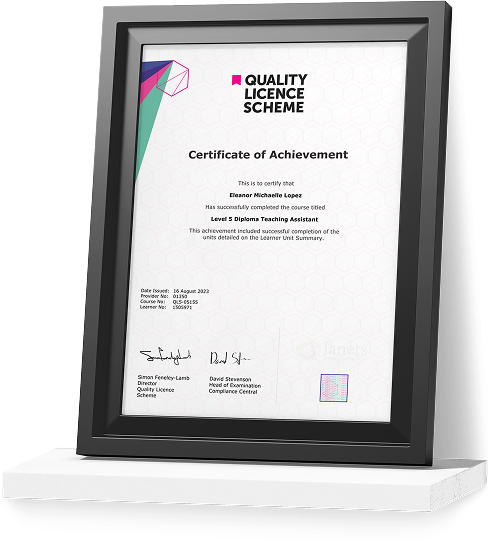
Certificate of Achievement

Earn Your Accredited Certificate with Transcript

Save 20% with the coupon code SKILL20

Show Your Certified Identity with a CPD-QS Certificate

Perfect for employers, clients, or academic verification.

Get a QLS Certificate to Showcase Your Skills

Detailed record of your completed modules and qualifications.
Career Path

Frequently Asked Questions

A basic understanding of electrical principles and DC circuits helps, though beginners can follow module guidance.

Typically, learners complete AC Electrical Circuit Analysis within 6–8 weeks, depending on pace.

Yes, AC Electrical Circuit Analysis equips learners with skills sought by UK electrical engineers, technicians, and consultants.

Absolutely, the course covers reactance, impedance, and phasor techniques in detail.

 Yes, AC Electrical Circuit Analysis includes modules on power flow, Kirchhoff’s laws, and energy distribution, ideal for UK power systems roles.

AC Electrical Circuit Analysis Reviews

Excellent

4.6 / 5
Based on 8 reviews

98%

Would Recommend

66

Certified Learners

100%

Authentic Reviews

A well-organised and highly valuable course with clear, easy-to-understand guidance throughout. I’ve gained knowledge that’s directly relevant to my day-to-day responsibilities. It’s given me greater confidence in applying these skills professionally.

Engaging content delivered in a straightforward and structured format. The examples were realistic and helped reinforce key concepts effectively. I would certainly recommend it to colleagues looking to upskill

Comprehensive, insightful and professionally presented from start to finish. The course materials were clear and well supported. A worthwhile investment for anyone serious about career development

Curriculum

  • play Introduction
    play 00:07:00
top