An ingrown toenail can often be managed at home when symptoms are mild. Soaking your foot in warm, salty water, wearing comfortable shoes and avoiding further pressure may help. However, ingrown toenail treatment depends on how severe the problem is. Infection, persistent pain or certain health conditions may mean you need professional care.
Knowing when to manage the problem yourself and when to seek help can prevent unnecessary discomfort and complications. This guide explains safe home care, NHS advice, professional treatment options and what to expect during recovery.
Study the Foot Health Practitioner course online
What Is an Ingrown Toenail? Symptoms and Causes
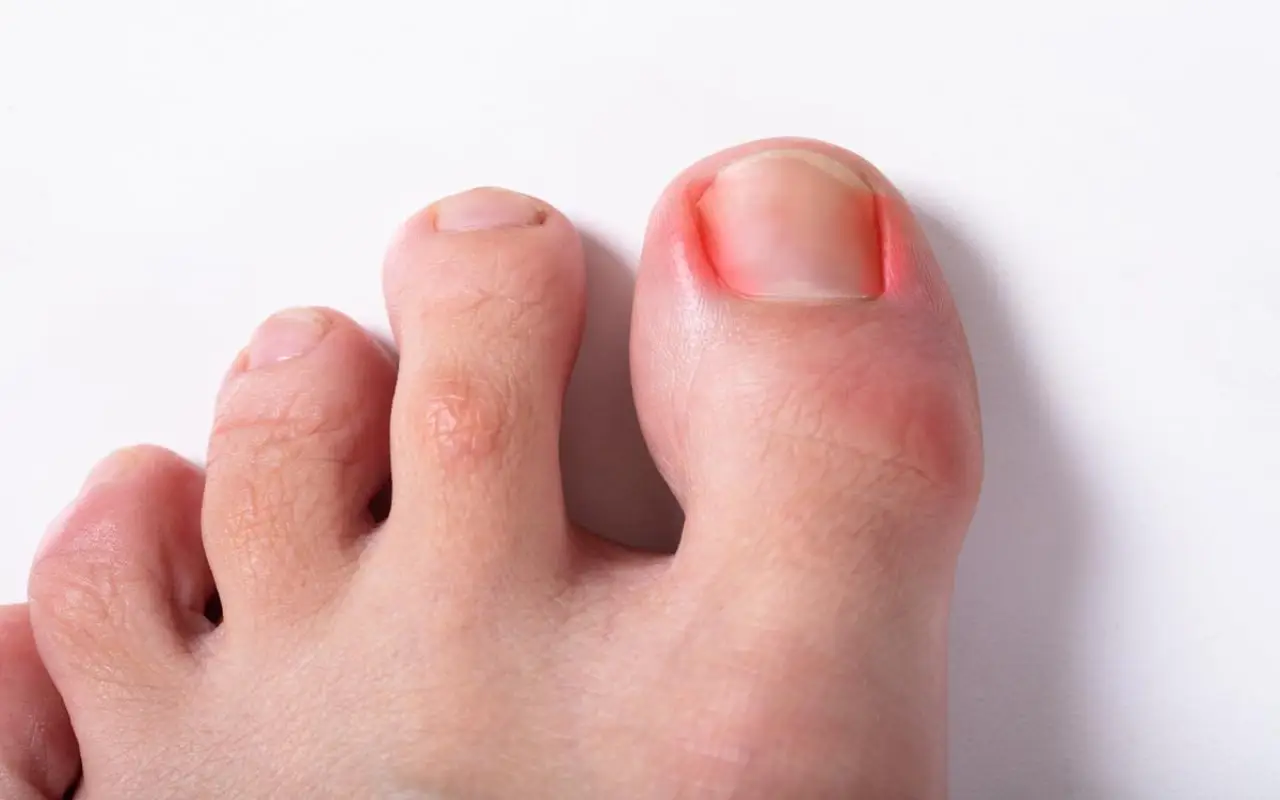
An ingrown toenail develops when the edge of a nail grows into or presses against the surrounding skin. It most commonly affects the big toe, although other toes can be affected.
Common Signs of an Ingrown Toenail
Typical symptoms include:
- Pain or tenderness along one side of the toenail.
- Redness and swelling around the nail.
- Discomfort when wearing shoes or walking.
- Skin becoming inflamed around the nail edge.
- Pus or discharge if an infection develops.
Symptoms vary. A mildly irritated nail may cause occasional discomfort, while a more severe case can become painful even without pressure.
Not every painful toenail is ingrown. A thickened or damaged nail, fungal infection or hard skin can cause similar discomfort.
For example, fungal nail treatment focuses on a different nail condition.
Why Toenails Grow Into the Skin
Common contributing factors include cutting nails too short, trimming down their sides, wearing tight footwear and naturally curved nails.
Repeated pressure from shoes and certain sporting activities may also contribute.
The Royal College of Podiatry’s guidance explains that nail shape, footwear and individual foot structure can all influence the development of ingrowing toenails.
How to Treat an Ingrown Toenail at Home
Home care may help when an ingrown toenail causes mild discomfort without concerning signs of infection.
The aim is to reduce irritation, relieve pressure and avoid damaging the surrounding skin.
Safe Home Care for Mild Symptoms
The following steps are consistent with NHS advice for ingrown toenails.

- Soak your foot in warm, salty water
Warm, salty water can soften the surrounding skin and help reduce the chance of infection.
Make sure the water is comfortably warm rather than hot. Dry your foot thoroughly afterwards.
- Wear comfortable footwear
Choose wide-fitting shoes or sandals that do not press against the affected toe.
Avoid narrow, pointed shoes that squeeze the toes together. Reducing pressure can make everyday movement more comfortable.
- Keep your foot clean and dry
Maintain normal foot hygiene and dry the area carefully after washing or soaking.
If the skin is broken or there is discharge, seek appropriate healthcare advice rather than attempting to treat a possible infection yourself.
- Consider suitable pain relief
Paracetamol or ibuprofen may help relieve discomfort if you can take them safely.
Follow the medicine’s instructions and ask a pharmacist if you are unsure whether it is suitable, particularly if you take other medicines or have an existing health condition.
What Not to Do With an Ingrown Toenail
Some popular home remedies can make the problem worse.
Avoid:
- Cutting deeply into the corners of the toenail.
- Digging underneath the nail with scissors or other tools.
- Picking or pulling away embedded nail edges.
- Wearing tight shoes that continue pressing against the toe.
- Attempting to remove part of the nail yourself.
The NHS specifically advises leaving an actively ingrown toenail to grow out rather than cutting or picking at it.
You may also encounter advice about placing cotton or dental floss underneath the nail. Do not attempt to lift or manipulate an embedded nail yourself, particularly if the skin is broken or inflamed.
Important: Home care is not a substitute for professional assessment when symptoms worsen, infection is suspected or you have a condition that increases the risk of foot complications.
When Should You Seek Professional Help?
An ingrown toenail that continues to cause pain or becomes increasingly inflamed should not simply be ignored.
Signs of Infection or Worsening Symptoms
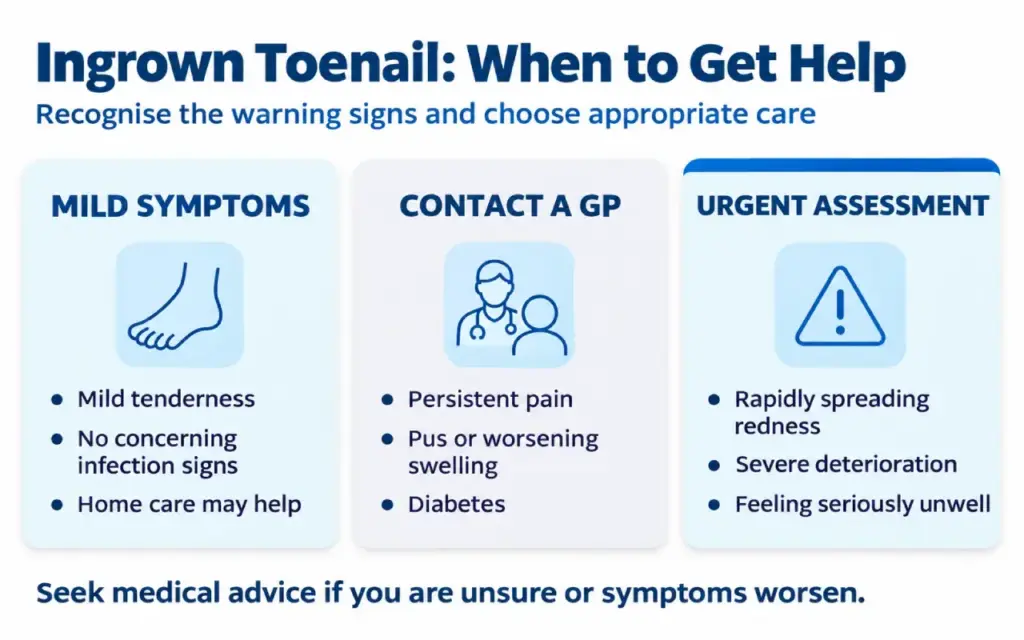
Contact your GP if:
- Home treatment is not improving your symptoms.
- Your toe is painful, swollen and producing pus.
- You develop a very high temperature.
- You feel hot, cold or shivery.
These are circumstances in which the NHS recommends medical advice.
If you notice rapidly spreading redness, severe deterioration or feel seriously unwell, seek urgent medical assessment rather than waiting for a routine appointment.
A pharmacist can also advise on pain relief and whether your symptoms require GP assessment.
Why Diabetes and Circulation Problems Need Extra Care
People with diabetes should contact their GP if they develop an ingrown toenail, even when symptoms appear relatively mild.
Diabetes can affect circulation and sensation in the feet, making certain problems more serious.
Poor circulation, reduced immunity or reduced feeling in the feet also require particular caution. The Royal College of Podiatry advises prompt professional attention when these conditions occur alongside signs of infection.
The safest approach is to seek medical advice early rather than attempting repeated home treatments when you are at higher risk.
Professional Ingrown Toenail Treatment Options
Professional treatment depends on the condition of the nail, the extent of inflammation and whether infection or repeated episodes are involved.
Not everyone requires surgery.
What a Pharmacist or GP Can Do
A pharmacist can suggest appropriate treatments to ease discomfort and advise whether you should see a GP.
A GP can examine the affected toe, assess whether the problem is an ingrown toenail and consider treatment for infection when necessary.
Antibiotics may be prescribed when clinically appropriate, but they are not routinely needed for every ingrown toenail.
If the nail is severely ingrown or symptoms keep returning, your GP may recommend assessment by a podiatrist.
Treatment From a Podiatrist
A podiatrist is a healthcare professional specialising in foot and lower-limb conditions.

Depending on the problem, a podiatrist may relieve pressure from the nail edge, address an embedded portion of nail or recommend a nail procedure.
NHS podiatry access varies by area, and some patients may be able to self-refer without seeing a GP first. Ask your GP surgery whether local self-referral services are available. Private podiatry is another option.
When choosing a practitioner using the protected title podiatrist or chiropodist, you can check their professional registration through the Health and Care Professions Council (HCPC).
Partial or Complete Toenail Removal
For persistent, recurrent or more severe cases, a podiatrist may recommend nail surgery.
Two possible procedures are:
| Treatment | What it involves |
|---|---|
| Partial nail removal | Removing the affected section while leaving the remaining nail in place |
| Complete nail removal | Removing the entire toenail when clinically appropriate |
These procedures are generally performed under local anaesthetic, which numbs the toe.
In some cases, the nail-growing tissue is treated to reduce the likelihood of the removed section growing back.
According to Guy’s and St Thomas’ NHS Foundation Trust’s nail surgery guidance, surgery may provide longer-term relief when problems repeatedly return, although complications and regrowth remain possible.
The appropriate procedure should always be determined through professional assessment.
How Long Does Ingrown Toenail Treatment and Recovery Take?
Recovery depends on the severity of the problem and the treatment provided.
Mild irritation may improve with appropriate home care, but there is no guaranteed number of days for every case. Persistent symptoms require assessment.
Recovery After Toenail Removal
Professional nail removal may be completed relatively quickly, but the wound takes longer to heal.
North Tees and Hartlepool NHS Foundation Trust advises that a toe may take approximately six to eight weeks to heal after nail surgery, although healing can take up to twelve weeks. Recovery varies, so follow your treating clinician’s advice.
Aftercare may include:
- Keeping dressings clean.
- Attending follow-up appointments when required.
- Wearing footwear that accommodates the dressing.
- Avoiding activities that put unnecessary pressure on the toe.
- Watching for increasing pain, discharge or other signs of infection.
The NHS nail surgery aftercare guidance explains the importance of appropriate dressings, wound care and following professional instructions.
Always follow the individual advice provided by your treating clinician.
How to Prevent Ingrown Toenails From Returning
Although not every ingrown toenail is preventable, everyday nail care can reduce avoidable irritation.

Useful habits include:
- Cutting toenails straight across rather than down the sides.
- Avoiding cutting nails excessively short.
- Choosing footwear with adequate space around the toes.
- Keeping feet clean and drying them thoroughly.
- Seeking professional advice if the same nail repeatedly becomes ingrown.
Do not try to correct a recurring problem by repeatedly cutting deeper into the nail corner.
Persistent recurrence may require a different treatment approach.
Study the Foot Health Practitioner course online
Interested in Learning More About Foot Health?
Understanding common nail conditions is one part of developing broader knowledge about foot health.
For readers interested in the subject professionally, Skill Up offers a Foot Health Practitioner course covering foot anatomy, common foot disorders, nail diseases and the management of high-risk patients.
The online course is advertised as CPD accredited and QLS endorsed. These credentials should not be confused with HCPC registration or independent authorisation to perform clinical procedures. Additional supervised practical training and appropriate competence may be required for specific activities.
Choosing the Right Next Step
Mild ingrown toenails may respond to careful home treatment, but persistent pain, infection symptoms or higher-risk health conditions call for professional advice. Knowing the difference helps you make a safer, more informed treatment decision.
Frequently Asked Questions (FAQs)
Can an ingrown toenail heal on its own?
A mildly ingrown toenail may settle with appropriate self-care, especially when pressure and irritation are reduced. However, it may not resolve without treatment if the nail remains embedded or symptoms worsen. Persistent pain or signs of infection warrant professional assessment.
What is the fastest safe way to relieve an ingrown toenail?
For mild symptoms, warm salty-water soaks, comfortable footwear and suitable pain relief may help. There is no reliable overnight cure. More severe cases may require a professional procedure to address the nail edge causing the problem.
Can I remove an ingrown toenail myself?
You should not attempt to remove an embedded toenail or cut deeply into its sides. Doing so can damage the skin and increase the risk of complications. A qualified professional can assess whether nail removal is necessary.
Is ingrown toenail removal painful?
Professional nail surgery is usually performed under local anaesthetic, so the toe is numbed during the procedure. You may experience some discomfort from the injection and soreness after the anaesthetic wears off. Your clinician can explain pain management and aftercare.
How long does an ingrown toenail take to heal?
Healing varies according to the severity of the condition and treatment received. Mild cases may improve without surgery, while recovery after nail removal can take several weeks. Follow your clinician’s advice and seek reassessment if symptoms worsen or healing is not progressing as expected.
All Courses
Personal Development
Employability
Career Bundle
Management
Free QLS Certificate
IT & Software
Business
Technology
Health & Care
Quality Licence Scheme Endorsed Courses
Health & Safety
Training
Marketing
Job Ready Programme
Design
Accounting & Finance
Health and Fitness
Healthcare and Medical
Animal Care
Psychology
Microsoft Office
Teach & Education
I.T
HR and Leadership
Counselling and Therapy
Teaching & Child Care
Health and Social Care
Electrical & Electronics
Law
Food Nutrition
programming
Administration & Office Skills
Education
Language
Engineering
Cooking & Baking
Law & Criminology
Accounting
QLS Bundle
Office Skills
Awareness
Photography
Finance
Lifestyle
Diet and Nutrition
Makeup & Beauty
Therapy
Sports
First Aid
Accounting & Bookkeeping
Mathematics
Excel
Web Design
Top Rated Course
Diet and Fitness
Counselling
Agriculture
Networking & Design
General Education
Biotechnology
Audit
Economics
Lifestyle & Recreational
Adobe Photoshop
Travel and Tourism
Categories

Awarded By