
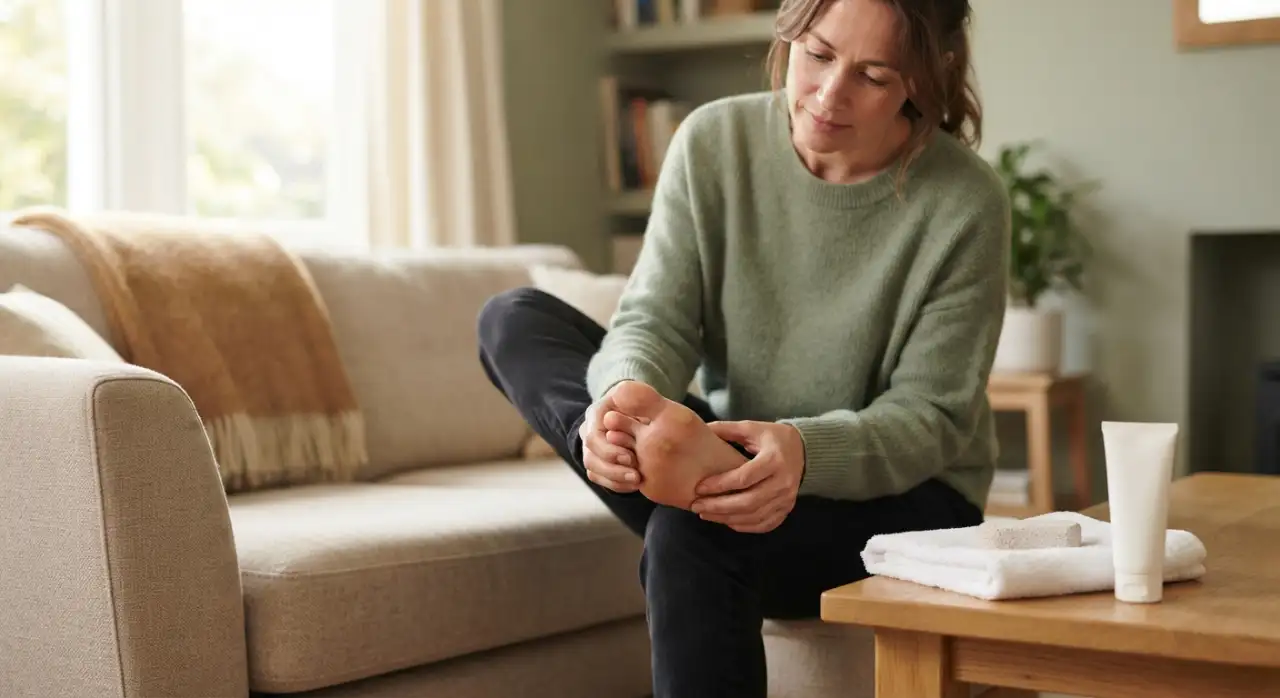
That tiny hard patch on your toe can make every step uncomfortable. If you’re wondering how to remove corns, start by reducing pressure with comfortable shoes, soft padding and gentle foot care. Soaking and careful filing may help, but never cut or dig out a corn yourself. People with diabetes, poor circulation or weakened immunity should seek professional advice rather than attempt home removal.
The NHS guidance on corns and calluses explains which self-care measures are suitable and when medical help is needed. Here’s what works, what can damage your skin and how to stop the problem returning.
Interested in a Career in Foot Health?
Explore foot anatomy, common skin conditions, foot assessments and essential care principles through structured online training.
What Are Corns, and Why Do They Form?
Corns are small, thick patches of skin that develop when the same area experiences repeated pressure or rubbing. They often appear on toes, between toes or beneath the foot.
Your skin produces extra hard tissue to protect itself. Unfortunately, that thickened area can become painful when pressed against a shoe or the ground.
There are two common types:
- Hard corns: Small, firm patches, usually found on the tops or sides of toes.
- Soft corns: Whitish, softer patches that often develop between toes where moisture collects.
Calluses are different. They usually spread across a larger area rather than forming a small, concentrated patch. The Royal College of Podiatry’s explanation of corns and calluses describes how pressure, friction and foot shape contribute to their formation.

How to Remove Corns at Home Safely
For otherwise healthy adults without relevant risk factors, how to remove corns at home begins with relieving pressure and gradually softening thickened skin. The safest approach is gentle. Trying to remove everything in one session can damage healthy tissue.
Step 1: Reduce pressure on the affected area
Wear shoes with enough room for your toes. Choose soft, supportive footwear that does not rub against the corn. Cushioned socks, suitable insoles and non-medicated protective pads can also reduce discomfort.
Step 2: Soften the hard skin
Soak your feet in comfortably warm water to soften thickened skin. Dry them carefully afterwards, particularly between the toes. Avoid very hot water, which can irritate or burn the skin.
Step 3: Gently file the thickened skin
For suitable low-risk adults, a pumice stone or foot file may gradually reduce hard skin. Use light pressure. Stop if the area becomes sore, irritated or damaged. Never use scissors, razors, needles or sharp blades.

Step 4: Moisturise and protect your feet
Apply foot moisturiser to help keep dry skin soft, avoiding excess cream between the toes. Continue wearing comfortable footwear even when the corn feels better.
If you’re searching for how to get rid of corns, remember that reducing the pressure causing them matters as much as treating the hard skin.
Which Corn Treatments Work, and What Should You Avoid?
The right corn treatment depends on the corn’s location, your symptoms and your general health.
| Treatment | What it does | Important precaution |
|---|---|---|
| Comfortable footwear | Reduces rubbing and pressure | Avoid tight toe areas |
| Non-medicated padding | Cushions painful spots | Ensure it does not create extra pressure |
| Gentle foot filing | Gradually reduces hard skin | Not suitable for everyone |
| Moisturiser | Softens dry skin | Do not apply to broken skin without advice |
| Medicated corn plasters | Use chemicals to soften hard skin | Can damage surrounding healthy skin |
| Professional removal | Allows assessment and careful treatment | May not prevent recurrence |
Are medicated corn plasters safe?
Some corn plasters contain salicylic acid, which breaks down thickened skin. However, the acid can also harm healthy skin. The Royal College of Podiatry warns about acid-containing corn plasters and recommends seeking podiatry advice before using commercial treatments.
People with diabetes, circulation problems or reduced sensation should not attempt chemical corn removal themselves. For anyone considering how to remove corns quickly, aggressive filing or strong chemical products are not a safe shortcut.
When Should You Visit a Doctor or Podiatrist for Corns?
You should seek professional advice if your corn is severely painful, bleeds, produces discharge or does not improve after three weeks of suitable home care. The NHS also advises people with diabetes, poor circulation, weakened immunity and older adults against self-treatment.
The NHS advice on when to seek medical help includes bleeding, discharge, severe pain and persistent symptoms. If the skin becomes increasingly red, hot or swollen, seek prompt medical advice, particularly if you also feel unwell.
How Do Professionals Remove Corns Without Surgery?
Professional corn removal usually does not require surgery. A podiatrist can assess the hard skin, carefully reduce it using appropriate instruments and recommend ways to relieve the pressure that caused it.

Treatment may include protective padding, insoles or footwear changes. A corn that repeatedly returns may need further assessment of your foot shape or walking pattern. The NHS explains that foot specialists can remove thickened skin and provide pressure-relieving treatments.
In the UK, ‘podiatrist’ and ‘chiropodist’ are protected professional titles. Practitioners using them must be registered with the Health and Care Professions Council.
Interested in a Career in Foot Health?
Study foot anatomy, common skin conditions, foot assessments and essential care principles with structured online training.
How to Remove Corns for Good: Can You Stop Them Returning?
Corns can return after treatment if the same pressure or rubbing continues. Removing hard skin does not always remove its underlying cause. If you’re wondering how to prevent corns, start with these habits:
- Choose shoes with enough width and depth for your toes.
- Replace footwear that repeatedly rubs the same area.
- Wear comfortable socks that reduce friction.
- Use suitable cushioning or insoles where advised.
- Keep your feet clean, dry and moisturised appropriately.
- Seek podiatry advice if the same corn repeatedly returns.
A recurring painful corn on foot may be linked to toe position, foot shape or pressure during walking.
Final Thoughts
Knowing how to remove corns safely starts with protecting your skin, reducing pressure and avoiding sharp tools or unsuitable products.
For many otherwise healthy adults, gentle foot care and better-fitting shoes can make a difference. However, painful, persistent or recurring corns deserve professional attention, particularly when other health conditions increase the risk of complications.
The safest corn treatment is not necessarily the fastest. It is the one that protects your feet while addressing the cause of the problem.
Frequently Asked Questions (FAQs)
1. Will a corn go away by itself?
Yes, some corns improve when pressure or friction stops. However, persistent or painful corns may need appropriate home care or professional treatment.
2. Can I dig a corn out myself?
No. Digging or cutting a corn can cause bleeding, skin damage and infection. A podiatrist can remove thickened skin using appropriate instruments.
3. Do corns have roots?
No. Corns have a hard central core, not roots. That core may press into sensitive tissue, causing pain when you walk.
4. Do corns grow back after removal?
Yes. Corns can return when repeated pressure or rubbing continues. Comfortable footwear, suitable padding and professional advice may reduce recurrence.
5. Can I remove corns from my feet overnight?
No reliable overnight cure exists. If you’re researching how to remove corns quickly, avoid cutting, digging or aggressive chemical treatments.
6. What happens if you leave a corn untreated?
Some corns remain harmless, but others become increasingly painful. Seek medical advice for bleeding, discharge, severe pain or persistent symptoms.
7. Is corn removal painful?
Professional removal of thickened skin is often comfortable, although tenderness varies. Surgery is different, and discomfort depends on the procedure.
8. Does removing a corn leave a hole?
Not necessarily. A small depression may remain after thickened skin is removed. Bleeding, an open wound or unusual pain needs professional assessment.
9. How do you know when corn removal is complete?
The thickened area and pressure-related discomfort should improve. Stop home filing before healthy skin becomes sore; persistent symptoms need professional assessment.
All Courses
Personal Development
Employability
Career Bundle
Management
Free QLS Certificate
IT & Software
Business
Technology
Health & Care
Quality Licence Scheme Endorsed Courses
Health & Safety
Training
Marketing
Job Ready Programme
Design
Accounting & Finance
Health and Fitness
Healthcare and Medical
Animal Care
Psychology
Microsoft Office
Teach & Education
I.T
HR and Leadership
Counselling and Therapy
Teaching & Child Care
Health and Social Care
Electrical & Electronics
Law
Food Nutrition
programming
Administration & Office Skills
Education
Language
Engineering
Cooking & Baking
Law & Criminology
Accounting
QLS Bundle
Office Skills
Awareness
Photography
Finance
Lifestyle
Diet and Nutrition
Makeup & Beauty
Therapy
Sports
First Aid
Accounting & Bookkeeping
Mathematics
Excel
Web Design
Top Rated Course
Diet and Fitness
Counselling
Agriculture
Networking & Design
General Education
Biotechnology
Audit
Economics
Lifestyle & Recreational
Adobe Photoshop
Travel and Tourism
Categories

Awarded By