
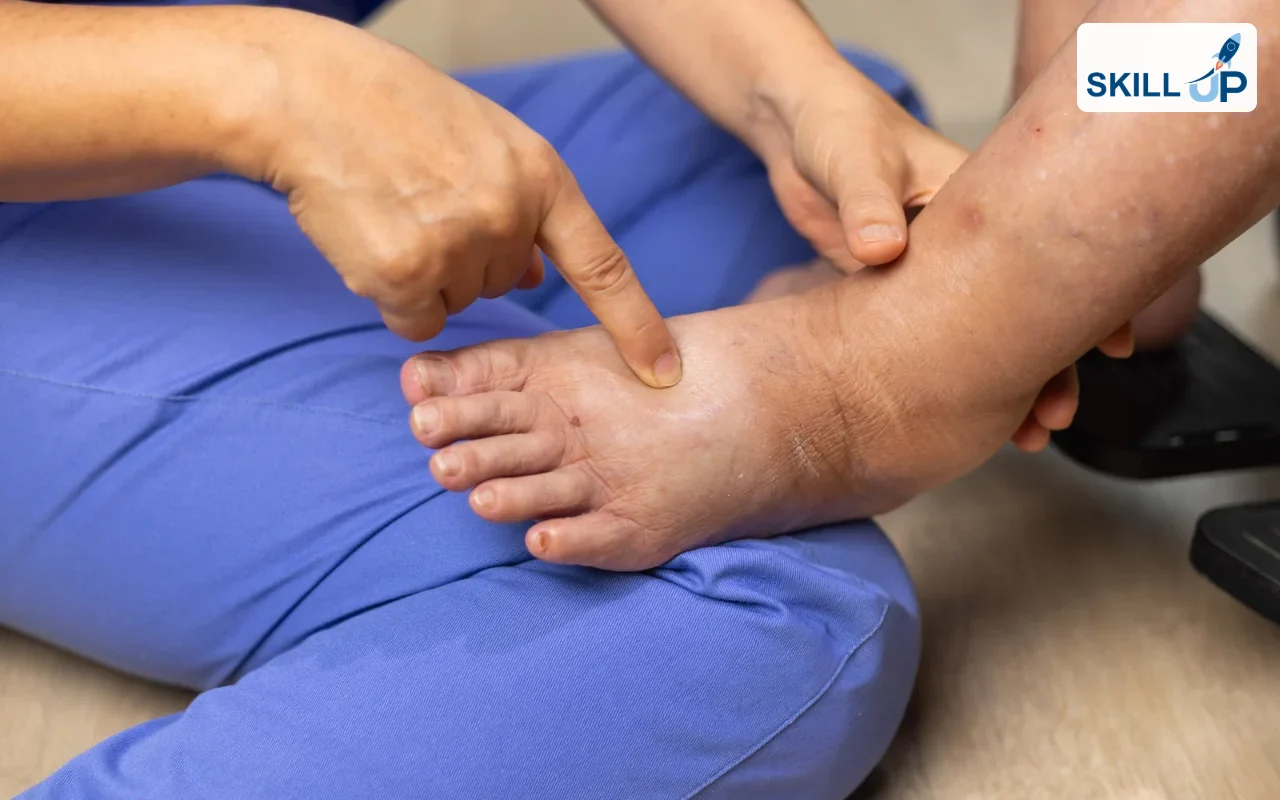
Every week, 184 diabetes-related leg, foot or toe amputations take place in the UK, according to Diabetes UK. Yet serious foot problems can begin with something as small as a blister or cut. Even more worrying, nerve damage may stop you from feeling the injury.
Diabetes can also reduce blood flow, making wounds harder to heal. That is why diabetic foot care matters, even when your feet look healthy. A simple daily check can help you spot cuts, blisters, swelling, colour changes or broken skin before problems become serious.
This guide explains how to check your feet, recognise early warning signs and know when to seek medical help, following trusted UK guidance. You’ll also learn why regular NHS foot assessments are essential for protecting your long-term foot health.
What Is Diabetic Foot Care?
Diabetic foot care means protecting your feet from injury, checking them regularly and getting professional help early when something changes. It includes everyday steps such as washing and drying your feet carefully, wearing well-fitting shoes, looking after dry skin and checking for signs of damage.

Diabetes can affect the nerves that carry messages about pain, temperature and touch. This is called diabetic neuropathy. If sensation is reduced, you may not notice a blister caused by a shoe, a small cut or a burn until the skin has already been damaged. Reduced blood supply can also make healing more difficult.
This is why diabetic foot care is about prevention as much as treatment. NICE recommends regular foot-risk assessment for people with diabetes, with the frequency depending on their level of risk. People at low risk should generally be assessed annually, while those at higher risk may need more frequent reviews.
Some people search for diabetic feet pictures beginning stages because they want to know whether a colour change, mark or patch of skin looks serious. Images may help you understand what different problems can look like, but a photograph cannot reliably diagnose nerve damage, poor circulation, infection or an ulcer. If you are worried, do not rely on diabetic foot pictures of beginning stages alone; ask a healthcare professional to assess the foot.
Why Can Diabetes Cause Problems With the Feet?
Two of the main reasons are nerve damage and circulation problems. Neuropathy may reduce sensation, while peripheral arterial disease can reduce blood supply to the feet. Together, these problems can make injuries easier to miss and harder to heal.
People sometimes describe diabetes as foot aches, tingling, burning, numbness or shooting pain. These symptoms can occur with neuropathy, although foot pain can have many different causes. If you experience diabetes foot pain, especially if it is new, worsening or linked with skin changes, speak to your GP, diabetes team or podiatry service rather than trying to diagnose the cause yourself.
Changes around diabetics’ toes also deserve attention. Look for blisters, sores, cuts, swelling, broken skin, nail changes or a difference in colour. If a diabetic’s toes suddenly become pale, blue, dark, hot, swollen or painful, seek prompt medical advice because some colour and temperature changes can be linked with poor circulation, infection or another serious foot problem.
These are common diabetes problems with feet, but they should not be treated as normal just because a person has diabetes. Early assessment matters because serious foot complications can develop from wounds, infection, reduced blood supply or Charcot foot.
Diabetic Foot Care Checklist: 7 Essential Steps
A daily foot check takes just a few minutes but can help prevent serious complications. According to Diabetes UK, checking your feet every day is an important part of diabetic foot care, especially if you have reduced feeling in your feet.

Simple Foot Check Checklist
- Remove your shoes and socks: Check both feet in good lighting.
- Inspect the whole foot: Look at the tops, soles, heels, toenails and spaces between your toes. Use a mirror or ask someone to help if needed.
- Check for skin damage: Look for cuts, blisters, cracks, hard skin, sores or wounds that are not healing.
- Notice colour changes: Watch for new redness, pale or blue areas, or dark patches.
- Look for swelling or heat: A foot that suddenly becomes swollen, hot or changes shape needs urgent medical attention, even without pain.
- Check for unusual sensations: Notice any new burning, tingling, numbness or pain. Remember that nerve damage can hide injuries.
- Inspect your footwear: Check inside your shoes for stones, rough seams or anything that could rub against your skin.
A diabetic with sore feet should pay particular attention to pressure marks, blisters and poorly fitting shoes. If you are a diabetic with sore feet, seek medical advice if the soreness is new, worsening or linked to swelling, redness or broken skin.
Important: Contact your GP, diabetes team or NHS 111 urgently if you notice a new wound, unexplained swelling or signs of infection. Do not wait for your next routine appointment.
Daily checks are essential, but they cannot replace your annual NHS diabetes foot assessment, which checks circulation, sensation and overall foot health.
Which Warning Signs Need Urgent Help?
Do not wait for your next routine appointment if you notice a new wound, ulcer, spreading redness or colour change, increasing swelling, heat, discharge, pus, a bad smell or blackened tissue. A suddenly hot, swollen foot can also be a warning sign of Charcot foot, particularly in someone with neuropathy.

NICE says active diabetic foot problems should normally be referred to a specialist foot service within one working day. A limb-threatening or life-threatening problem, such as an ulcer with fever or sepsis, gangrene, severe loss of blood supply or suspected deep infection, requires immediate acute assessment.
That distinction is important: diabetic foot care at home is suitable for routine prevention, but a wound or suspected infection is not something to manage only with self-care.
Is Foot Cream Safe for People With Diabetes?
People often search for cream for foot diabetes when the skin feels dry or cracked. Moisturising can be helpful: Diabetes UK recommends an emollient for dry skin and advises asking your healthcare team which product is suitable. However, routine cream should generally not be applied between the toes because excess moisture there can cause skin problems.
There is no single cream for foot diabetes that can prevent or treat all diabetic foot complications. A moisturiser cannot treat an infected wound, poor circulation or a foot ulcer. If your skin is cracked, bleeding, infected or broken, get professional advice rather than relying on cosmetic products.
This is another area where diabetes problems with feet need careful judgement. Diabetes UK also advises against using blades, corn plasters, acid-based corn remedies or similar self-treatment because these can damage the skin and may lead to ulceration. Walking barefoot and exposing numb feet to direct heat can also increase the risk of injury.
Learning More About Safe Foot Care
If you are interested in routine foot health, Skill-UP’s Foot Health Practitioner (FHP) course includes modules on high-risk patients and diabetic foot awareness. Skill-UP states that the programme also covers foot anatomy, dermatology, foot disorders, nail conditions and foot care practice.
The course should be viewed as education rather than a substitute for podiatry training or specialist diabetic-foot services. Skill-UP’s own course information distinguishes Foot Health Practitioners from podiatrists and notes that complex diabetic complications, including ulcers and infected wounds, should be referred to an appropriately qualified healthcare professional.
For related reading, the planned pillar guide How to Become a Foot Health Practitioner in the UK will explain training routes, scope and referral boundaries. A related supporting article, Fungal Nail Treatment: What Works, explains nail changes and treatment choices.
The safest message is straightforward: good diabetic foot care starts with daily checks, but new wounds, infection, major colour changes or a hot swollen foot need professional assessment rather than home treatment.
Interested in a Career in Foot Health?
Explore foot anatomy, common skin conditions, foot assessments and essential care principles through structured online training.
How to Protect Your Feet Every Day
Good diabetic foot care goes beyond checking for cuts and blisters. Simple habits can help protect your skin, reduce pressure and prevent avoidable injuries.

Follow these daily steps:
- Wash gently: Use lukewarm water and mild soap. Check the water temperature with your elbow if you have reduced feeling in your feet.
- Dry carefully: Pat your feet dry, especially between your toes. Avoid rubbing the skin.
- Moisturise dry skin: Apply a suitable moisturiser to dry areas, but not between your toes.
- Choose comfortable shoes: Wear footwear that fits properly, with enough room for your toes. Check inside your shoes for stones or rough seams.
- Wear clean socks: Choose socks that fit comfortably without tight bands or bulky seams.
- Avoid treating corns yourself: Do not use blades, corn plasters or strong acid-based treatments.
If your toenails are difficult to cut, or you have poor eyesight or reduced feeling, ask a qualified professional for advice.
These steps follow the recommendations in Diabetes UK’s foot care guidance.
What Should You Do If You Notice a Foot Problem?
Even a small wound can become serious when you have diabetes. Knowing when to ask for help is an essential part of diabetic foot care.

| What you notice | What to do |
|---|---|
| Dry skin without a wound | Use suitable moisturiser and continue daily checks. |
| New blister, cut or broken skin | Contact your GP, diabetes team or foot protection service urgently, ideally the same day. |
| New redness, swelling, heat or discharge | Seek urgent medical assessment. |
| A suddenly hot, swollen foot | Seek urgent assessment for possible Charcot foot, even without pain. |
| Blackened tissue, severe infection or feeling seriously unwell | Attend A&E immediately. Call 999 if you are seriously ill. |
According to NICE guideline NG19, active diabetic foot problems need prompt specialist assessment. Some severe conditions require immediate hospital care.
Never wait for pain before seeking help. Nerve damage can make a serious injury feel surprisingly mild.
Are Diabetic Foot Checks Free on the NHS?
Yes. People with diabetes should receive a foot assessment as part of their annual NHS diabetes review.
A trained healthcare professional checks your skin, circulation and sensation. They also assess your risk of developing foot ulcers.
People at higher risk may need more frequent checks or specialist podiatry support.
However, a free annual foot assessment does not mean every routine nail-cutting or private foot-care service is covered by the NHS. Access to ongoing podiatry depends on clinical need and local referral arrangements.
You can learn more from Diabetes UK’s annual foot check guide.
Can Fungal Nails Affect Diabetic Foot Health?
Fungal nail infections can make nails thick, brittle or discoloured. Thick nails may also rub against footwear and damage nearby skin.

However, not every thick or yellow nail has a fungal infection. An examination may be needed to find the cause.
Avoid cutting deeply into thick nails or using harsh treatments without advice. If the nail or surrounding skin becomes painful, swollen or broken, contact a healthcare professional.
For more information about nail changes and treatment choices, read our related guide, Fungal Nail Treatment: What Works.
Learn More About Foot Health With Skill-UP
Understanding diabetic foot care is valuable for patients, carers and people interested in foot health careers.
Skill-UP’s Foot Health Practitioner (FHP) course covers foot anatomy, common foot conditions, nail disorders and awareness of high-risk patients, including people with diabetes.
You can also explore the Diabetes Awareness & Diabetes Care course to develop your general knowledge of diabetes.
Interested in a foot health career? Our planned pillar guide, How to Become a Foot Health Practitioner in the UK, will explain training routes and professional responsibilities.
These courses provide education. They do not replace regulated podiatry qualifications, supervised clinical training or specialist diabetic foot treatment.
Interested in a Career in Foot Health?
Study foot anatomy, common skin conditions, foot assessments and essential care principles with structured online training.
Final Thoughts
A serious foot problem does not always start with pain. Sometimes, a tiny cut or blister is the first warning sign. That is why diabetic foot care should never be overlooked, even when your feet feel perfectly healthy.
Make daily foot checks part of your routine. Keep your skin clean, wear comfortable shoes and attend regular NHS foot assessments. Remember, early action can make a life-changing difference.
Current NICE guidance, reviewed in 2025, recommends specialist referral within one working day for active diabetic foot problems, with immediate hospital care for limb threatening conditions.
Your feet carry you through life. Give them a few minutes of care every day.
This article is for general information only and does not replace advice from your GP, diabetes team or podiatrist.
Frequently Asked Questions About Diabetic Foot Care
1. Can diabetic foot pictures of beginning stages help identify early problems?
People searching for diabetic foot pictures of beginning stages often want to compare their feet with examples of ulcers, blisters or skin changes.
However, diabetic foot pictures in the beginning stages cannot show nerve damage or reliably tell you whether a wound is infected. Never use photographs instead of a professional assessment.
2. What changes should you watch for in a diabetic's toes?
The search phrase diabetics toes usually relates to changes such as numbness, swelling, discolouration or sores.
When checking a diabetic’s toes, look between them and around the nails. A new wound, sudden colour change or swollen toe needs prompt medical advice.
3. Why do diabetes foot aches happen?
People searching for diabetes foot aches may be experiencing burning, tingling, aching or sharp pain.
Although diabetes foot ache can sometimes be linked to nerve damage, poor circulation, pressure or other conditions may also cause discomfort. New or worsening pain should be assessed.
4. What should a diabetic with sore feet do?
A diabetic with sore feet should check for blisters, rubbing, swelling and skin damage.
If you are a diabetic with sore feet, do not simply change your shoes and ignore the problem. Contact your healthcare team if the pain is new, persistent or accompanied by other changes.
5. What are the most common diabetes problems with feet?
Common diabetes problems with feet include nerve damage, reduced circulation, dry skin, infections and foot ulcers.
Some diabetes problems with feet develop without noticeable pain. This is why daily checks and regular professional assessments are important.
6. What is the best cream for feet with diabetes?
There is no single best cream for foot diabetes. A gentle emollient may help with dry, unbroken skin.
If you are searching for cream for feet diabetes, ask your pharmacist or diabetes team which moisturiser suits your skin. Do not apply ordinary moisturiser to an open wound or between your toes.
All Courses
Personal Development
Employability
Career Bundle
Management
Free QLS Certificate
IT & Software
Business
Technology
Health & Care
Quality Licence Scheme Endorsed Courses
Health & Safety
Training
Marketing
Job Ready Programme
Design
Accounting & Finance
Health and Fitness
Healthcare and Medical
Animal Care
Psychology
Microsoft Office
Teach & Education
I.T
HR and Leadership
Counselling and Therapy
Teaching & Child Care
Health and Social Care
Electrical & Electronics
Law
Food Nutrition
programming
Administration & Office Skills
Education
Language
Engineering
Cooking & Baking
Law & Criminology
Accounting
QLS Bundle
Office Skills
Awareness
Photography
Finance
Lifestyle
Diet and Nutrition
Makeup & Beauty
Therapy
Sports
First Aid
Accounting & Bookkeeping
Mathematics
Excel
Web Design
Top Rated Course
Diet and Fitness
Counselling
Agriculture
Networking & Design
General Education
Biotechnology
Audit
Economics
Lifestyle & Recreational
Adobe Photoshop
Travel and Tourism
Categories

Awarded By