
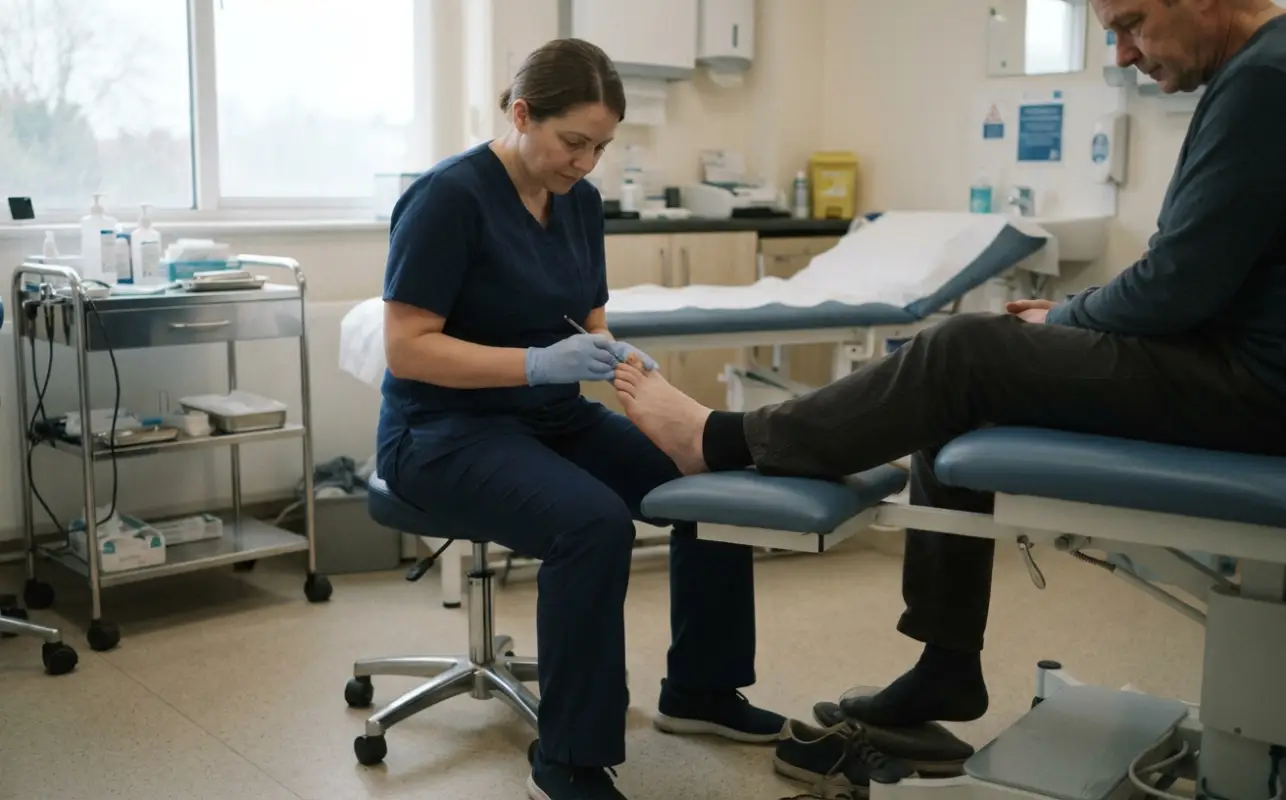
A yellow, thickened or crumbling toenail can be frustrating, especially when it refuses to improve. With so many pharmacy products, prescription medicines and home remedies available, choosing the right fungal nail treatment can feel confusing.
The most effective options are antifungal nail lacquers for certain mild infections and prescription antifungal tablets for more extensive confirmed infections. Oral medicines are generally more effective, but the right choice depends on how much of the nail is affected and your overall health.
This guide explains which treatments work, what has limited evidence, how long recovery takes and when to seek professional help in the UK.
Explore foot care as a subject or career
How Do You Know If You Have a Fungal Nail Infection?
A fungal nail infection, medically known as onychomycosis, occurs when fungi infect a fingernail or toenail. It often begins near the edge and gradually spreads.
Common signs include:
- Yellow, white or brown nail discolouration.
- Thickened nails that become difficult to trim.
- Brittle, cracked or crumbly nail edges.
- Flaky material collecting underneath the nail.
- A nail begins to lift away from the nail bed.

However, not every discoloured nail has a fungal infection. Nail injuries and conditions such as psoriasis can look similar.
The British Association of Dermatologists’ guidance on fungal nail infections explains why testing a nail sample may be necessary before treatment.
What Fungal Nail Treatments Actually Work?
The best fungal nail treatment depends on the infection’s severity, location and your medical circumstances.
Some medicines are applied directly to the nail, while others work through the bloodstream. Professional nail care can also support treatment.
Antifungal Nail Lacquers and Pharmacy Treatments
For mild fungal nail infections, medicated nail lacquers are often a suitable starting point.
One commonly used treatment contains amorolfine, an antifungal medicine applied directly to the affected nail.
These treatments generally work best when:
- Less than half the nail is affected.
- The infection has not reached the cuticle.
- The nail is not severely thickened or damaged.
Consistency matters. According to the NHS guidance on fungal nail treatment, pharmacy nail treatments may need to be used for 6–12 months.
Improvement usually appears gradually as healthier nails grow from the base.
A pharmacist can help you choose a suitable product, explain how frequently to apply it and advise whether further assessment would be helpful.
Prescription Antifungal Tablets
For extensive or persistent infections, prescription antifungal tablets may be more effective than nail lacquers.
Terbinafine is commonly recommended for suitable adults with confirmed fungal nail infections. Itraconazole may be considered when terbinafine is unsuitable or when the type of infection makes another medicine preferable.
These medicines work throughout the body, helping treat fungus within the affected nail.
Before prescribing treatment, a GP may arrange nail testing to confirm the infection.
They will also consider your medical history, existing medicines and possible side effects. Liver-function blood tests are usually needed before treatment and may be repeated during treatment.
Although prescription tablets can be effective, they are not suitable for everyone. Your GP will decide whether their benefits outweigh any potential risks.
Professional Nail Care and Debridement
When a fungal toenail becomes unusually thick or uncomfortable, professional nail care may help.
A podiatrist may reduce thickened nail material using a procedure called nail debridement.
This involves carefully trimming or thinning affected parts of the nail. It can improve comfort, reduce pressure inside footwear and sometimes help topical treatments reach the affected area.
Debridement may be used alongside antifungal medicines, depending on the condition of the nail.
For severely damaged nails, a specialist may occasionally recommend partial or complete nail removal.
Professional assessment is particularly useful when thickened nails make walking or wearing shoes uncomfortable.
Which Fungal Nail Treatment Is Best?
The best fungal nail treatment depends on how much of the nail is affected, how severe the infection is and your overall health. Different treatments work better in different situations.
Antifungal nail lacquers are often suitable for mild infections affecting a small part of the nail. They are applied directly to the affected area and need consistent use over several months to achieve results.
Prescription antifungal tablets are generally more effective for extensive or persistent fungal nail infections. Medicines such as terbinafine work throughout the body to treat the infection. However, a GP will need to assess whether they are suitable, and blood tests may be required.
Professional nail debridement can help when infected nails become particularly thick or uncomfortable. A podiatrist carefully reduces the thickened nail material, which can relieve pressure and support other antifungal treatments. However, this procedure does not usually cure the infection on its own.
Laser treatment is another option available at some private clinics. However, research has not consistently shown that it reliably clears fungal nail infections, so it should not be considered a guaranteed cure.
For suitable adults with extensive confirmed infections, oral antifungal tablets are generally more effective than topical treatments. Mild infections, however, may respond well to medicated nail lacquers.
The most suitable treatment is one that matches the condition of your nails and your individual health needs. A pharmacist or GP can help you choose the right approach.
How Long Does Fungal Nail Treatment Take?
Fungal nail infections take time to clear because nails grow slowly.
Pharmacy nail lacquers may require 6–12 months of application. Prescription tablets are usually taken for a shorter period, although the duration varies according to the infection and treatment prescribed.
Importantly, clearing the fungus and growing a healthy-looking nail are different stages.

A toenail can take around 12–18 months to grow out completely. Fingernails generally recover more quickly.
You may notice healthier growth near the base while the older, damaged section remains visible.
Even after successful treatment, a severely damaged nail may not return entirely to its previous appearance.
If the nail continues deteriorating or the infection spreads, seek professional advice rather than repeatedly changing treatments.
Do Home Remedies Work for Fungal Nail Infections?
Home remedies are popular because they are readily available. However, their effectiveness varies, and some have little reliable clinical evidence.
Tea Tree Oil, Vinegar and Other Remedies
Tea tree oil, vinegar and menthol-based products are sometimes promoted as natural fungal nail treatments.
Although certain ingredients have shown antifungal activity in laboratory studies, there is insufficient consistent evidence that these remedies reliably cure established nail infections.
Some substances can also irritate the surrounding skin.
Keeping your feet clean and dry is beneficial, but good hygiene works best as part of prevention and general care rather than as a replacement for appropriate antifungal treatment.
Does Laser Treatment Work?
Laser treatment is sometimes offered privately for persistent fungal nail infections.
However, research has not consistently demonstrated reliable benefits from laser treatment alone.
The British Association of Dermatologists notes that laser and other light-based treatments have not shown sufficiently consistent results to be routinely funded by the NHS.
If you are considering private laser treatment, discuss the expected outcomes, limitations and costs with an appropriately qualified healthcare professional.
When Should You See a Pharmacist, GP or Podiatrist?
Many fungal nail infections can initially be discussed with a pharmacist. However, professional assessment is useful when symptoms persist, or additional health concerns are present.
When Pharmacy Advice May Help
A pharmacist can recommend suitable non-prescription products for mild infections.
They can also explain correct application, treatment duration and whether a particular medicine is appropriate for your circumstances.
When to Speak to a GP
Arrange a GP appointment if:
- The infection is severe or continues spreading.
- Pharmacy treatment has not helped.
- Several nails are affected.
- The nail becomes particularly painful.
- You have diabetes or a weakened immune system.
- You are uncertain whether the problem is fungal.
Seek prompt medical advice if the surrounding skin becomes increasingly red, swollen or painful, particularly if redness is spreading.
How Can a Podiatrist Help?
A podiatrist can assess foot and nail problems, manage uncomfortable thickened nails and recommend suitable professional care.
Podiatrists are regulated healthcare professionals. In the UK, anyone practising under the protected title must meet the relevant HCPC registration requirements.
A podiatrist may also recommend GP or specialist assessment when further investigation or prescription treatment is needed.
How to Prevent Fungal Nail Infections from Returning
Fungal nail infections can return after treatment, but everyday foot care can help reduce the likelihood.
Here are six useful habits:
- Keep feet clean and dry. Pay particular attention to the spaces between your toes.
- Change socks daily. Replace damp or sweaty socks promptly.
- Allow footwear to dry. Rotate shoes rather than wearing the same damp pair repeatedly.
- Treat an athlete’s foot. Fungal skin infections can spread to toenails.
- Avoid sharing nail tools. Keep nail clippers, scissors and towels for personal use.
- Wear footwear in communal showers. Flip-flops can help reduce contact with contaminated surfaces.
Keep toenails neatly trimmed without cutting deeply into the surrounding skin.
Maintaining these habits during and after treatment supports healthier feet and may help prevent reinfection.
For those working in care settings, infection prevention and control training covers wider hygiene and infection prevention practices.
Interested in Learning More About Professional Foot Health?
Fungal nail infections are one of several conditions covered within professional foot health education.

Learners interested in wider foot care topics may also consider broader foot health and infection control training.
If you are interested in foot care as a subject or potential career direction, Skill Up’s Foot Health Practitioner (FHP) course introduces topics including nail diseases, foot dermatology, common foot disorders and diabetic foot care.
Learners particularly interested in supporting people with long-term health conditions may also consider diabetes awareness and care training.
The CPD-accredited, QLS-endorsed course supports theoretical learning about foot health. It is not an HCPC-regulated podiatry qualification.
This can help you assess which learning pathway is appropriate for your goals.
For those considering other care-related roles, Skill Up also covers the skills and responsibilities involved in health and social care work.
Explore foot care as a subject or career
Final Thoughts
Effective fungal nail treatment depends on choosing an appropriate option and allowing enough time for recovery.
Medicated nail lacquers may help with mild infections, while more extensive confirmed infections may require prescription antifungal tablets. Professional nail care can also improve comfort and support treatment.
With suitable treatment, sensible foot hygiene and realistic expectations, many fungal nail infections can be successfully managed.
Frequently Asked Questions (FAQs)
What Kills Nail Fungus the Fastest?
Prescription antifungal tablets, particularly terbinafine, are generally more effective than topical treatments for extensive fungal nail infections. However, they require medical assessment and are not suitable for everyone. Even when treatment successfully clears the fungus, toenails can take 12–18 months to grow out completely.
What Does the NHS Recommend for Nail Fungus?
The NHS recommends speaking to a pharmacist about suitable antifungal nail treatments, particularly for mild infections. These may include medicated nail lacquers used consistently over several months. If pharmacy treatments are unsuccessful or the infection is severe, a GP may consider prescription antifungal tablets following an appropriate assessment.
What Is the Best Over-the-Counter Treatment for Toenail Fungus?
Antifungal nail lacquers containing amorolfine are an established pharmacy treatment for mild fungal nail infections. They generally work best when a limited part of the nail is affected. Treatment often continues for several months, and a pharmacist can advise whether the product is appropriate for your condition.
Can Fungal Nail Infections Go Away Without Treatment?
Fungal nail infections do not usually clear on their own. However, some mild infections may not require immediate medication, particularly when they cause no discomfort. A healthcare professional can advise whether treatment would be beneficial.
Why Is My Fungal Nail Treatment Not Working?
Treatment may appear ineffective because nails grow slowly, the diagnosis is incorrect, or the infection is extensive. Inconsistent application and reinfection can also affect results. Seek advice if the nail continues to worsen or treatment has not helped.
Can Fungal Nail Infections Spread to Other Nails?
Yes. Fungal infections can spread between nails and surrounding skin. Keeping feet dry, avoiding shared nail tools and treating athlete’s foot can help reduce the risk.
Can You Treat Fungal Fingernails the Same Way as Toenails?
Similar antifungal medicines may be used for both, but treatment duration and suitability can differ. Fingernails grow faster than toenails, so visible improvement may appear sooner.
Can Fungal Nail Infections Come Back After Treatment?
Yes. Reinfection is possible, particularly when an athlete’s foot persists or feet remain frequently damp. Completing treatment and maintaining good foot hygiene can help reduce recurrence.
All Courses
Personal Development
Employability
Career Bundle
Management
Free QLS Certificate
IT & Software
Business
Technology
Health & Care
Quality Licence Scheme Endorsed Courses
Health & Safety
Training
Marketing
Job Ready Programme
Design
Accounting & Finance
Health and Fitness
Healthcare and Medical
Animal Care
Psychology
Microsoft Office
Teach & Education
I.T
HR and Leadership
Counselling and Therapy
Teaching & Child Care
Health and Social Care
Electrical & Electronics
Law
Food Nutrition
programming
Administration & Office Skills
Education
Language
Engineering
Cooking & Baking
Law & Criminology
Accounting
QLS Bundle
Office Skills
Awareness
Photography
Finance
Lifestyle
Diet and Nutrition
Makeup & Beauty
Therapy
Sports
First Aid
Accounting & Bookkeeping
Mathematics
Excel
Web Design
Top Rated Course
Diet and Fitness
Counselling
Agriculture
Networking & Design
General Education
Biotechnology
Audit
Economics
Lifestyle & Recreational
Adobe Photoshop
Travel and Tourism
Categories

Awarded By