Cart
No products in the basket.
Log In Sign Up

Login

Automated External Defibrillator (AED) Training

Get 92% Discount | CPD Accredited | Affordable Pricing | No Hidden Charges | 24/7 Tutor Support | Instant Access
4.7
★ ★ ★ ★ ★
★ ★ ★ ★ ★
9 Reviews

stds319 Students

Accreditation Icon
Accreditation Icon

Overview: Automated External Defibrillator (AED) Training Course

The Automated External Defibrillator (AED) Training course introduces the essential procedures used when responding to sudden cardiac emergencies. Sudden cardiac arrest can occur without warning, and the rapid use of an AED device can significantly improve survival rates. This training explains how AED devices function and how individuals can respond safely and effectively during emergency situations in workplaces, public areas, and community environments.

âž½Learn the concept and purpose of Automated External Defibrillator (AED) devices.
âž½Study the preparation steps required before using an AED during an emergency.
âž½Identify the correct procedures for operating an AED device.
âž½Explore special situations that may occur when using an AED.
âž½Review where AED devices are commonly located in workplaces and public settings.
âž½Understand the importance of AED training programmes for emergency response.
âž½Examine routine maintenance and inspection procedures required for AED devices.

This course explains how AED devices support emergency response systems and how individuals can assist during cardiac emergencies until professional medical services arrive.

What Is Automated External Defibrillator (AED) Training Course?

The Automated External Defibrillator (AED) Training course focuses on the knowledge required to respond to sudden cardiac arrest using an AED device. AED devices are designed to analyse heart rhythms and deliver a controlled electric shock when necessary to restore normal heart function.

This training begins with an introduction to AED technology and emergency response procedures. Learners study how cardiac arrest occurs and why early defibrillation is essential for increasing survival rates during cardiac emergencies.

The course then explains the preparation steps required before using an AED device. Participants explore how to assess the situation, ensure safety, and prepare the patient before applying the device.

Further modules explain how to operate an AED during emergency situations. Learners review the step-by-step process used to attach electrode pads, follow device prompts, and provide assistance during cardiac emergencies.

The programme also examines special AED situations, device availability in public locations, and maintenance procedures that ensure equipment remains ready for use. By completing this course, learners develop knowledge of AED operation, emergency response procedures, and device maintenance within first aid systems.

Description: Emergency AED Operation and Cardiac Response Training

The Automated External Defibrillator (AED) Training course begins with an introduction to AED technology and the role it plays in emergency cardiac response. Learners study how AED devices function and why they are essential in responding to sudden cardiac arrest situations.

The training then explains the preparation steps required before using an AED device. Participants explore safety procedures, initial assessment of the patient, and the steps taken before activating the defibrillator. This section highlights the importance of organised emergency response in critical medical situations.

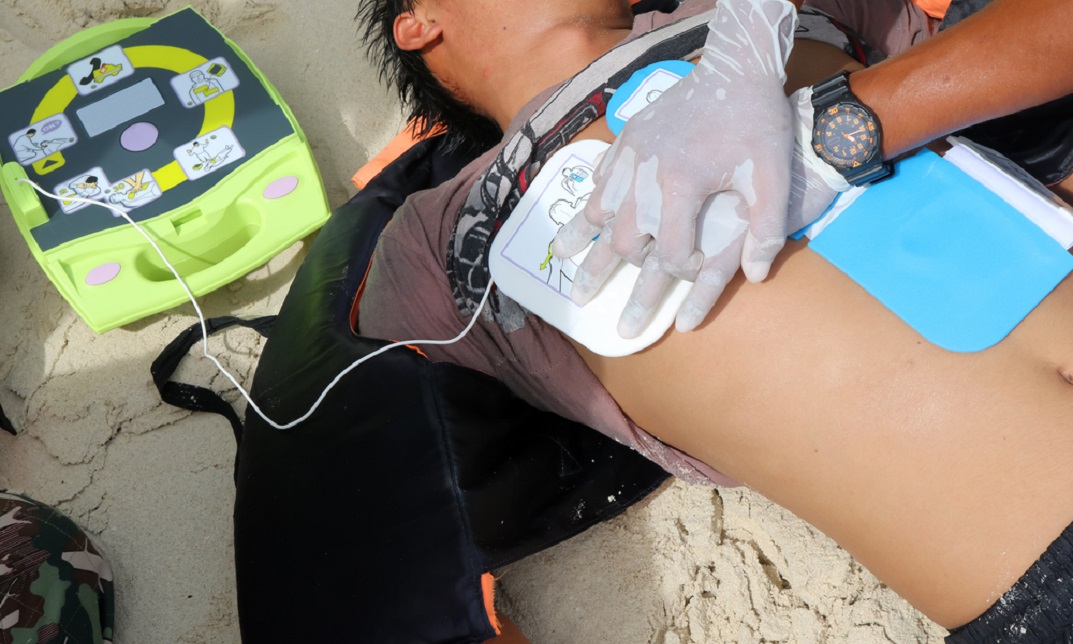
The course also focuses on the process of using an AED device during cardiac emergencies. Learners review the correct procedures for placing electrode pads, following automated voice instructions, and supporting the patient while the device analyses heart rhythm and delivers a shock if required.

Further modules introduce special AED situations that may occur during emergency use. Learners examine scenarios such as wet environments, patients with medical devices, and the presence of bystanders during emergency response.

The programme concludes with sections on AED availability, training programmes, and device maintenance procedures. Learners explore how organisations maintain AED equipment and ensure that devices remain functional and accessible during emergencies.

Learning Outcomes

Who Is This Course For?

Why Enrol in This Automated External Defibrillator (AED) Training Course?

Sudden cardiac arrest can occur in workplaces, public spaces, and community environments. Quick access to an AED device and proper response procedures can significantly increase the chances of survival during these emergencies.

This course explains how AED devices operate and how individuals can respond effectively when cardiac emergencies occur. It also introduces preparation procedures, safety steps, and equipment maintenance practices required for responsible AED use.

Training in AED response supports emergency preparedness within workplaces, schools, and public environments. Organisations that implement AED training programmes contribute to safer environments and improved emergency readiness.

Completing this course supports knowledge development in first aid response, workplace safety training, and emergency medical awareness.

Automated External Defibrillator (AED) Training Course Career Path

Training in AED response and emergency procedures supports several roles related to workplace safety and emergency preparedness.

Typical career pathways include:

First Aid Officer — £22,000–£30,000
Provides emergency assistance and first aid response within workplaces and public settings.

Health and Safety Officer — £30,000–£45,000
Ensures workplace safety systems include emergency response procedures and first aid equipment.

Emergency Response Coordinator — £28,000–£40,000
Supports organisations in maintaining emergency preparedness and response systems.

Safety Compliance Officer — £32,000–£48,000
Monitors organisational safety procedures and emergency readiness programmes.

Community Safety Officer — £25,000–£38,000
Supports public safety programmes and emergency awareness training within communities.

Professionals with education in emergency response training can continue developing careers in workplace safety management, first aid instruction, and public safety coordination.

Enrol Today – Strengthen Emergency Response Knowledge

By enrolling in this Automated External Defibrillator (AED) Training course, you begin developing knowledge of AED device operation, emergency response procedures, and equipment maintenance.

AED devices play a vital role in cardiac emergency response systems. Individuals trained in AED procedures can assist during critical situations and support emergency response efforts before professional medical services arrive.

Start building knowledge that supports first aid training, emergency response preparation, and workplace safety programmes.

Certificate of Achievement

Upon successfully completing this Automated External Defibrillator (AED) Training course, learners will receive an Accredited Certificate confirming their knowledge of AED operation, emergency response procedures, and equipment maintenance practices.

We provide two recognised certificate options:

CPD-QS Certificate
Learners can obtain a certificate accredited by CPD Quality Standards (CPD-QS). This accreditation confirms that the course meets recognised Continuing Professional Development standards and supports professional development in first aid and emergency response training.

SKILL UP Brand Recognised Certificate
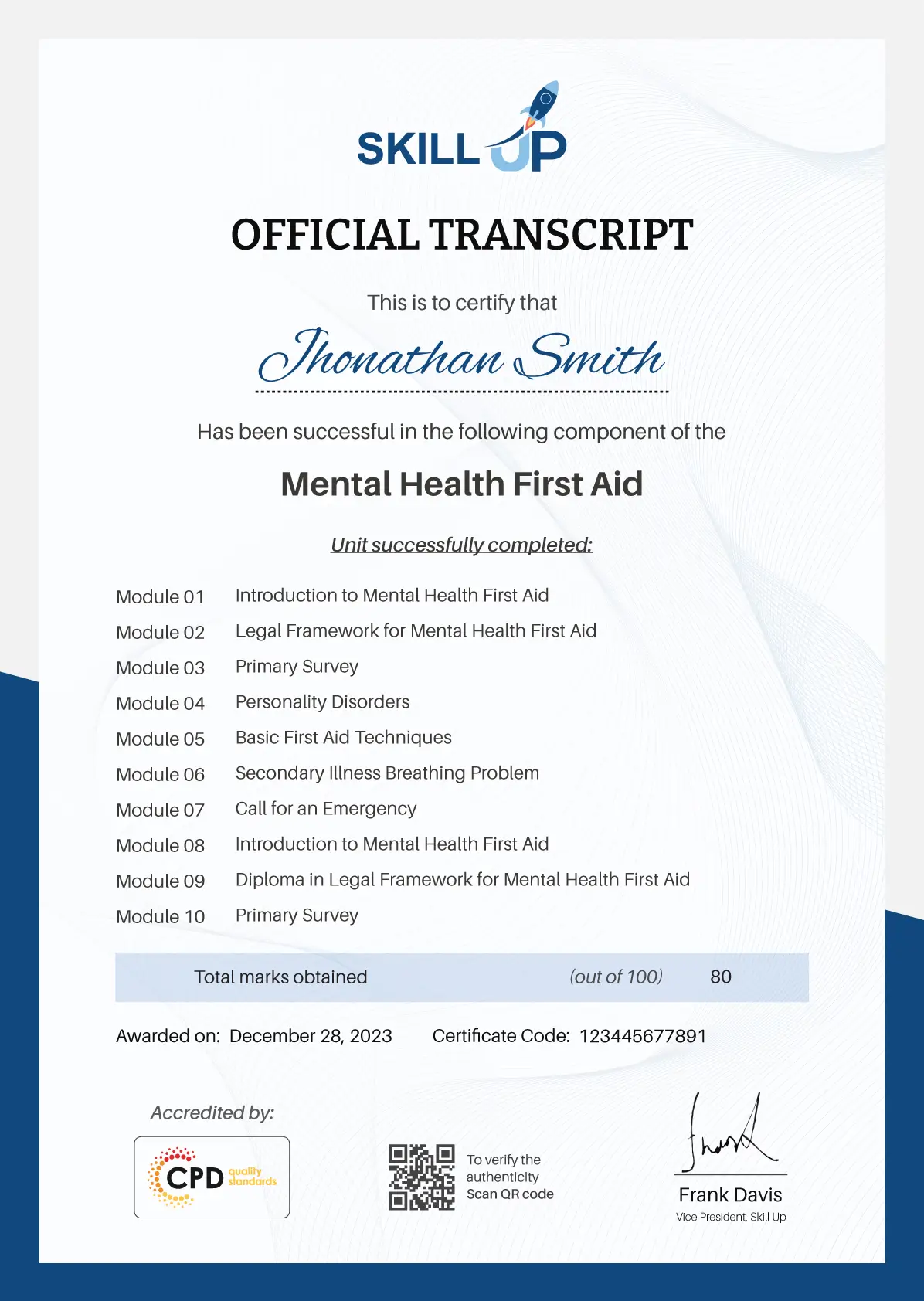
Learners will also receive a SKILL UP Certificate of Completion. This certificate verifies that you have successfully completed the training and achieved the required learning outcomes related to AED operation, emergency response procedures, and equipment maintenance.

Both certificates demonstrate knowledge of AED emergency response systems and first aid support procedures.

Earn Your Accredited Certificate with Transcript

Save 20% with the coupon code SKILL20
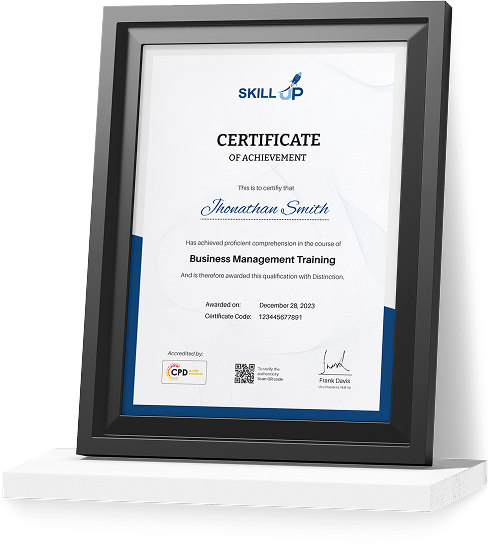
Show Your Certified Identity with a CPD-QS Certificate

Perfect for employers, clients, or academic verification.

Frequently Asked Questions

The course is delivered online and self-paced, allowing learners to complete the training within approximately 2–4 weeks depending on their schedule.

No prior training is required. The course introduces AED operation and emergency response procedures from a beginner level.

Yes, learners receive a recognised certificate confirming completion of the AED training course.

Yes, the training explains preparation steps and the procedures used to operate AED devices during cardiac emergencies.

Yes, the programme explains different scenarios that may occur when using AED equipment.

 Yes, the course supports workplace safety training and emergency response awareness.

Automated External Defibrillator (AED) Training Reviews

Excellent

4.7 / 5
Based on 9 reviews

98%

Would Recommend

319

Certified Learners

100%

Authentic Reviews

A well-organised and highly valuable course with clear, easy-to-understand guidance throughout. I’ve gained knowledge that’s directly relevant to my day-to-day responsibilities. It’s given me greater confidence in applying these skills professionally.

Engaging content delivered in a straightforward and structured format. The examples were realistic and helped reinforce key concepts effectively. I would certainly recommend it to colleagues looking to upskill

Comprehensive, insightful and professionally presented from start to finish. The course materials were clear and well supported. A worthwhile investment for anyone serious about career development

Curriculum

  • play Introductionto AED
    play 00:29:00
top