Overview
• Learn how aftertreatment technologies reduce harmful vehicle emissions
• Understand the environmental impact of automotive pollutants
• Explore key aftertreatment subsystems and components
• Study NOx control methods including EGR, SCR, and LNT systems
• Discover diesel particulate filter (DPF) operation and regeneration methods
• Examine air-fuel ratio control and lambda sensor functionality
Automotive emissions control has become a critical focus in modern engineering due to increasing environmental regulations and public health concerns. The Automotive Engineering: Aftertreatment Technologies course introduces the systems and technologies used to reduce harmful exhaust emissions produced by internal combustion engines.
Vehicle pollutants such as nitrogen oxides (NOx), carbon monoxide, hydrocarbons, and particulate matter contribute significantly to air pollution and environmental damage. Automotive manufacturers rely on advanced aftertreatment systems to meet emission standards and minimise environmental impact while maintaining engine performance.
This course provides structured training on aftertreatment systems, starting from fundamental concepts to advanced technologies. Learners explore how different components work together to control emissions, improve efficiency, and comply with global environmental standards.
Whether you are pursuing a career in automotive engineering, mechanical systems, or environmental technology, this course supports your ability to work with modern emission control systems and sustainable vehicle technologies.
What Is Automotive Engineering: Aftertreatment Technologies Course?
The Automotive Engineering: Aftertreatment Technologies course focuses on the systems used to reduce harmful emissions from vehicle exhaust systems. Aftertreatment technologies are essential in modern automotive design, helping manufacturers meet strict environmental regulations and improve air quality.
In this course, learners explore the core principles of emission formation and the technologies used to control them. Topics include catalytic converters, diesel particulate filters, NOx reduction systems, and sensor-based control mechanisms that monitor and optimise engine performance.
The training also explains how aftertreatment systems are integrated into vehicles, highlighting the relationship between engine operation and emission control. Learners examine how different technologies interact to reduce pollutants while maintaining fuel efficiency and system reliability.
By the end of the course, learners develop clear knowledge of emission control strategies, aftertreatment components, and system operation, supporting further study or career development in automotive engineering and environmental technologies.
Course Description
The Automotive Engineering: Aftertreatment Technologies course begins with an introduction to vehicle emissions and their environmental impact. Learners study the harmful effects of pollutants, including nitrogen oxides, particulate matter, and unburned hydrocarbons, and why emission control technologies are essential in modern vehicles.
The course then explores aftertreatment systems from basic to advanced levels. Learners examine the purpose of aftertreatment, key subsystems, and the structure of catalytic components such as substrate beds. Modules on diesel oxidation catalysts (DOC) and diesel particulate filters (DPF) explain how these systems reduce particulate emissions and improve exhaust quality.
Further modules focus on controlling nitrogen oxides (NOx), one of the most challenging pollutants in engine emissions. Learners study exhaust gas recirculation (EGR), selective catalytic reduction (SCR), and lean NOx trap (LNT) technologies. These sections explain how chemical and mechanical processes are used to convert harmful gases into less harmful substances.
The curriculum also includes detailed study of diesel particulate filter systems, including different types and regeneration methods used to maintain efficiency. Learners explore how particulate filters capture and remove soot from exhaust gases, ensuring compliance with emission standards.
The course concludes with air-fuel ratio control and lambda sensor technology. Learners examine how sensors monitor oxygen levels in exhaust gases and support engine control systems in maintaining optimal combustion conditions, improving both performance and emission reduction.
Learning Outcome
- Understand the impact of automotive pollutants on the environment
- Identify key components of aftertreatment systems
- Explain the function of DOC and DPF technologies
- Analyse different methods for controlling NOx emissions
- Understand the working principles of EGR, SCR, and LNT systems
- Evaluate diesel particulate filter types and regeneration processes
- Understand air-fuel ratio control and lambda sensor operation
Who Is This Course For?
- Automotive engineering students seeking knowledge of emission control systems.
- Mechanical engineering learners interested in vehicle technologies.
- Technicians working with automotive maintenance and diagnostics.
- Professionals involved in environmental and emission compliance.
- Individuals interested in sustainable automotive technologies.
Why Enrol in This Automotive Engineering: Aftertreatment Technologies Course?
Modern vehicles must meet strict emission standards, making aftertreatment technologies a key area of automotive engineering. These systems are essential for reducing environmental impact and ensuring regulatory compliance across global markets.
This course provides structured training on emission control technologies, covering both theoretical concepts and system functionality. It explains how aftertreatment components operate, how pollutants are reduced, and how systems are designed to work efficiently within modern vehicles.
Professionals with knowledge of aftertreatment systems contribute to cleaner and more efficient automotive solutions. Their expertise supports environmental protection, regulatory compliance, and technological innovation within the automotive industry.
Whether you are studying engineering or working in automotive-related fields, this course strengthens your knowledge of emission control systems and modern vehicle technologies.
Automotive Engineering: Aftertreatment Technologies Course Career Path
Knowledge of aftertreatment technologies supports a range of careers within automotive engineering and environmental systems.
Typical career pathways include:
Automotive Engineer — £30,000–£50,000
Designs and develops vehicle systems, including emission control technologies.
Emission Control Specialist — £35,000–£55,000
Focuses on reducing vehicle emissions and ensuring compliance with regulations.
Automotive Technician — £25,000–£40,000
Maintains and diagnoses vehicle systems, including aftertreatment components.
Mechanical Engineer — £32,000–£52,000
Works on mechanical systems related to engines and emission control.
Environmental Engineer — £30,000–£50,000
Focuses on reducing environmental impact through engineering solutions.
Research and Development Engineer — £35,000–£60,000
Develops new technologies to improve emission reduction and efficiency.
Enrol Today – Advance Automotive Engineering Skills
By enrolling in this Automotive Engineering: Aftertreatment Technologies course, you begin building knowledge of emission control systems and modern automotive technologies.
Aftertreatment technologies play a vital role in reducing environmental impact and improving air quality. Professionals with this knowledge contribute to sustainable engineering solutions and the development of cleaner vehicles.
Start developing the expertise required to support innovation, compliance, and environmental responsibility in the automotive industry.
Certificate of Achievement
Upon successfully completing this Automotive Engineering: Aftertreatment Technologies course, learners will receive an Accredited Certificate confirming their knowledge of emission control systems and aftertreatment technologies.
We provide two recognised certificate options:
CPD-QS Certificate
Learners can obtain a certificate accredited by CPD Quality Standards (CPD-QS). This accreditation confirms that the course meets recognised Continuing Professional Development standards in automotive and engineering education.
SKILL UP Brand Recognised Certificate
Learners will also receive a SKILL UP Certificate of Completion. This certificate verifies that you have successfully completed the training and achieved the required learning outcomes related to aftertreatment systems and emission control technologies.
Both certificates demonstrate your ability to work with modern automotive emission systems and environmental technologies.
Earn Your Accredited Certificate with Transcript
Save 20% with the coupon code SKILL20
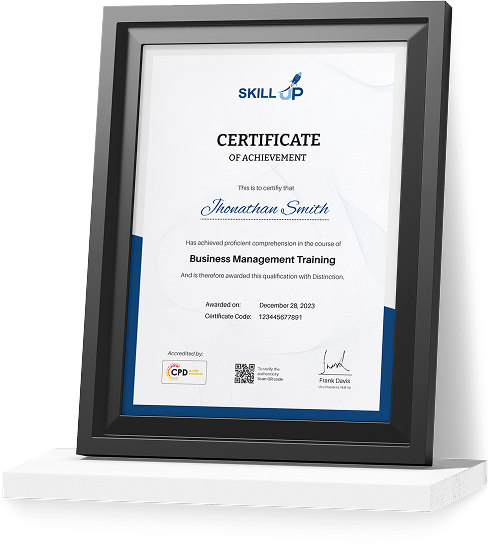
Show Your Certified Identity with a CPD-QS Certificate
Perfect for employers, clients, or academic verification.
Frequently Asked Questions
The course is fully online and self-paced, allowing completion within a few weeks depending on your schedule.
 No prior experience is required. The course is suitable for beginners and those interested in automotive engineering.
 Yes, a recognised certification is awarded, validating your knowledge of aftertreatment systems and emission technologies.
Yes, the course covers current emission control technologies and industry practices used in modern vehicles.
Yes, it supports career opportunities in automotive engineering, environmental compliance, and mechanical design roles.
Yes, assessments are included to help evaluate your knowledge of emission systems and aftertreatment technologies.
Automotive Engineering: Aftertreatment Technologies Reviews
Excellent
98%
Would Recommend22
Certified Learners100%
Authentic Reviews
A well-organised and highly valuable course with clear, easy-to-understand guidance throughout. I’ve gained knowledge that’s directly relevant to my day-to-day responsibilities. It’s given me greater confidence in applying these skills professionally.
Engaging content delivered in a straightforward and structured format. The examples were realistic and helped reinforce key concepts effectively. I would certainly recommend it to colleagues looking to upskill
Comprehensive, insightful and professionally presented from start to finish. The course materials were clear and well supported. A worthwhile investment for anyone serious about career development
Curriculum
-
Introduction
00:02:00
-
Harmful Effects of the Pollutants
00:04:00
-
Why Aftertreatment?
00:03:00
-
Subsystems of Aftertreatment
00:06:00
-
Types of Substrate Beds
00:05:00
-
DOC & DPF
00:08:00
-
Exhaust Gas Recirculation (EGR)
00:04:00
-
Selective Catalytic Converter (NOX Reduction)
00:05:00
-
Lean NOX Trap (LNT)
00:05:00
-
Methods of DPF
00:05:00
-
Types of DPF
00:05:00
-
A/F Ratio & Lambda Sensor
00:06:00
-
Order Your Certificate

Offer Ends in
-
Duration:58 minutes
-
Access:1 Year
-
Units:13

7 Reviews

TAKE ALL COURSES FOR £99