Cart
No products in the basket.
Log In Sign Up

Login

Digital Electronics with Boolean Algebra

Get 92% Discount | CPD Accredited | Affordable Pricing | No Hidden Charges | 24/7 Tutor Support | Instant Access
★ ★ ★ ★ ★
★ ★ ★ ★ ★
7 Reviews

stds64 Students

Accreditation Icon
Accreditation Icon

Overview

• Learn how digital electronics form the foundation of modern computing and electronic systems
• Understand Boolean algebra laws and their role in digital circuit design
• Explore logic gates, number systems, and circuit simplification techniques
• Develop knowledge of combinational and sequential circuit design
• Analyse timing, performance, and verification methods in digital systems

The Digital Electronics with Boolean Algebra course is designed to provide structured training on the principles of digital systems and logical design. Digital electronics are essential in computers, communication systems, and embedded technologies, making this field highly relevant in modern engineering and technology sectors.

Boolean algebra is the core mathematical framework used to design and simplify digital circuits. By applying logical rules and expressions, engineers can create efficient and reliable electronic systems that perform specific tasks.

This course introduces key concepts such as logic gates, Karnaugh maps, number systems, and arithmetic operations in digital circuits. It also explains how circuits are designed, analysed, and optimised for performance and accuracy.

Whether you are a student, aspiring engineer, or technology enthusiast, this course provides the knowledge required to work with digital systems and logical circuit design effectively.

What Is Digital Electronics with Boolean Algebra Course?

The Digital Electronics with Boolean Algebra course focuses on the principles of digital logic and circuit design. It explains how binary systems, logical operations, and electronic components work together to create digital devices.

In this course, learners explore Boolean laws, DeMorgan’s laws, and logical expressions used in circuit simplification. The programme also covers logic gates and how they are combined to build functional digital circuits.

The training introduces number systems, including binary operations such as addition and subtraction, which are fundamental to digital computing. Learners also study combinational circuits such as adders and subtractors, along with their design and functionality.

Advanced topics include sequential circuits, latches, flip-flops, counters, and finite state machines (FSM). By the end of the course, learners develop knowledge of digital circuit analysis, design techniques, and system behaviour.

Course Description

The Digital Electronics with Boolean Algebra course begins with an introduction to digital systems and their importance in modern technology. Learners explore the basic concepts of logic and how digital signals represent information in electronic devices.

The course then focuses on Boolean algebra and logic gates. Learners study Boolean laws, DeMorgan’s laws, and logical expressions used to simplify circuit design. Karnaugh maps are introduced as a method for minimising logical functions and improving circuit efficiency.

As the training progresses, learners examine number systems and binary arithmetic. Topics such as addition and subtraction in digital systems are explained, along with their application in designing arithmetic circuits like adders and subtractors.

Further modules introduce digital circuit design concepts, including how circuits are combined and optimised. Learners also explore performance-related topics such as circuit speed and timing diagrams, which are essential for verifying correct operation.

The course then moves into sequential circuits, where learners study latches, flip-flops, and counters. These components are fundamental in memory and storage systems. Finite state machine (FSM) design is also covered, providing insight into how digital systems manage states and transitions.

By completing this training, learners develop a structured approach to analysing, designing, and evaluating digital electronic systems.

Learning Outcome

Who Is This Course For?

Why Enrol in This Digital Electronics with Boolean Algebra Course?

Digital electronics is a fundamental area in modern technology, supporting systems such as computers, communication devices, and embedded systems. Knowledge of digital logic is essential for designing and analysing these technologies.

This course provides structured training that combines theoretical concepts with circuit design principles. It explains how logical operations translate into real-world electronic systems and how circuits are optimised for performance.

Learners benefit from improved analytical ability, better problem-solving techniques, and stronger knowledge of digital system design. These capabilities are valuable for academic studies and technical career development.

Whether you are starting your journey in electronics or advancing your knowledge, this course supports your growth in digital technology and engineering fields.

Digital Electronics with Boolean Algebra Course Career Path

Knowledge of digital electronics supports a wide range of technical and engineering roles.

Typical career pathways include:

Electronics Engineer — £30,000–£55,000
Designs and develops electronic circuits and systems.

Digital Design Engineer — £35,000–£60,000
Focuses on designing digital circuits and logic systems.

Embedded Systems Engineer — £40,000–£65,000
Develops systems that integrate hardware and software components.

Hardware Engineer — £32,000–£58,000
Works on physical components of computing and electronic devices.

Test and Verification Engineer — £30,000–£50,000
Ensures digital systems function correctly through testing and validation.

Control Systems Engineer — £35,000–£62,000
Designs systems that control processes using digital logic.

Professionals in this field can progress into advanced engineering roles, research, and system design positions.

Enrol Today – Build Digital Electronics Knowledge

By enrolling in this Digital Electronics with Boolean Algebra course, you begin developing knowledge that supports digital system design and electronic circuit analysis.

Digital technologies continue to expand across industries, increasing the demand for individuals with strong knowledge of electronic systems and logical design.

Start building the knowledge required to analyse circuits, design digital systems, and contribute to modern technological development.

Certificate of Achievement

Upon successfully completing this Digital Electronics with Boolean Algebra course, learners will receive an Accredited Certificate confirming their knowledge of digital systems and logical circuit design.

We provide two recognised certificate options:

CPD-QS Certificate
Learners can obtain a certificate accredited by CPD Quality Standards (CPD-QS). This accreditation confirms that the course meets recognised Continuing Professional Development standards and supports development in electronics and engineering fields.

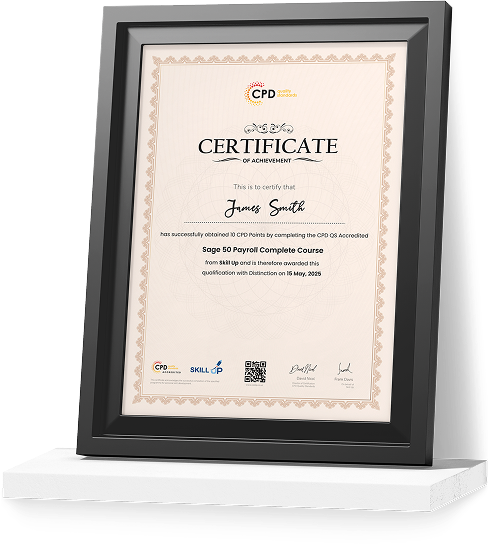
SKILL UP Brand Recognised Certificate
Learners will also receive a SKILL UP Certificate of Completion. This certificate verifies that you have successfully completed the training and achieved the required learning outcomes related to digital electronics and Boolean algebra.

Both certificates demonstrate that you have developed knowledge required for digital circuit design and analysis.

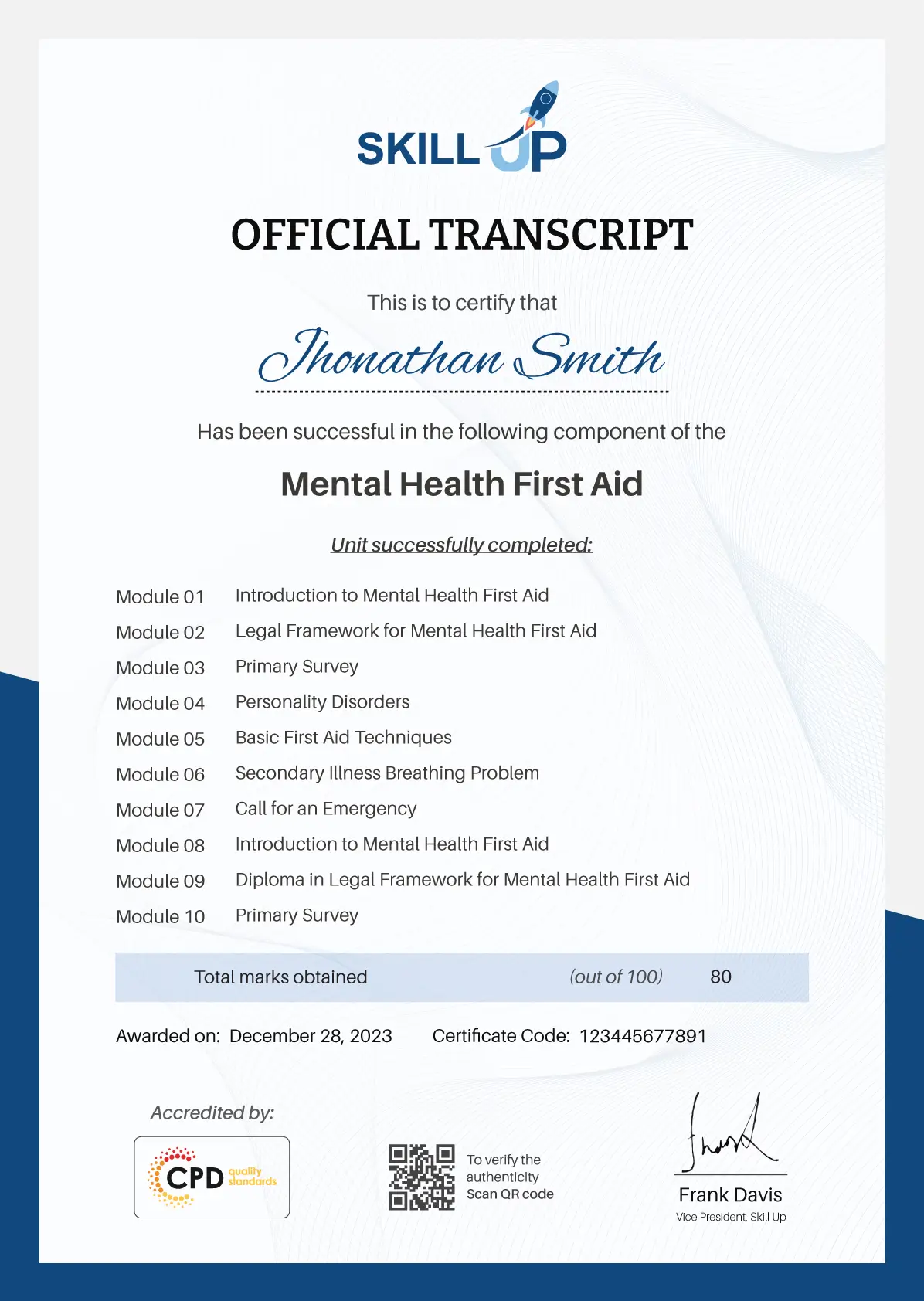
Earn Your Accredited Certificate with Transcript

Save 20% with the coupon code SKILL20
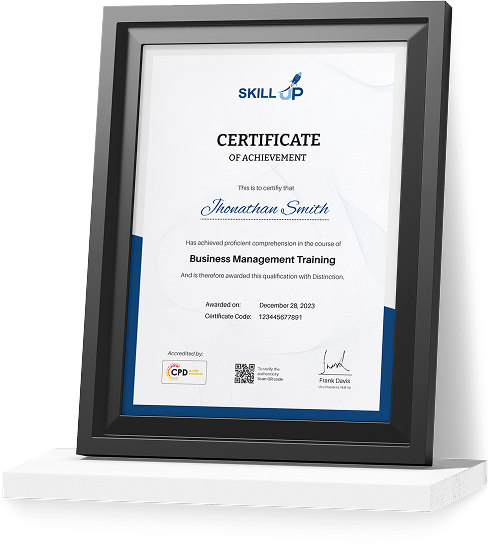
Show Your Certified Identity with a CPD-QS Certificate

Perfect for employers, clients, or academic verification.
Frequently Asked Questions

The course is fully online and self-paced, allowing completion within 4–6 weeks depending on your schedule.

No prior experience is required. Basic knowledge of mathematics can be helpful but is not mandatory.

 Yes, a recognised certification is awarded after successful completion.

Yes, it covers both combinational and sequential circuit design.

Yes, the course explains Boolean laws, simplification techniques, and applications in circuits.

Yes, it supports academic learning and technical skill development in electronics and computing.

Digital Electronics with Boolean Algebra Reviews

Excellent

/ 5
Based on 7 reviews

98%

Would Recommend

64

Certified Learners

100%

Authentic Reviews

A well-organised and highly valuable course with clear, easy-to-understand guidance throughout. I’ve gained knowledge that’s directly relevant to my day-to-day responsibilities. It’s given me greater confidence in applying these skills professionally.

Engaging content delivered in a straightforward and structured format. The examples were realistic and helped reinforce key concepts effectively. I would certainly recommend it to colleagues looking to upskill

Comprehensive, insightful and professionally presented from start to finish. The course materials were clear and well supported. A worthwhile investment for anyone serious about career development

Curriculum

  • play Introduction
    play 00:09:00
top