Overview: Level-4 Medical Coding Training: ICD-10-CM
Master ICD-10-CM classification, coding conventions, and chapter-specific guidelines — fully online, at your own pace.
Medical coding sits at the heart of every functioning healthcare system. Whether records are processed within an NHS trust, a private clinic, or an international health organisation, accurate and consistent diagnosis coding underpins clinical audit, funding allocation, research, and patient care. The demand for skilled, knowledgeable coders continues to grow — and this Level 4 Medical Coding Training course is designed to meet that demand head-on.
This comprehensive medical coding course takes you from foundational principles all the way through to advanced, chapter-specific ICD-10-CM guidelines, covering sixteen clinical chapters and the full range of disease classifications. Whether you are entirely new to health informatics or a healthcare professional seeking a formal national medical coding qualification, this programme delivers structured, rigorous training that reflects real-world coding practice.
If you have been searching for a medical coding course UK, browsing medical coding courses UK to find a programme with genuine depth, or simply looking for a flexible way to break into clinical data roles, this is the course for you.
Course Description: Level-4 Medical Coding Training: ICD-10-CM
The Level-4 Medical Coding Training begins with an introduction to medical coding systems and the purpose of ICD-10-CM classification. Learners explore how coding supports healthcare documentation, billing systems, and data accuracy in clinical environments. This foundation explains the importance of coding consistency and regulatory compliance.
As the course progresses, learners study ICD-10-CM conventions and general coding guidelines. This section explains how to locate codes, apply coding rules, interpret signs and symptoms, and understand classification structures. Key concepts such as sequencing, combination codes, laterality, and documentation standards are covered in detail.
The curriculum then explores chapter-specific coding guidelines across multiple disease categories. Learners examine coding practices for infectious diseases, cancers, endocrine conditions, neurological disorders, and respiratory diseases. Each section explains how different conditions are classified and coded within the ICD-10-CM system.
Further modules focus on complex coding scenarios, including complications of care, injuries, pregnancy-related conditions, congenital disorders, and external causes. Learners also explore how coding is applied in different healthcare encounters and clinical situations.
The course concludes with advanced topics such as coding accuracy, compliance requirements, and healthcare documentation standards. By completing this training, learners develop structured knowledge of ICD-10-CM coding systems and their application in healthcare administration.
What You Will Learn
By the end of this Level 4 programme, you will be able to:
- Understand the structure, purpose, and conventions of the ICD-10-CM classification system
- Apply general coding guidelines correctly and consistently across clinical scenarios
- Navigate and assign codes across all sixteen ICD-10-CM clinical chapters with accuracy
- Interpret chapter-specific coding guidelines for complex conditions including neoplasms, infectious diseases, pregnancy, and injury
- Distinguish between principal and secondary diagnoses and apply sequencing rules
- Understand the coding implications of conditions such as diabetes, sepsis, mental health disorders, and musculoskeletal diseases
- Support clinical audit, funding, and data quality processes through precise code assignment
- Lay a solid foundation for a career in medical coding UK or further clinical coding qualifications
Who Is This Course For?
By the end of this Level 4 programme, you will be able to:
- Individuals seeking entry into health informatics, clinical coding, or medical records
- NHS administrative and clinical support staff looking to formalise their NHS coding knowledge
- Healthcare professionals — including nurses, allied health professionals, and GP surgery staff — who work with diagnostic data
- Students in health sciences, biomedical sciences, or health informatics programmes
- International candidates seeking medical coding education online aligned with ICD-10-CM standards
- Career changers entering the healthcare data sector
- Existing coders pursuing a clinical coding qualification at Level 4 to advance their professional standing
No prior coding experience is required. A basic familiarity with healthcare settings or medical terminology is helpful but not essential — the course builds your knowledge progressively from first principles.
Why Choose This Medical Coding Course?
There are a growing number of medical coding courses online, but few offer the depth, structure, and real-world relevance of this Level 4 programme. Here is what makes this course stand apart:
Comprehensive ICD-10-CM coverage — every chapter in the classification is addressed, so you are not left with gaps when you encounter less common conditions in practice.
Built around official guidelines — the course is structured to reflect the ICD-10-CM Official Guidelines for Coding and Reporting, meaning the knowledge you acquire is grounded in the same standards used by working coders.
Genuinely flexible — fully self-paced medical coding training online means you can study around work, family, and other commitments, with no fixed timetable to follow.
Recognised qualification — upon successful completion, you will receive a Level 4 certificate that supports your professional development and demonstrates a credible, verifiable standard of medical coding education online.
Relevant to UK and international practice — whilst this course focuses on ICD-10-CM, the coding logic and guidelines covered are closely aligned with ICD-10 frameworks used across NHS and international health systems, making this relevant to anyone pursuing medical coding UK careers or global health informatics roles.
Certificate of Achievement
Upon completing the course assessments, you will receive a Level 4 Medical Coding Training: ICD-10-CM certificate from Skill-Up. This qualification supports your professional profile and serves as verifiable evidence of your commitment to medical coding education at an advanced level.
Whether you are building towards an NHS Clinical Coding Course pathway, exploring roles as a clinical coder, or strengthening an existing healthcare career, this certificate is a meaningful step forward.
We provide two recognised certificate options:
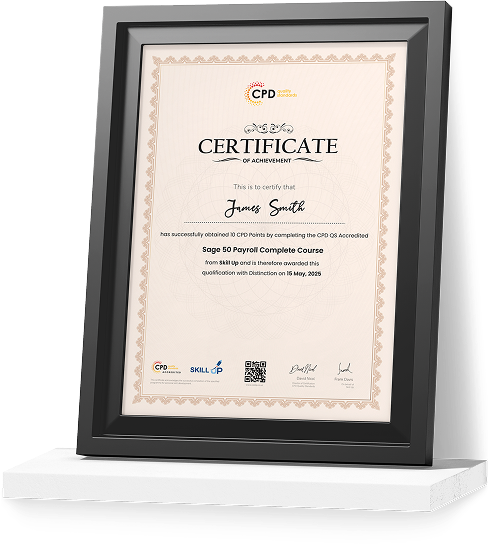
CPD-QS Certificate
Learners can obtain a certificate accredited by CPD Quality Standards (CPD-QS), supporting professional development in healthcare administration and medical coding.
SKILL UP Brand Recognised Certificate
Learners will also receive a SKILL UP Certificate of Completion, verifying successful completion of training in ICD-10-CM coding, classification systems, and documentation standards.
Both certificates demonstrate knowledge of medical coding systems and healthcare data management.
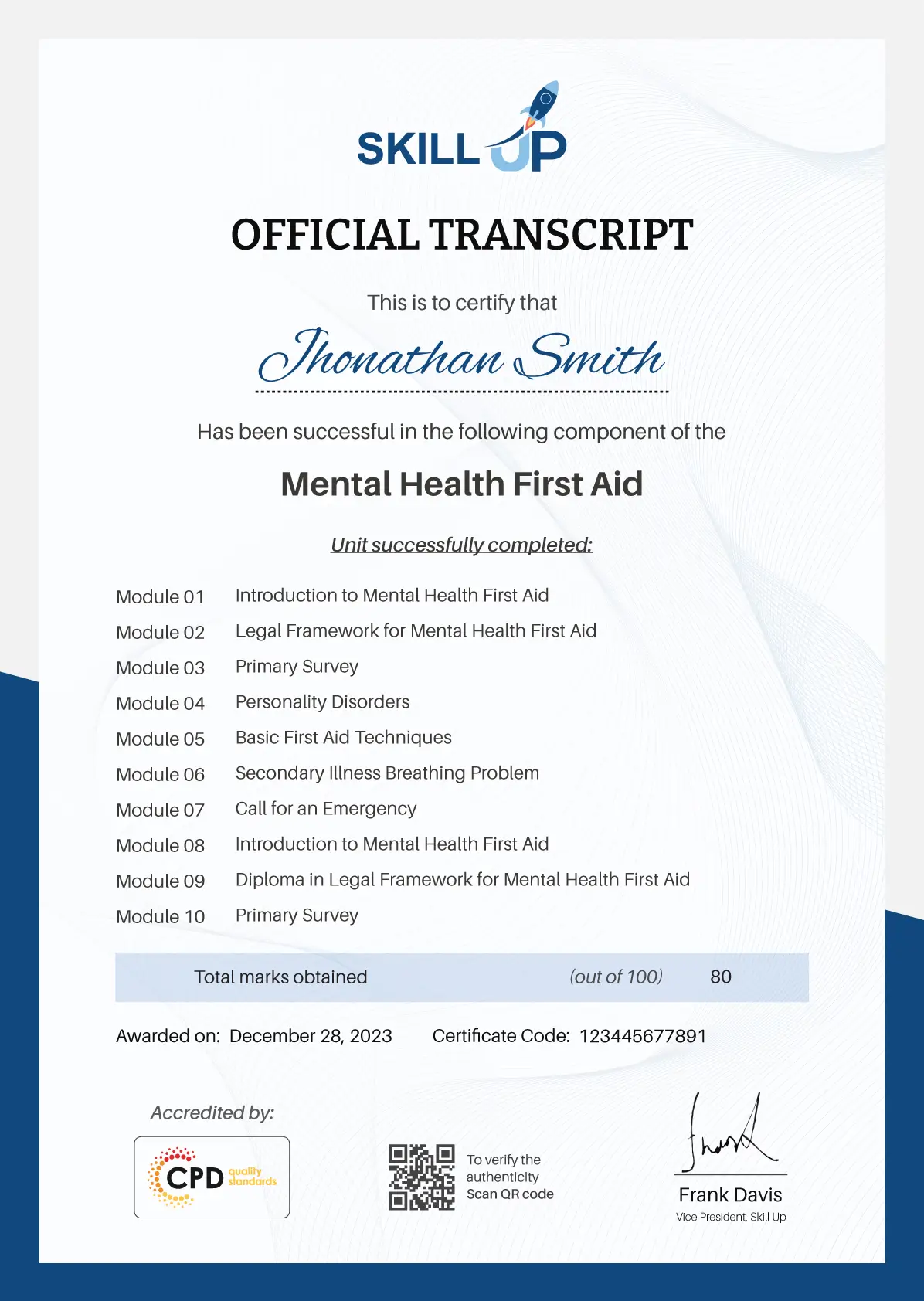
Earn Your Accredited Certificate with Transcript
Save 20% with the coupon code SKILL20

Show Your Certified Identity with a CPD-QS Certificate
Perfect for employers, clients, or academic verification.
Entry Requirements?
There are no formal academic prerequisites for this course. It is open to anyone with an interest in health informatics, healthcare administration, or clinical coding — regardless of prior experience.
A basic familiarity with healthcare settings or human biology is helpful but not required. All learners need is access to the internet and a commitment to working through the material carefully.
Level-4 Medical Coding Training Career Path
Completing this Level 4 Medical Coding Training: ICD-10-CM course can support progression into a range of healthcare data and clinical coding roles across the NHS and private healthcare sectors.
Typical career pathways include:
Medical Coder — £25,000–£40,000
Responsible for assigning accurate codes to medical diagnoses and procedures.
Clinical Coder / ACC Coder — £24,000 – £40,000
Responsible for translating clinical documentation into standardised codes for NHS reporting, funding, and patient records.
Health Information Analyst — £28,000–£42,000
Analyses healthcare data to support clinical audits, performance reporting, and data quality improvement across healthcare systems.
Clinical Coding Auditor — £30,000–£45,000
Reviews and validates coded clinical data to ensure accuracy, compliance with ICD-10 standards, and NHS reporting requirements.
Medical Records Officer — £22,000–£35,000
Manages, organises, and maintains patient records, ensuring accuracy, confidentiality, and compliance with healthcare standards.
Healthcare Administrator — £35,000–£55,000
Oversees administrative processes including coding and documentation systems.
Medical Billing & Coding Specialist — £25,000 – £40,000
Handles medical coding and billing processes, ensuring accurate claims submission and reimbursement within private healthcare and insurance organisations.
Health Informatics Support Officer — £26,000 – £40,000
Supports healthcare IT systems, clinical data management, and digital transformation projects within NHS and integrated care environments.
Demand for qualified coders continues to grow across NHS trusts and private providers alike, with NHS medical coding and NHS coding roles representing a particularly stable and expanding career pathway. Completing this course equips you with the foundational knowledge required to pursue these roles with confidence.
Enrol Today – Build Medical Coding Knowledge
Medical coding is a skilled, valued profession at the intersection of clinical practice and health informatics. Whether your goal is a career as a medical coder, a promotion within an NHS coding team, or a recognised clinical coding qualification to support your professional development, this Level 4 programme gives you the knowledge, structure, and certification to move forward.
Enrol in the Level 4 Medical Coding Training: ICD-10-CM today and take a decisive step towards a career built on precision, expertise, and genuine healthcare impact.
Frequently Asked Questions
The course is self-paced and can typically be completed within 4–8 weeks depending on your schedule.
No prior experience is required. The course starts with foundational concepts and progresses to advanced coding topics.
Yes, learners receive an accredited certificate upon successful completion.
ICD-10-CM is used for coding diagnoses, maintaining patient records, and supporting healthcare billing and reporting systems.
Yes, it supports roles in medical coding, healthcare administration, and health information management.
Level-4 Medical coding Training: ICD-10-CM Reviews

Excellent
98%
Would Recommend125
Certified Learners100%
Authentic Reviews
A well-organised and highly valuable course with clear, easy-to-understand guidance throughout. I’ve gained knowledge that’s directly relevant to my day-to-day responsibilities. It’s given me greater confidence in applying these skills professionally.
Engaging content delivered in a straightforward and structured format. The examples were realistic and helped reinforce key concepts effectively. I would certainly recommend it to colleagues looking to upskill
Comprehensive, insightful and professionally presented from start to finish. The course materials were clear and well supported. A worthwhile investment for anyone serious about career development
Curriculum
-
Medical Coding Introduction
00:15:00
-
Placeholder
00:01:00
-
How to Use Medical Coding Books?
00:36:00
-
Conventions Introduction
00:03:00
-
Conventions Part-1
00:19:00
-
Conventions Part-2
00:17:00
-
Conventions Part-3
00:17:00
-
Conventions Part-4
00:37:00
-
Locating a code in the ICD-10-CM
00:02:00
-
Level of Detail in Coding
00:01:00
-
Code or codes from A00.0 through T88.9, Z00-Z99.8
00:01:00
-
Signs and symptoms
00:02:00
-
Conditions that are an integral part of a disease process
00:01:00
-
Conditions that are not an integral part of a disease process
00:02:00
-
Introduction To Lean
00:10:00
-
Multiple coding for a single condition Part 2
00:01:00
-
Principles of Lean
00:15:00
-
Combination Code
00:02:00
-
Sequela (Late Effects)
00:02:00
-
Impending or Threatened Condition
00:01:00
-
Reporting Same Diagnosis Code More than Once
00:01:00
-
Laterality
00:02:00
-
Lean in Various Fields
00:15:00
-
Documentation of Complications of Care Part 1
00:02:00
-
Documentation of Complications of Care Part 2
00:01:00
-
Borderline Diagnosis
00:01:00
-
Lean and Six Sigma Part I
00:05:00
-
Coding for Healthcare Encounters in Hurricane Aftermath
00:06:00
-
Lean and Six Sigma Part II
00:15:00
-
HIV Coding Guidelines
00:13:00
-
Infections resistant to antibiotics
00:02:00
-
Coding of Sepsis, Severe Sepsis, and Septic Shock
00:13:00
-
Zika virus infections
00:02:00
-
Introduction of Neoplasm or Cancer
00:02:00
-
Understanding Kanban
00:10:00
-
Lean Tools I: Simplify and Streamline
00:15:00
-
Coding & Sequencing of complications
00:04:00
-
Primary malignancy previously excised
00:01:00
-
Encounters involving chemotherapy, immunotherapy and radiation therapy
00:02:00
-
Encounter to determine extent of malignancy
00:01:00
-
Signs and Symptoms with Neoplasms
00:02:00
-
Admission for pain control management
00:01:00
-
Malignancy in two or more non-contiguous sites
00:02:00
-
Disseminated Malignant Neoplasm
00:01:00
-
Lean Tools II: Standardise and Visual Systems
00:20:00
-
Sequencing of Neoplasm codes
00:06:00
-
Current Malignancy versus personal history of Malignancy
00:04:00
-
Leukemia, Multiple Myeloma
00:02:00
-
Aftercare, Follow-up, Prophylactic organ removal
00:05:00
-
Introduction Endocrine, Nutritional, and Metabolic Diseases
00:01:00
-
Diabetes mellitus (DM)
00:01:00
-
Diabetes mellitus and use of insulin
00:01:00
-
DM in Pregnancy
00:01:00
-
Complications due to Insulin Pump Malfunction
00:02:00
-
Secondary Diabetes Mellitus (DM)
00:06:00
-
Pain Disorder related to Psychological Factor
00:02:00
-
Lean Tools III: Mistake-Proof Processes and Product Designs
00:05:00
-
Introduction of Nervous System
00:04:00
-
Pain Coding Guidelines
00:03:00
-
Pain due to Device and Post OP Pain
00:03:00
-
Post OP Pain associated
00:01:00
-
Chronic Pain, Neoplasm related and Chronic pain Syndrome
00:05:00
-
Tip for Today
00:03:00
-
Glaucoma Coding Guidelines
00:07:00
-
Blindness Coding Guidelines
00:07:00
-
Hypertension (HTN) Coding Guidelines
00:06:00
-
Different types of Hypertension combination codes
00:10:00
-
Lean Tools V: Collocate
00:20:00
-
Intra and Postoperative CVA
00:03:00
-
Acute and Sequela Cerebrovascular Accident (CVA)
00:06:00
-
Myocardial Infarction (MI)
00:09:00
-
Tip for Today
00:03:00
-
Guidelines for COPD
00:07:00
-
Guidelines for Respiratory Failure and Influenza
00:07:00
-
Ventilator Associated Pneumonia (VAP)
00:05:00
-
Non Pressure Ulcer Coding Guidelines
00:06:00
-
Pressure Ulcer Coding Guidelines
00:07:00
-
Non Pressure Ulcer Coding Guidelines
00:06:00
-
Musculoskeletal System
00:14:00
-
CKD & Transplant status
00:09:00
-
Tip for you
00:02:00
-
General Rules to code Pregnancy
00:15:00
-
Selection of Codes in obstetrics
00:10:00
-
Pre-existing conditions in Pregnancy
00:07:00
-
Pregnancy Combination conditions
00:17:00
-
Postpartum and Peri partum
00:09:00
-
Termination and Spontaneous Abortion
00:09:00
-
Newborn General Guidelines
00:10:00
-
Additional Diagnosis and Newborn codes
00:07:00
-
Congenital Malformation Codes
00:07:00
-
Symptoms Guidelines R Series
00:16:00
-
Coding Injury & Fracture
00:26:00
-
Coding of Burns and Corrosions
00:15:00
-
Adult, Child Abuse, Neglect
00:07:00
-
Adverse effect, Poisoning
00:17:00
-
Complication of Care
00:09:00
-
Conclusion
00:01:00
-
Order Your Certificate

Offer Ends in
-
Duration:11 hours, 35 minutes
-
Access:1 Year
-
Units:98

7 Reviews

TAKE ALL COURSES FOR £99