Overview: NodeJS for MEAN & MERN Stack Course
If you want to build modern web applications using JavaScript across both frontend and backend environments, the NodeJS for MEAN & MERN Stack Online Course is designed to develop your technical knowledge of full-stack development. In today’s software industry, businesses increasingly rely on scalable web applications built with JavaScript technologies such as NodeJS, Express, MongoDB, React, and Angular.
This training introduces learners to backend development with NodeJS while gradually expanding into REST APIs, database integration, testing, deployment, Docker, AWS, and frontend development. The mern stack full course structure helps learners explore how web applications are created, managed, tested, and deployed in real-world development workflows.
Modern employers seek developers who can work across databases, APIs, cloud deployment, and frontend frameworks. This course explains how NodeJS supports server-side development while integrating with MongoDB, Express, React, and deployment tools.
Key Points of This Course at Overview:
• Structured mern stack full course covering backend to frontend development
• Learn NodeJS, Express, MongoDB, Mongoose, React, Docker, and AWS
• Build REST APIs and database-driven applications
• Explore testing with Mocha and Chai
• Deploy applications using Docker and AWS EC2
• Learn PostgreSQL integration and database operations
• Includes frontend React application development
• Suitable as a node js for mean and mern stack online course
What Is NodeJS for MEAN & MERN Stack Online Course?
The NodeJS for MEAN & MERN Stack Online Course focuses on teaching learners how JavaScript technologies are used to create scalable full-stack web applications. NodeJS allows developers to run JavaScript outside the browser, enabling server-side programming, API creation, and backend logic implementation.
This course introduces learners to the full development ecosystem, beginning with NodeJS fundamentals and progressing into Express framework development, MongoDB database operations, Mongoose integration, testing, cloud deployment, Docker containerisation, and React frontend integration.
Learners explore how backend services communicate with databases, process HTTP requests, and serve frontend applications. The best mern stack course structure also introduces software deployment workflows and cloud hosting concepts.
By the end of this course, learners will develop clear knowledge of full-stack JavaScript development workflows, backend services, API architecture, testing methods, and deployment strategies.
Course Description
The course begins with NodeJS fundamentals, helping learners understand what NodeJS is, why developers use it, and how to configure development environments. Learners explore package management with NPM, installation processes, and project setup using Visual Studio Code.
The curriculum then moves into NodeJS application development. Learners create simple applications while working with modules such as OS, HTTP, file systems, and asynchronous operations. Additional lessons cover dependencies, JSON responses, nodemon, scripts, and project structure.
As the training progresses, learners study Express development, including REST concepts, route creation, HTTP methods, middleware usage, routers, and API endpoint development.
Database modules introduce MongoDB and Mongoose. Learners explore CRUD operations, body-parser configuration, schema creation, model configuration, DAO patterns, controller logic, and modular project architecture.
Advanced modules cover Axios REST client integration, testing using Mocha and Chai, refactoring strategies, Docker containerisation, AWS EC2 deployment, React frontend creation, and PostgreSQL database integration.
The course concludes with a patient clinical data project that integrates backend, database, routing, controllers, and frontend workflows. This helps learners connect multiple development concepts into one complete application lifecycle.
Learning Outcome
- Understand NodeJS architecture and server-side JavaScript concepts
- Install and configure NodeJS development environments
- Use NPM and manage dependencies
- Build backend applications with NodeJS modules
- Create REST APIs using Express
- Handle routing, middleware, and HTTP methods
- Work with MongoDB and Mongoose
Who Is This Course For?
- Aspiring full-stack developers building JavaScript development careers
- Frontend developers expanding into backend programming
- Software engineering students learning full-stack frameworks
- Developers interested in MERN or MEAN stack development
- Freelancers building web applications and APIs
Why Enrol in This NodeJS for MEAN & MERN Stack Course?
Modern software companies actively seek developers who can manage both frontend and backend technologies. Full-stack JavaScript frameworks reduce development complexity while improving efficiency across teams.
This training provides structured learning covering backend development, database management, testing, deployment, and frontend integration. Instead of isolated coding topics, the course explains how web applications are built from development to deployment.
The mern stack full course supports learners interested in software development, web engineering, API development, and cloud deployment careers.
Whether you want to build web applications professionally, strengthen your programming portfolio, or expand into backend development, this course supports your learning journey.
NodeJS for MEAN & MERN Stack Course Career Path
Full-stack JavaScript development supports multiple software career pathways.
Typical career pathways include:
NodeJS Developer — £35,000–£60,000
Builds backend systems and server-side applications.
Full Stack Developer — £40,000–£70,000
Develops frontend and backend web applications.
MERN Stack Developer — £38,000–£65,000
Works with MongoDB, Express, React, and NodeJS.
Backend Developer — £40,000–£68,000
Develops APIs, databases, and server architecture.
Software Engineer — £45,000–£75,000
Builds scalable software systems and applications.
Cloud Application Developer — £50,000–£78,000
Deploys and manages cloud-hosted applications.
Professionals with NodeJS and MERN skills often progress into senior software engineering and cloud development roles.
Enrol Today – Build Full Stack Development Knowledge
By enrolling in this NodeJS for MEAN & MERN Stack Online Course, you begin building technical knowledge used in modern software engineering and web development.
Full-stack JavaScript technologies remain highly relevant across startups, enterprise systems, SaaS platforms, and freelance development markets.
Start learning backend systems, APIs, databases, cloud deployment, and frontend integration today.
Certificate of Achievement
Upon successfully completing this NodeJS for MEAN & MERN Stack Online Course, learners will receive an Accredited Certificate confirming their knowledge of full-stack JavaScript development, NodeJS, databases, APIs, testing, and deployment.
We provide two recognised certificate options:
CPD-QS Certificate
Learners can obtain a certificate accredited by CPD Quality Standards (CPD-QS). This accreditation confirms that the course meets recognised Continuing Professional Development standards.
SKILL UP Brand Recognised Certificate
Learners will also receive a SKILL UP Certificate of Completion verifying successful course completion.
Both certificates help demonstrate technical training in JavaScript full-stack development.
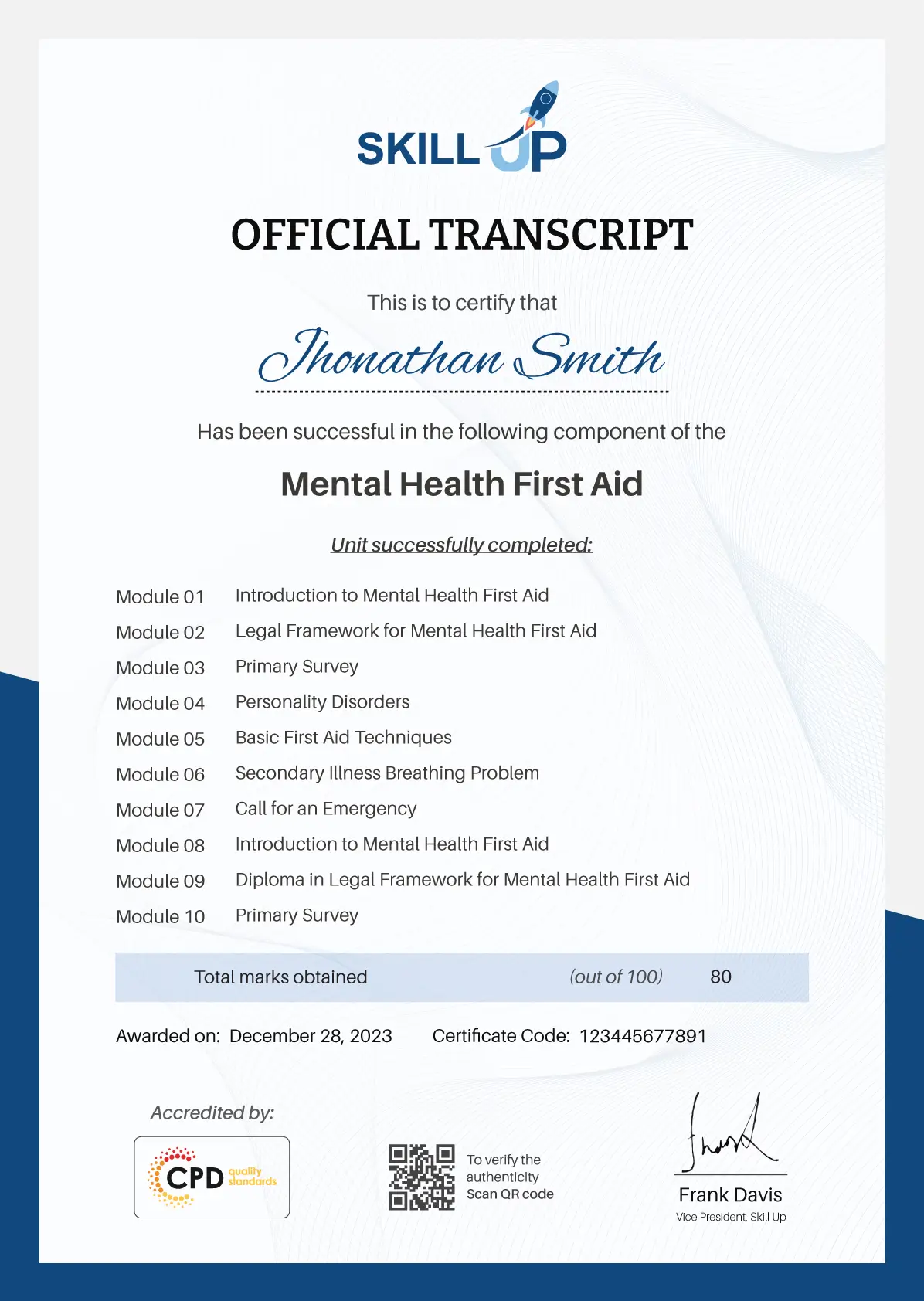
Earn Your Accredited Certificate with Transcript
Save 20% with the coupon code SKILL20
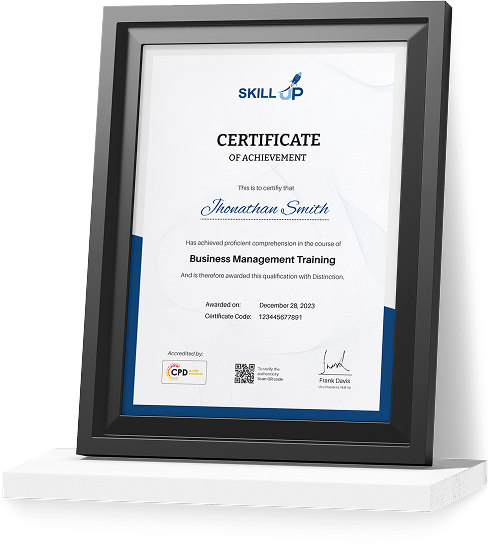
Show Your Certified Identity with a CPD-QS Certificate
Perfect for employers, clients, or academic verification.

Frequently Asked Questions
Yes, this course starts with NodeJS fundamentals before moving into advanced topics.
Basic JavaScript knowledge is recommended but not mandatory.
Yes, it covers backend, database, testing, deployment, and React frontend modules.
Yes, Docker and AWS EC2 deployment are included.
Yes, accredited certification options are available.
NodeJS for MEAN & MERN Stack Online Course Reviews
Excellent
98%
Would Recommend116
Certified Learners100%
Authentic Reviews
A well-organised and highly valuable course with clear, easy-to-understand guidance throughout. I’ve gained knowledge that’s directly relevant to my day-to-day responsibilities. It’s given me greater confidence in applying these skills professionally.
Engaging content delivered in a straightforward and structured format. The examples were realistic and helped reinforce key concepts effectively. I would certainly recommend it to colleagues looking to upskill
Comprehensive, insightful and professionally presented from start to finish. The course materials were clear and well supported. A worthwhile investment for anyone serious about career development
Curriculum
-
Module 01: Course and Instructor Introduction
00:03:00
-
Module 02: GITHub URL
00:01:00
-
Module 01: What is Node?
00:05:00
-
Module 02: Why Node?
00:04:00
-
Module 03: NodeJS package manager NPM
00:02:00
-
Module 04: Install Node and Visual Studio Code
00:02:00
-
Module 01: Create a simple node application
00:04:00
-
Module 02: Adding Dependencies
00:04:00
-
Module 03: OS Module
00:05:00
-
Module 04: Write a file sync and async
00:07:00
-
Module 05: Use Arrow Functions
00:02:00
-
Module 06: Append and Rename
00:03:00
-
Module 07: Read and Delete
00:04:00
-
Module 08: HTTP module in action
00:03:00
-
Module 09: Return JSON Response
00:04:00
-
Module 10: Use nodemon
00:02:00
-
Module 11: Scripts block
00:04:00
-
Module 01: Introduction
00:04:00
-
Module 02: What is REST?
00:06:00
-
Module 03: Create an Express App
00:02:00
-
Module 04: Express In Action
00:05:00
-
Module 05: Handle other HTTP Methods
00:06:00
-
Module 06: Use Router
00:05:00
-
Module 07: Create Customer Endpoint
00:05:00
-
Module 01: Introduction
00:02:00
-
Module 02: Mongo Command Line
00:07:00
-
Module 03: Steps
00:03:00
-
Module 04: Use Mongo Client
00:04:00
-
Module 05: Implement Find All
00:04:00
-
Module 06: GET single product
00:04:00
-
Module 07: What is body-parser?
00:03:00
-
Module 08: Configure body-parser
00:02:00
-
Module 09: Create Product
00:04:00
-
Module 10: Update Product
00:06:00
-
Module 11: Delete Product
00:02:00
-
Module 01: Introduction
00:04:00
-
Module 02: Steps
00:01:00
-
Module 03: Create Project
00:02:00
-
Module 04: Create Server JS
00:02:00
-
Module 05: Create and Configure Product Controller
00:02:00
-
Module 06: Create Mongoose Schema and Model
00:02:00
-
Module 07: Create
00:03:00
-
Module 08: Test and Flow
00:03:00
-
Module 09: Read
00:03:00
-
Module 10: Update
00:04:00
-
Module 11: Delete
00:02:00
-
Module 01: Introduction
00:01:00
-
Module 02: Steps
00:01:00
-
Module 03: Create the Project
00:02:00
-
Module 04: Get All
00:02:00
-
Module 05: Create and Update
00:04:00
-
Module 06: Get and Delete
00:03:00
-
Module 01: Mocha and Chai
00:03:00
-
Module 02: Steps
00:02:00
-
Module 03: Install Dependencies
00:01:00
-
Module 04: First Test
00:06:00
-
Module 05: Handle Failures
00:02:00
-
Module 06: Test Create and Get
00:02:00
-
Module 07: Before and after methods
00:03:00
-
Module 01: Introduction
00:03:00
-
Module 02: Steps
00:03:00
-
Module 03: Create DB Connection
00:04:00
-
Module 04: Mongoose Static Methods
00:03:00
-
Module 05: Create the Model and DAO
00:07:00
-
Module 06: Create the Controller
00:08:00
-
Module 07: Map Routes
00:05:00
-
Module 08: Test
00:02:00
-
Module 09: Use src folder
00:02:00
-
Module 10: Use Babel and ES6 Syntax
00:06:00
-
Module 01: Usecase
00:03:00
-
Module 02: Create the Project
00:03:00
-
Module 03: Setup Configuration
00:04:00
-
Module 04: Create Model
00:05:00
-
Module 05: Implement Patient DAO
00:04:00
-
Module 06: Create Patient Controller
00:04:00
-
Module 07: Create and Configure Routes
00:03:00
-
Module 08: Create Clinical DAO and Controller
00:07:00
-
Module 09: Run and Test
00:06:00
-
Module 10: Fix Bug and Test
00:02:00
-
Module 01: Introduction
00:02:00
-
Module 02: Install Docker Desktop
00:02:00
-
Module 03: Steps
00:06:00
-
Module 04: Create Dockerfile
00:07:00
-
Module 05: Create docker-compose.yml
00:05:00
-
Module 06: docker compose up
00:05:00
-
Module 01: Introduction
00:01:00
-
Module 02: AWS EC2 Introduction
00:03:00
-
Module 03: Launch an EC2 Instance
00:05:00
-
Module 04: Windows – Use MobaXterm and connect
00:04:00
-
Module 05: Install Mongo
00:04:00
-
Module 06: Install Node and Git
00:02:00
-
Module 07: Push Project to Github
00:04:00
-
Module 08: Run the APP on EC2 and Test
00:04:00
-
Module 01: Introduction
00:01:00
-
Module 02: Install React CLI
00:01:00
-
Module 03: Create Project
00:06:00
-
Module 04: Create Components
00:03:00
-
Module 05: Configure Routing
00:04:00
-
Module 06: Home Component
00:03:00
-
Module 07: Use State and React Hook
00:04:00
-
Module 08: Render Rows
00:03:00
-
Module 09: Enable CORS on the Node Project
00:04:00
-
Module 10: Test Home Page
00:03:00
-
Module 11: Add Patient – Create Form
00:05:00
-
Module 12: Handle Submit
00:04:00
-
Module 13: Add Clinical’s – Create Form
00:07:00
-
Module 14: Add Clinical’s – Handle Submit
00:04:00
-
Module 01: Introduction
00:02:00
-
Module 02: Steps
00:01:00
-
Module 03: Setup the database
00:03:00
-
Module 04: Setup Project
00:02:00
-
Module 05: Get All
00:05:00
-
Module 06: Get One
00:03:00
-
Module 07: Create
00:03:00
-
Module 08: Return after Insert
00:02:00
-
Module 09: Update
00:03:00
-
Order Your Certificate
Offer Ends in
-
Duration:6 hours, 47 minutes
-
Access:1 Year
-
Units:117

6 Reviews

TAKE ALL COURSES FOR £99