
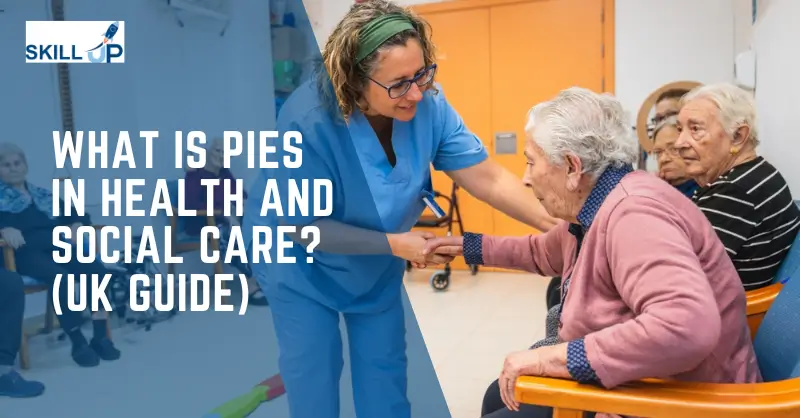
If you work in care, or you are studying health and social care, you will come across PIES very quickly. It matters because good care is never just about one problem. A person may have physical pain, but that pain can also affect their mood, confidence, relationships, and daily choices. In the UK, person-centred care means looking at the whole person, not just one symptom or one task. The Care Quality Commission says care plans should reflect people’s physical, mental, emotional and social needs. In contrast, SCIE says personalisation means recognising people as individuals and putting them at the centre of their own care and support.
That is why the PIES model is so useful. It gives care workers, students, and support staff a simple way to think about the full picture. Instead of asking only, “What is wrong?”, it encourages a better question: “What does this person need physically, intellectually, emotionally, and socially?” This guide explains what PIES means in health and social care, why it matters, how it is used in real care settings, and how to apply it in a way that feels practical rather than academic.
What Is PIES in Health and Social Care?
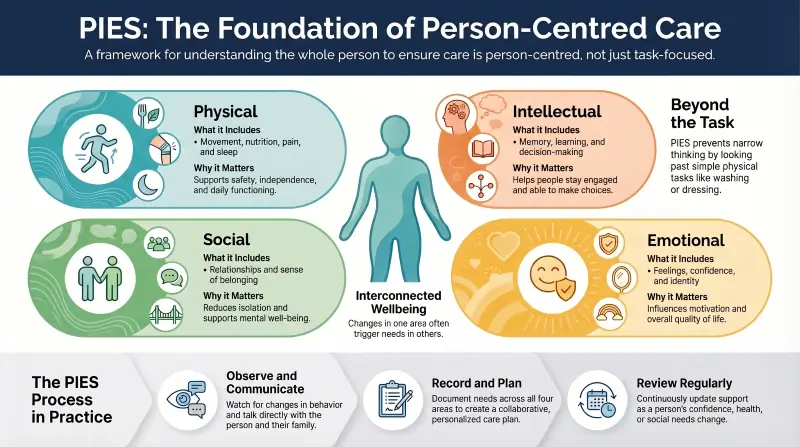
PIES in health and social care is a simple framework used to understand a person in a fuller, more balanced way. The letters stand for Physical, Intellectual, Emotional and Social. The main idea is that all four areas affect each other.
That matters because people do not live in separate boxes. Someone may look like they only have a physical problem, but the real issue may be bigger. A person with poor mobility may also feel embarrassed, isolated, or less confident. Children who seem withdrawn may not only be shy; they may be struggling emotionally. Someone who stops joining activities may not be “difficult”; they may be in pain, low in mood, confused, or lonely.
This is why PIES fits so well with person-centred care. CQC and SCIE both stress that care should be built around the individual, their needs, and their preferences. PIES helps staff think in exactly that way.

What Does PIES Stand For?
PIES stands for Physical, Intellectual, Emotional and Social. These four areas are used in health and social care to understand a person more fully rather than focusing on just one need or condition.
| PIES Area | What It Includes | Why It Matters in Care |
|---|---|---|
| Physical | Movement, pain, sleep, nutrition, medication, personal care, and general health | Supports safety, independence, and day-to-day functioning |
| Intellectual | Memory, understanding, communication, learning, decision-making, mental stimulation | Helps people stay engaged, informed, and able to make choices |
| Emotional | Feelings, stress, anxiety, confidence, coping, identity, mental well-being | Influences behaviour, motivation, and overall quality of life |
| Social | Relationships, communication, activities, family contact, sense of belonging | Reduces isolation and supports emotional and mental well-being |
Each area plays a different role, but they are closely connected. A change in one area often affects the others. For example, physical pain may reduce confidence, emotional distress may affect sleep or appetite, and social isolation may impact mental well-being.
Why the PIES Model Matters
The PIES model in health and social care matters because it helps staff avoid narrow thinking. Without it, care can easily become too task-focused. A worker may help someone wash, dress, and eat, but still miss the fact that the person feels lonely, frightened, bored, or unable to understand what is happening around them.
PIES encourages a more complete view. It supports the kind of care that UK regulators and guidance bodies expect. CQC says care should be personalised and based on an assessment of the person’s needs and preferences. SCIE says person-centred care means recognising people as individuals and putting them at the centre of their support. In simple words, PIES helps turn that idea into something staff can actually use.
It also improves judgment. Instead of reacting only to what is most visible, staff are more likely to ask what else may be going on. That usually leads to better support, better communication, and more respectful care.
How PIES Is Used in Real Care Practice
A good PIES approach is not complicated, but it does need thought. In real care settings, it usually works like this.
First, staff observe what is happening. Has the person become quieter, less active, more upset, or less interested in things they used to enjoy?
Then they talk with the person, and where appropriate, with family members or others involved in care. Good communication matters here. SCIE’s guidance on person-centred care planning says the person should remain at the centre, and that building relationships and good communication is critical to meaningful involvement.

After that, staff record needs across all four areas. This is an important step. The physical issue may be the first thing noticed, but the emotional and social impact may be just as important.
Then they plan support. That support should not only solve the immediate task. It should also reflect the person’s preferences, routines, strengths, and wider wellbeing. CQC says assessment and care planning should be collaborative and based on the person’s needs and preferences.
Finally, the plan should be reviewed. Needs change over time. If someone’s confidence improves, or their pain gets worse, or their communication changes, the support should change too.
PIES Across Different Life Stages
One reason the PIES framework is so widely used is that it works across different ages and settings.
In child development, PIES is especially useful because physical growth, learning, emotional development, and social relationships are all happening at once. Early years guidance says adults should respond to children’s emotions with warmth, empathy, and support, and that strong relationships help children build trust and self-regulation.
During adolescence, the model helps explain how body changes, school pressure, friendships, confidence, and identity can all affect each other.
For adults receiving care, PIES often supports work around long-term conditions, disability, mental well-being, independence, and social participation.
Later in life, the link between the four areas often becomes even clearer. Reduced mobility can lower confidence. Bereavement can reduce social contact. Poor memory can affect independence. A good PIES approach helps staff see those links instead of treating each issue as separate.
A Simple Care Example
Imagine an older woman in a care home. She has recently had an infection and is now spending more time in her room.
At first, staff may think the issue is mainly physical. She feels weaker and is walking less. But when they look properly through a PIES lens, they see more.
She is also worried about falling, which affects her emotional well-being. She no longer joins lunch in the dining room, which affects her social life. Staff also notice that she seems less alert and less engaged, which may point to an intellectual need, such as confusion, low stimulation, or difficulty processing information.
Without PIES, the care plan might only say, “Encourage mobility.”
With PIES, the support becomes fuller and better. Staff might review pain and strength, offer reassurance, rebuild confidence step by step, increase social contact, and make sure communication is clear and supportive.
That is the real value of the model. It turns a narrow response into a more human one.
Common Challenges When Using PIES
The model is simple, but using it well is not always easy. Time pressure is one common problem. If staff are rushed, they may focus on physical tasks and miss the wider picture. Staffing shortages can make emotional and social support harder to give consistently. Training quality can also vary, which means some workers may know the term PIES without feeling confident applying it properly.
Another challenge is bias. People sometimes assume they already know what the issue is. They may label someone as difficult, lazy, confused, or withdrawn without asking enough questions.

This is why training, supervision, and reflective practice matter. Person-centred care works best when staff slow down enough to think, listen, and review what they are seeing. SCIE stresses the value of warmth, empathy, reliability, and respect in care relationships, and those qualities matter just as much as technical knowledge.
How to Write a PIES-Based Care Plan
A PIES-based care plan should be simple, clear, and centred on the person. Start with what matters to them. What do they enjoy? Are there any specific worries they have? What helps them feel safe, confident, or comfortable?
Then record the main needs in each area. For example, you might note reduced mobility under physical, memory prompts under intellectual, anxiety under emotional, and low participation under social.
After that, add the support actions. Say what the staff will do, why they are doing it, and what outcome they hope to see. This makes the care plan practical rather than vague.
Finally, review it. If the person’s condition or mood changes, the plan should change with it. CQC says care and treatment should be personalised, collaborative, and kept under review so it remains relevant.
Quick PIES Checklist
| Checklist Question | Purpose |
|---|---|
| Have I considered physical needs? | Ensures health and safety are covered |
| Have I checked intellectual needs? | Supports understanding and mental engagement |
| Have I explored emotional well-being? | Identifies stress, anxiety, or low mood |
| Have I considered social needs? | Prevents isolation and supports connection |
| Does the support reflect the person’s preferences? | Keeps care person-centred |
| Have I planned a review? | Ensures care stays relevant over time |

Final Thoughts
If you want the simplest answer to what PIES is in health and social care UK, it is this: a practical way to understand the whole person.
That is what makes it valuable. It is not just a study term. It is a useful way of thinking that helps care workers notice more, plan better, and support people with more dignity and understanding. When used well, the PIES framework makes care more personal, more thoughtful, and more realistic, because real people are never only physical, only emotional, or only social. They are all of those things at once.
Get valuable training, UK-focused support, and the skills employers want. No experience needed.
Join 50+ graduates who landed tech jobs with our industry-focused training programme designed for beginners.
Explore Now - Our Job Ready ProgrammeFrequently Asked Questions (FAQs)
What is PIES in health and social care?
PIES is a whole-person framework used in health and social care to look beyond one condition or need. It covers physical, intellectual, emotional, and social well-being, helping staff provide more balanced, person-centred support.
What does PIES stand for in health and social care in the UK?
In the UK health and social care, PIES stands for Physical, Intellectual, Emotional, and Social. These four areas help care workers and students understand how different parts of well-being connect in daily care.
Why is PIES important in health and social care?
PIES is important because a change in one area can affect the others. For example, poor physical health may affect mood, while social isolation can reduce confidence, engagement, and overall well-being.
How does PIES support person-centred care?
PIES supports person-centred care by helping staff see the whole person rather than focusing only on a diagnosis, task, or behaviour. It encourages support based on individual needs, preferences, and daily life.
How is the PIES model used in health and social care settings?
The PIES model is used through observation, conversation, assessment, care planning, and review. It can be applied in care homes, hospitals, and community settings to understand what may be affecting well-being.
What is a simple example of PIES in health and social care?
An older adult recovering from illness may need physical help, feel anxious emotionally, withdraw socially, and need clearer explanations. This shows why care should consider the full picture.
How do you apply PIES in a care plan?
Staff gather information, group needs under the four areas, plan suitable support, and review progress regularly. This creates a clearer structure for whole-person care.


All Courses
Personal Development
Employability
Career Bundle
Management
Free QLS Certificate
IT & Software
Business
Technology
Health & Care
Quality Licence Scheme Endorsed Courses
Health & Safety
Training
Marketing
Job Ready Programme
Design
Accounting & Finance
Health and Fitness
Healthcare and Medical
Animal Care
Psychology
Microsoft Office
Teach & Education
I.T
HR and Leadership
Counselling and Therapy
Teaching & Child Care
Health and Social Care
Electrical & Electronics
Law
Food Nutrition
programming
Administration & Office Skills
Education
Language
Engineering
Cooking & Baking
Law & Criminology
Accounting
QLS Bundle
Office Skills
Awareness
Photography
Finance
Lifestyle
Diet and Nutrition
Makeup & Beauty
Therapy
Sports
First Aid
Accounting & Bookkeeping
Mathematics
Excel
Web Design
Top Rated Course
Diet and Fitness
Counselling
Agriculture
Networking & Design
General Education
Biotechnology
Audit
Economics
Lifestyle & Recreational
Adobe Photoshop
Travel and Tourism
Categories

Awarded By