
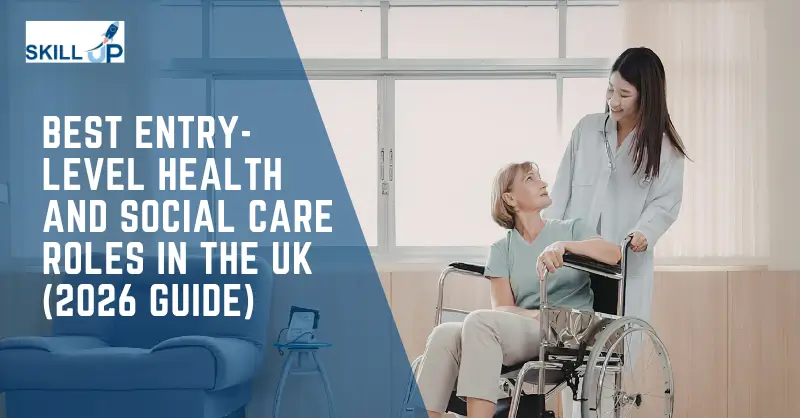
The healthcare landscape in United Kingdom is undergoing a period of profound evolution. As we move through 2026, a demand for dedicated professionals in Health and Social Care Roles is no longer just a necessity—it is a national priority. Whether you are exploring entry-level health and social care jobs UK, considering a career shift, or looking to understand how UK’s care system supports its most vulnerable, vital question is not just where to find work, but how to become a professional whose skills align with 2026 statutory requirements.
This guide provides an exhaustive breakdown of health and social care careers UK 2026, the documentation that keeps care delivery lawful, and career pathways available for those starting a career in health and social care UK. You will find practical insights for hospital, residential, and community settings, along with a clear explanation of why professional training is a foundation of long-term success in this sector.
What Makes Health and Social Care Essential in 2026?
Special educational needs coordinator or a lead nurse might design a care strategy, but an entry-level workforce—the healthcare support workers and care assistants—are in ones who deliver it. UK, these roles exist because constant, high-quality monitoring and intervention are the only ways to ensure patient safety and dignity.
Under the 2026 healthcare guidelines, every care provider must designate trained staff who understand not just a “how” but the “why” of care. While every practitioner is responsible for their patients, a qualified care professional coordinates the day-to-day operations, ensures legal compliance with an Care Certificate UK, and makes sure that support actually improves the quality of life for service users.
Practically, this means the care professional translates complex clinical plans into workable daily routines. They ensure the right residents receive the right support at the right time. They oversee nutritional plans that meet medical standards, coordinate with families, and provide the essential “ground-level” data that doctors and social workers rely on. Without this coordination, care becomes fragmented, safety risks increase, and the infrastructure of the NHS and private sectors fails.
Core Entry-Level Roles and Responsibilities
Understanding what a care professional does requires looking at statutory duties alongside the practical realities of the ward or care home. Health and Social Care Act and the CQC (Care Quality Commission) set out specific responsibilities that define these roles across all settings.
Strategic and Professional Responsibilities
Responsibilities for policy implementation include working with senior management to ensure the strategic development of care provision. This is not merely administrative; it involves shaping how a facility identifies risks and allocates resources.
- Developing Care Standards: Overseeing the implementation of local care policies.
- Duty of Care: Advising on the graduated approach to providing support while maintaining independence.
- Resource Management: Advising on the use of personal budgets to meet patient needs effectively.
- Quality Assurance: Ensuring all care reports meet legal requirements and reflect the 6 Cs of care.
Operational Responsibilities
At the operational level, entry-level care jobs UK focus on the coordination and quality of daily life:
- Identification of Needs: Supporting the identification of changing health needs through screening and vital sign monitoring.
- Tracking Progress: Monitoring the recovery or stability of patients using qualitative and quantitative data.
- Record Maintenance: Maintaining accurate patient files and ensuring all clinical documentation stays up to date.
- Intervention Delivery: Designing and evaluating small-scale interventions (like mobility exercises) through the Assess-Plan-Do-Review cycle.

Hospital vs Residential vs Community Care: Where to Start?
A roles and responsibilities in a primary hospital setting differ in scale and focus compared to residential care, though statutory duties remain consistent.
NHS Hospital Settings (Band 2 and Band 3)
In hospitals, NHS healthcare support worker career paths in the UK often focus on acute needs. These professionals work with younger and older patients, where early identification of deteriorating health is crucial. They manage transitions from surgery to recovery and typically work in fast-paced environments where they might assist nurses alongside coordinating basic clinical tasks.
Residential and Nursing Homes
In residential settings, responsibilities expand to manage longer-term pastoral systems. Care workers manage the foundational stages of the graduated approach for elderly residents or those with dementia. They handle higher volumes of daily living documentation and coordinate with visiting specialists like GPs or chiropodists.
Community and Domiciliary Care
Regardless of the setting, community care worker UK roles share common threads: maintaining the care register, coordinating with families, and ensuring the graduated approach operates effectively for every client living independently.
Health and Social Care Paperwork and Documentation Explained
Paperwork and documentation requirements in UK create a significant administrative load, but each document serves a legal and life-saving purpose. Understanding these requirements helps beginners prioritise effectively and avoid legal pitfalls.
Essential Healthcare Documentation Overview
| Document | Purpose | Care Worker's Role |
|---|---|---|
| Care Plan | Lists all identified needs and support strategies | Implement daily, ensure accuracy, and report changes |
| MAR Chart | Records medication administration | Precise sign-off, monitoring for side effects |
| Incident Report | Records accidents, falls, or near-misses | Immediate drafting, evidence gathering, and reporting |
| Fluid & Nutrition Chart | Tracks dietary intake and hydration levels | Real-time updates, identifying risks of malnutrition |
| Daily Progress Log | Summarises daily status and interventions | Objective summary, professional terminology use |
| Safeguarding Alert | Statutory report for suspected abuse/neglect | Identifying signs, immediate escalation to lead |
Care Plan and Risk Assessment
A healthcare assistant career path in the UK involves foundational duties in managing care plans. This register lists all service users, categorised by the level of risk they face. It must be accurate, regularly reviewed, and accessible to relevant clinical staff. For those in entry-level NHS jobs with no UK experience, mastering this paperwork is the first step toward promotion.

Graduated Approach: Assess, Plan, Do, Review
Managing a care plan centres on the graduated approach—a four-step cycle that defines professional care delivery.
- Assess: The assessment stage involves gathering evidence of a patient’s physical and mental state. It includes vital sign data, nutritional levels, and emotional observations. Additionally, care workers advise senior staff on what constitutes sufficient evidence for a change in treatment.
- Plan: During the planning stage, professionals develop the support plan with specific, measurable outcomes. Moreover, the care professional ensures that the plan is SMART (Specific, Measurable, Achievable, Relevant, Time-bound).
- Do: At the implementation stage, the actual provision of care takes place. Care workers deliver interventions, implement support strategies, and continuously monitor quality. They also ensure that patients understand their care and participate whenever possible.
- Review: The review stage focuses on evaluating whether the support achieved its intended outcomes. If the patient’s condition does not improve, the care professional may recommend escalation to a specialist referral, such as a doctor or therapist.
Working With Families and External Agencies
Responsibilities of a care professional bridge a gap between a healthcare facility, the family home, and specialist external services. This liaison work is essential for coordinated support.
Family Partnership
Care workers must liaise closely with families, ensuring they understand the strategies used and remain partners in the care journey. This includes regular communication beyond standard updates and involving them in planning next steps after health reviews.
External Agency Coordination
The role in coordinating provision extends to professionals beyond the ward gates. Care professionals typically liaise with:
- Occupational Therapists for mobility and home adjustments.
- Physiotherapists for rehabilitation plans.
- Social Workers for safeguarding and funding matters.
- GP Services for medication reviews and diagnostic referrals.
Who Helps the Care Professional?
A healthcare support worker’s UK role cannot operate in isolation. Several roles support or share responsibilities to ensure the “Circle of Care” is complete.
Support Network in the Care Sector
| Role | How They Support the Care Professional |
|---|---|
| Registered Nurse (RN) | Clinical oversight, delegation of medical tasks, mentorship |
| Registered Manager | Statutory compliance, resource allocation, strategic lead |
| Social Worker | Legal advocacy, discharge planning, and family liaison support |
| Senior Care Lead | Day-to-day management, training, and emergency escalation |
| Family/Carers | Providing patient history, emotional support, and long-term insights |
| Training Providers | Accredited CPD, skill workshops, career progression advice |
Qualifications and Training Requirements
Health and social care qualifications UK must reflect statutory requirements. Since the introduction of tighter regulations, all staff must achieve the Care Certificate UK during their induction period.
For those aiming for NHS band 3 healthcare roles UK or higher, the National Diploma in Health and Social Care (Level 2 or 3) is becoming a mandatory benchmark. This change aims to improve outcomes through evidence-based, high-quality training that reflects central role care workers play in 2026.
Effective professionals also pursue ongoing CPD in areas like Dementia Care, Mental Health First Aid, and Clinical Observations to support their responsibilities effectively.
Common Challenges and How to Handle Them
Even experienced care professionals face recurring difficulties. Understanding these helps new starters prepare for the reality of a role:
- Workload and Time Pressure: The combination of direct patient care and mandatory paperwork creates intense pressure. Professionals need dedicated time for record-keeping and handovers.
- Resource Constraints: Stretched budgets mean care workers must be creative and efficient with equipment and staffing.
- Emotional Resilience: Managing end-of-life care or patients with aggressive dementia requires immense emotional strength and professional boundaries.
- Statutory Deadlines: Medication rounds and health reviews have strict schedules. Missing these can breach statutory duties and endanger lives.
- Effective Communication: Some families or staff may have conflicting views on care. Building trust and clear communication remains a primary challenge.
Final Thoughts
The role of an entry-level care professional in 2026 represents one of UK’s most demanding yet rewarding positions. It requires combining clinical expertise with administrative precision, legal knowledge with interpersonal skill, and strategic vision with operational detail.
What does a care professional do? They ensure that individuals receive a support they are entitled to by law. They coordinate complex systems involving multiple stakeholders. They maintain documentation that proves safe care is happening. And they advocate for dignity of those who cannot advocate for themselves.
For those considering how to start a career in health and social care UK, understand that this is a distinct professional role requiring specific training and resilience to navigate bureaucracy while keeping an patient at centre. The best professionals balance empathy with efficiency, and they never lose sight of why role exists: ensuring every individual, regardless of their health, can live a life that is safe, respected, and fulfilling.
Get valuable training, UK-focused support, and the skills employers want. No experience needed.
Join 50+ graduates who landed tech jobs with our industry-focused training programme designed for beginners.
Explore Now - Our Job Ready ProgrammeFrequently Asked Questions (FAQs)
What are the most in-demand healthcare jobs in the UK?
Most in-demand healthcare jobs in the UK include Healthcare Assistants, Nurses, Social Workers, Care Support Workers, and Mental Health Practitioners due to high demand and staff shortages.
What jobs pay £4,000 a month in the UK?
Jobs like Registered Nurses, Paramedics, Social Workers, Specialist Care Coordinators, and senior healthcare roles such as Clinical Leads can earn around £4,000 per month, depending on experience.
What is the easiest NHS job to get?
A easiest NHS jobs to get are Healthcare Assistant, Administrative Support, and Patient Transport roles, which usually require minimal qualifications and offer training.
How to become a social worker in the UK with no experience?
You need a degree in social work, plus volunteering experience in care or community services can help. After graduation, you must register with Social Work England.
What is the easiest healthcare job that pays well?
Healthcare Assistant, Care Support Worker, and Paramedic Assistant roles are easy to start and offer good pay with training and career progression.
Which healthcare courses are in demand in the UK?
Nursing, Social Work, Mental Health Support, Healthcare Assistant training, and Allied Health courses are in demand, along with short certifications like First Aid.
What is the fastest-growing career in healthcare?
Nursing, Mental Health Support, Social Work, Paramedics, and Healthcare Assistant roles are the fastest-growing due to increasing healthcare demand.
What jobs are in the UK shortage list?
UK shortage list includes Nurses, Social Workers, Care Workers, Paramedics, and other healthcare professionals that are in high demand and often have faster hiring processes.


All Courses
Personal Development
Employability
Career Bundle
Management
Free QLS Certificate
IT & Software
Business
Technology
Health & Care
Quality Licence Scheme Endorsed Courses
Health & Safety
Training
Marketing
Job Ready Programme
Design
Accounting & Finance
Health and Fitness
Healthcare and Medical
Animal Care
Psychology
Microsoft Office
Teach & Education
I.T
HR and Leadership
Counselling and Therapy
Teaching & Child Care
Health and Social Care
Electrical & Electronics
Law
Food Nutrition
programming
Administration & Office Skills
Education
Language
Engineering
Cooking & Baking
Law & Criminology
Accounting
QLS Bundle
Office Skills
Awareness
Photography
Finance
Lifestyle
Diet and Nutrition
Makeup & Beauty
Therapy
Sports
First Aid
Accounting & Bookkeeping
Mathematics
Excel
Web Design
Top Rated Course
Diet and Fitness
Counselling
Agriculture
Networking & Design
General Education
Biotechnology
Audit
Economics
Lifestyle & Recreational
Adobe Photoshop
Travel and Tourism
Categories

Awarded By